Last updated on June 12th, 2026 at 02:24 pm
Glazed Lava Stone Countertops & Fired Enamel Surfaces
The Architect's and Designer's Complete Specification Guide
By Jeff Downing | Downing Designs | Tampa, Florida
There is a moment in a well-designed kitchen or bar when the surface stops being furniture and becomes the room. Not because it is large. Not because it is expensive. Because it is specific — a color, a finish, a material decision so deliberate that everything around it organizes itself in response.

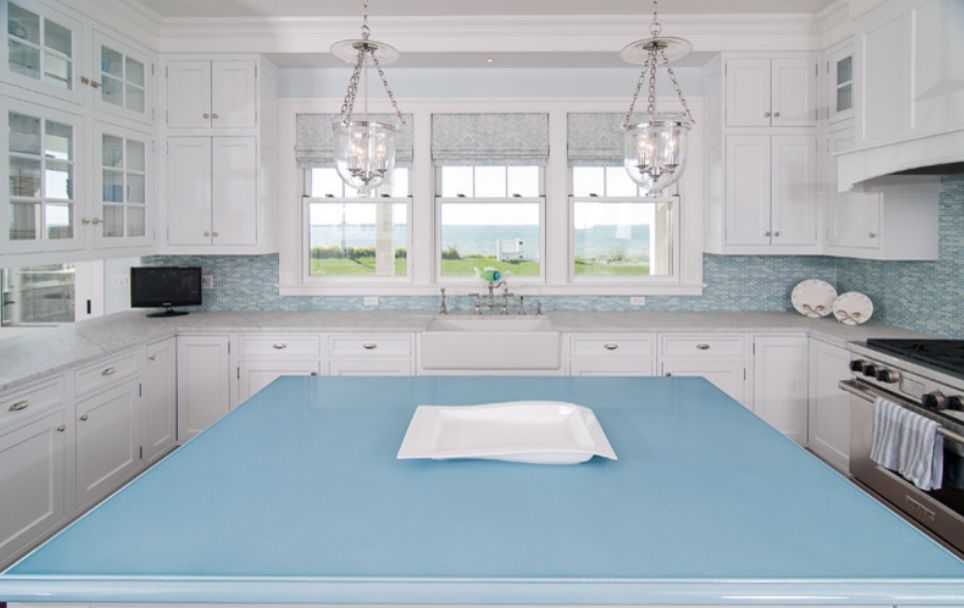
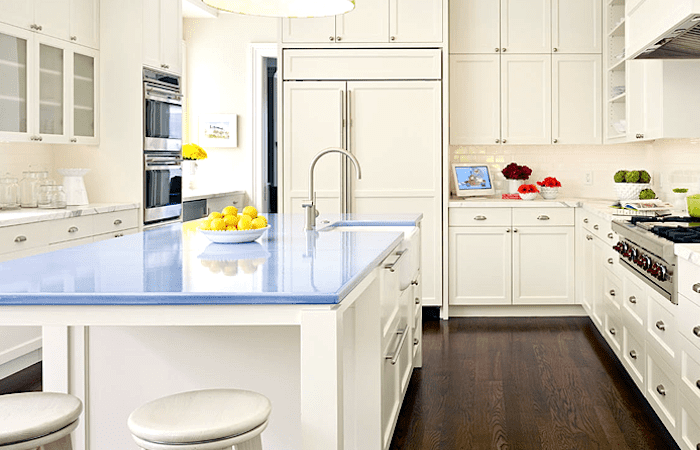
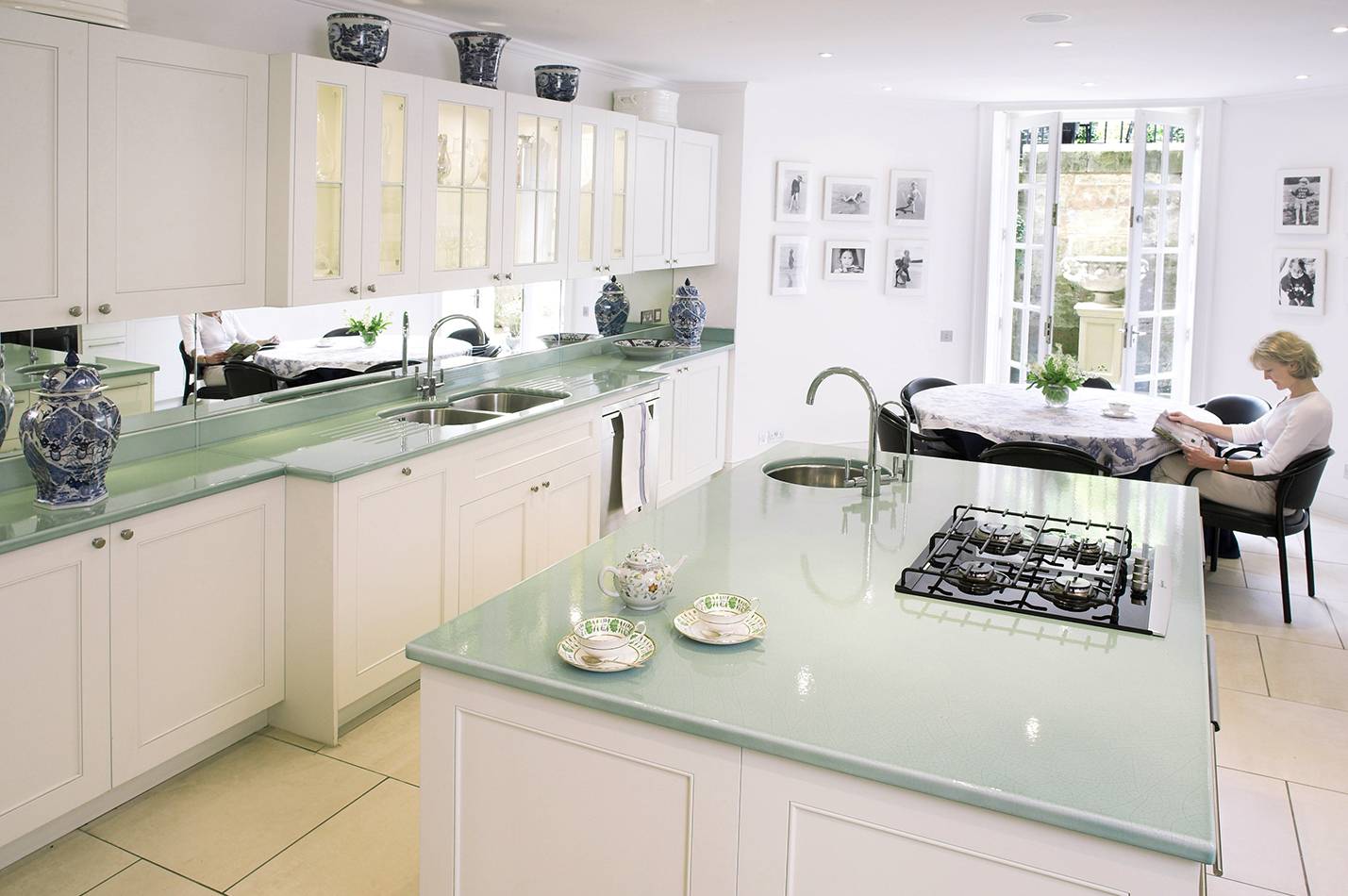
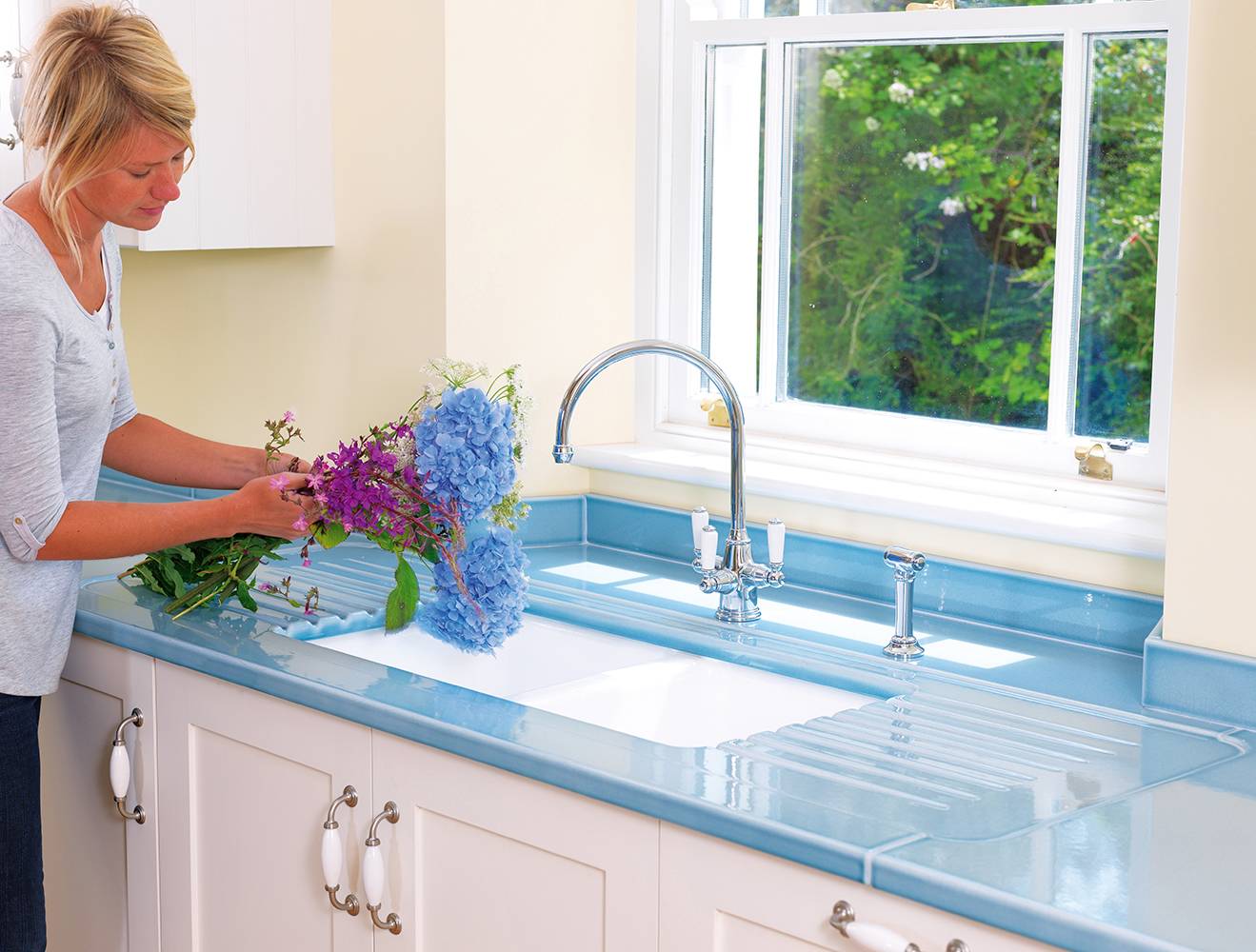
light blue glazed enamel island countertop
Glazed lava stone countertops and fired enamel tabletops produce that moment more reliably than almost any other surface material available to the specifier. Not because of what they look like in a catalog. Because of what they are made of, how they are made, and what they will never need from you once they are installed.
This guide is written for architects and interior designers who are specifying these surfaces seriously — or who have encountered them in a client brief and need to understand them fully before committing to a specification.
What Glazed Lava Stone Actually Is
The surface you are specifying has been through fire twice. Once as geology. Once as craft.
Lava stone countertops begin as basaltic volcanic rock — quarried from the Volvic plateau in the Auvergne region of central France or from the slopes of Mount Etna in Sicily. Basalt forms when molten rock cools from eruption temperatures of roughly 1,800 to 2,200°F. It is already one of the most thermally stable and chemically inert materials in the natural world before a craftsman ever touches it.
What transforms it into an architectural surface is the second firing. The quarried stone is cut to dimension, prepared, and coated with vitreous enamel — powdered glass mixed with metallic oxide colorants — applied in multiple spray passes and kiln-fired at temperatures between 1,400 and 1,650°F. The powdered glass melts, flows, and fuses permanently to the stone surface. When it cools, the enamel and the substrate are chemically bonded at the molecular level.
The surface you touch on a finished glazed lava stone countertop is not stone. It is fired glass enamel. That distinction matters in every performance category.
The Enamel Surface: Why It Performs the Way It Does
Vitreous enamel is not a coating in any conventional sense. It is not paint. It is not resin. It is not a sealant that needs periodic renewal. It is a glass system — fired and fused, inorganic and permanent.
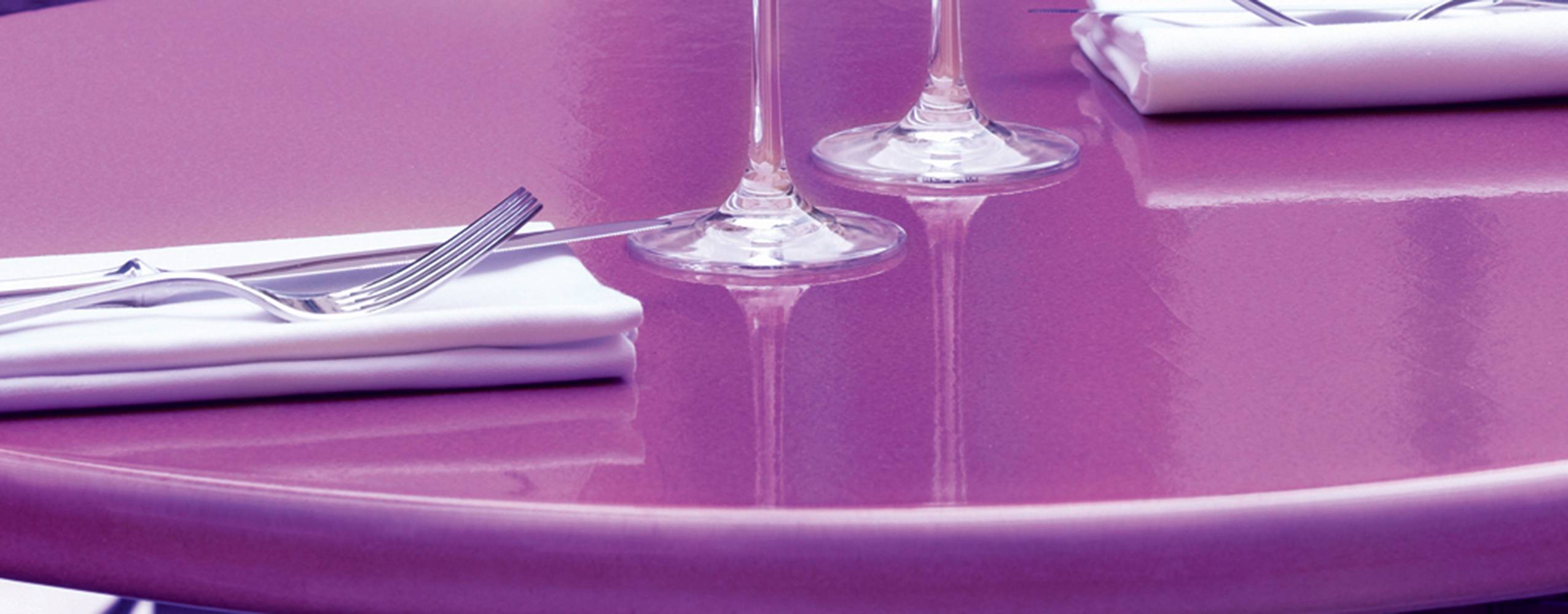
The colorants embedded in the enamel are metallic oxides: cobalt for blues and teals, chromium for greens, iron for ambers and terra cottas, manganese for purples and blacks, tin oxide for whites. These pigments are chemically stable across the full UV spectrum and across every temperature range encountered in residential or commercial use. They do not fade, bleach, shift, or degrade. The resin in man-made Quartz will eventually yellow under UV exposure. You cannot use quartz outside...period.
The London Underground has operated vitreous enamel tunnel signage continuously since the late nineteenth century. French road signs fabricated from enameled volcanic stone in the early twentieth century remain legible and color-accurate today. This is the same material technology, applied to countertops and tabletops.
When an interior designer specifies a glazed enamel surface in a specific oceanic blue for a hospitality project, that color will be the same color in twenty years as it is on installation day. No other countertop or tabletop material category can make that statement with equal authority.
Color: The Reason Most Designers Find This Material
The color range available in
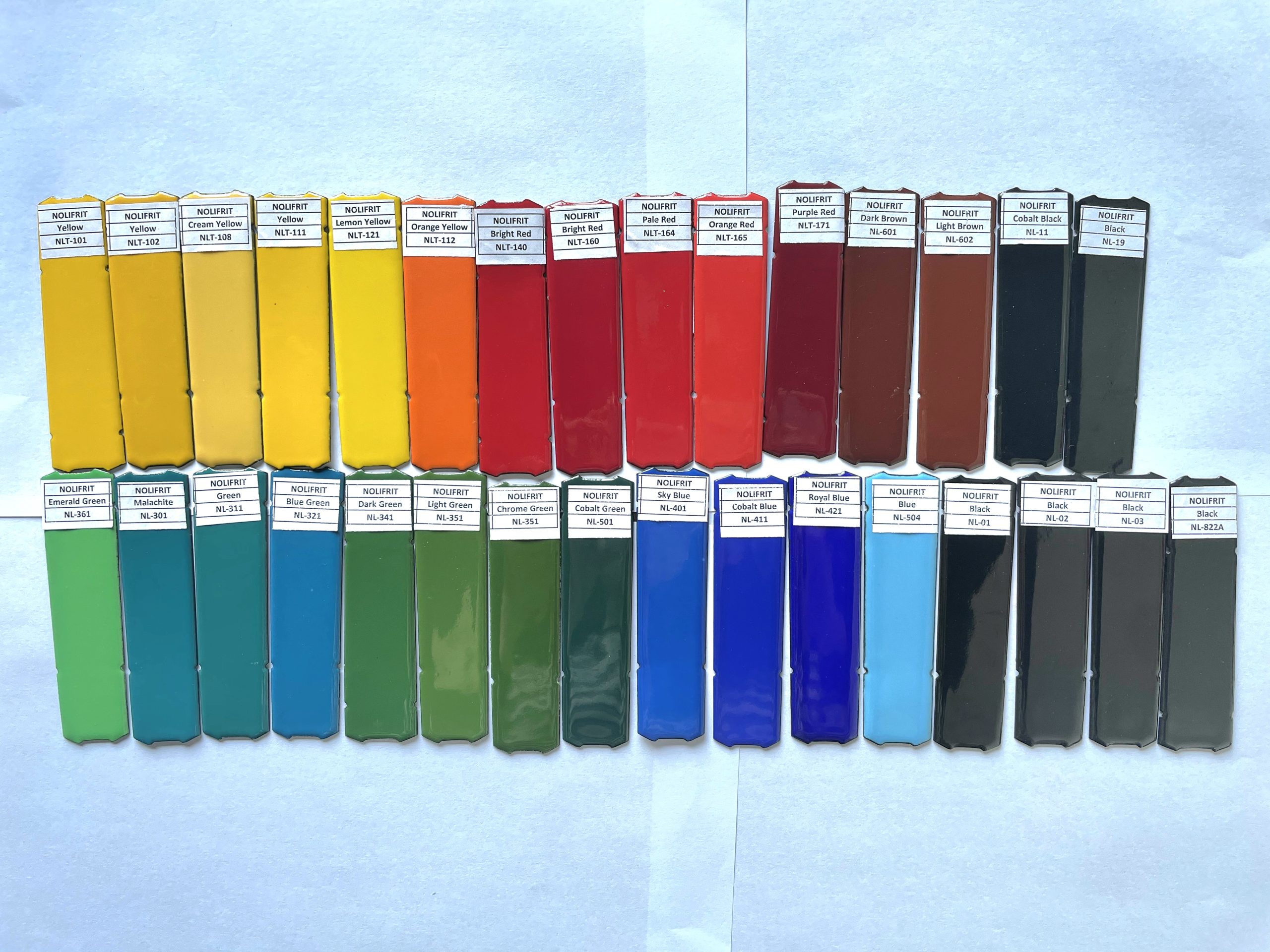
The color range available in glazed lava stone is effectively unlimited. Any Pantone reference, Benjamin Moore chip, fabric swatch, tile sample, or client-provided color can be matched and fired into the enamel.

glazed enamel color chart lava stone

glazed enamel Le Creuset colors
This is not a marketing claim. It is a chemistry fact. The enamel colorant system is a mixing palette of metallic oxides, and the relationship between pigment ratio and fired color is well understood and repeatable. A designer working on a hospitality project who needs a surface in a specific brand color — a precise warm terracotta, a deep forest green, a cobalt that reads correctly under the venue's specific lighting — can achieve that specification in a glazed enamel surface. They cannot achieve it in granite, quartz, marble, or any natural stone.
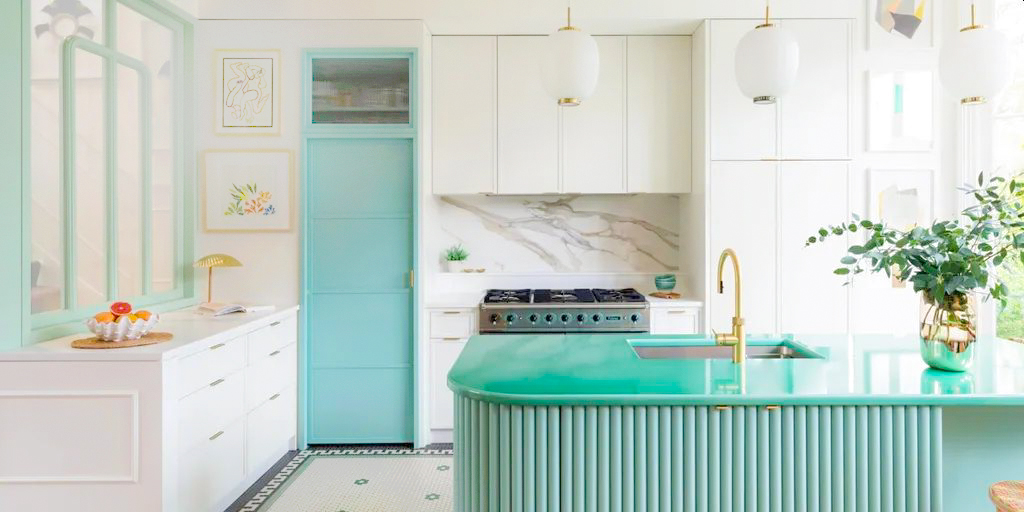
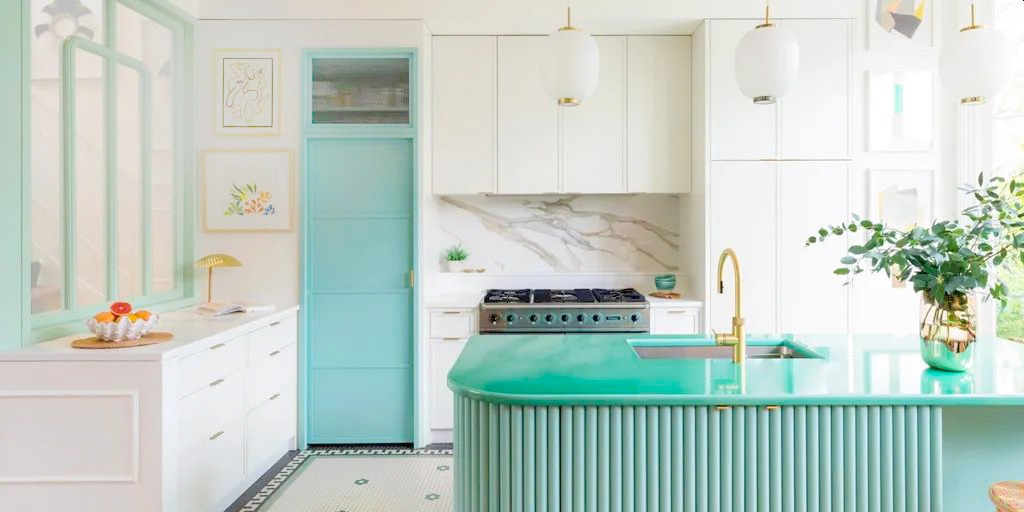
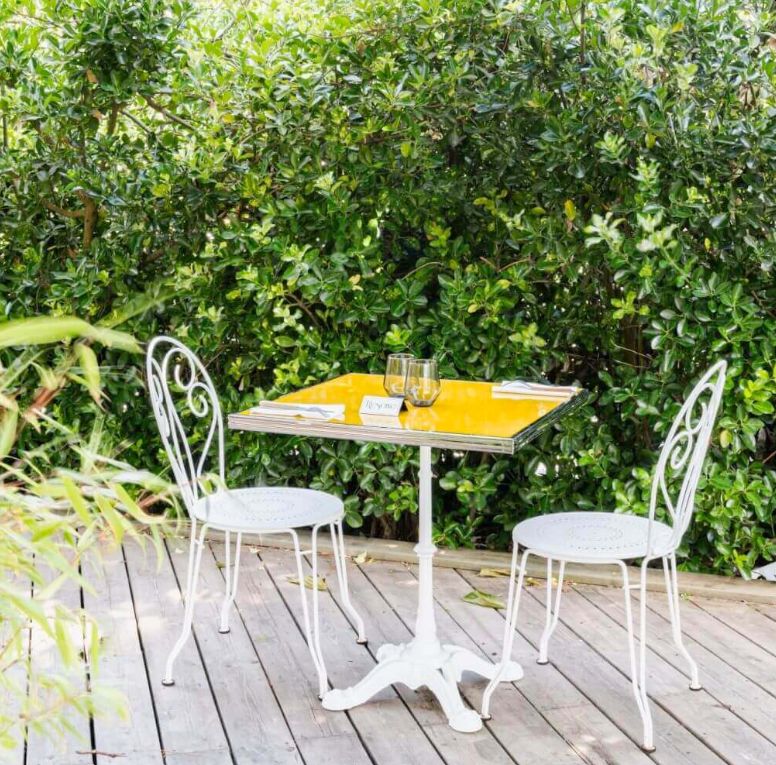
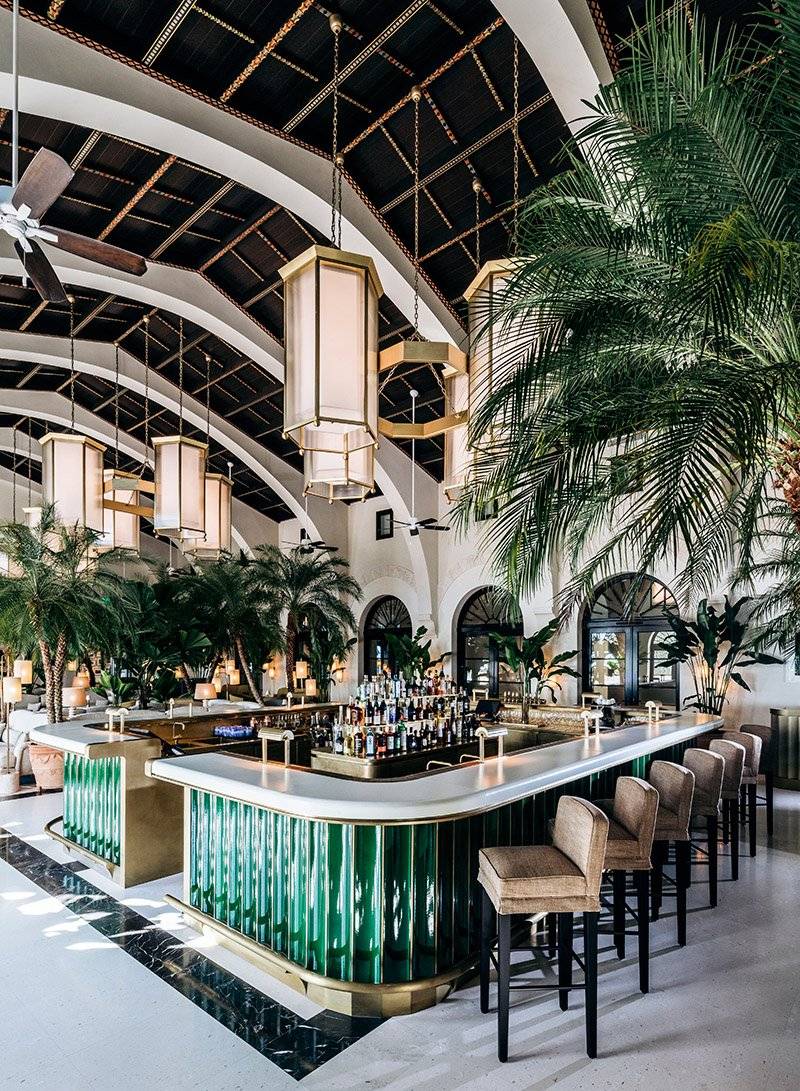
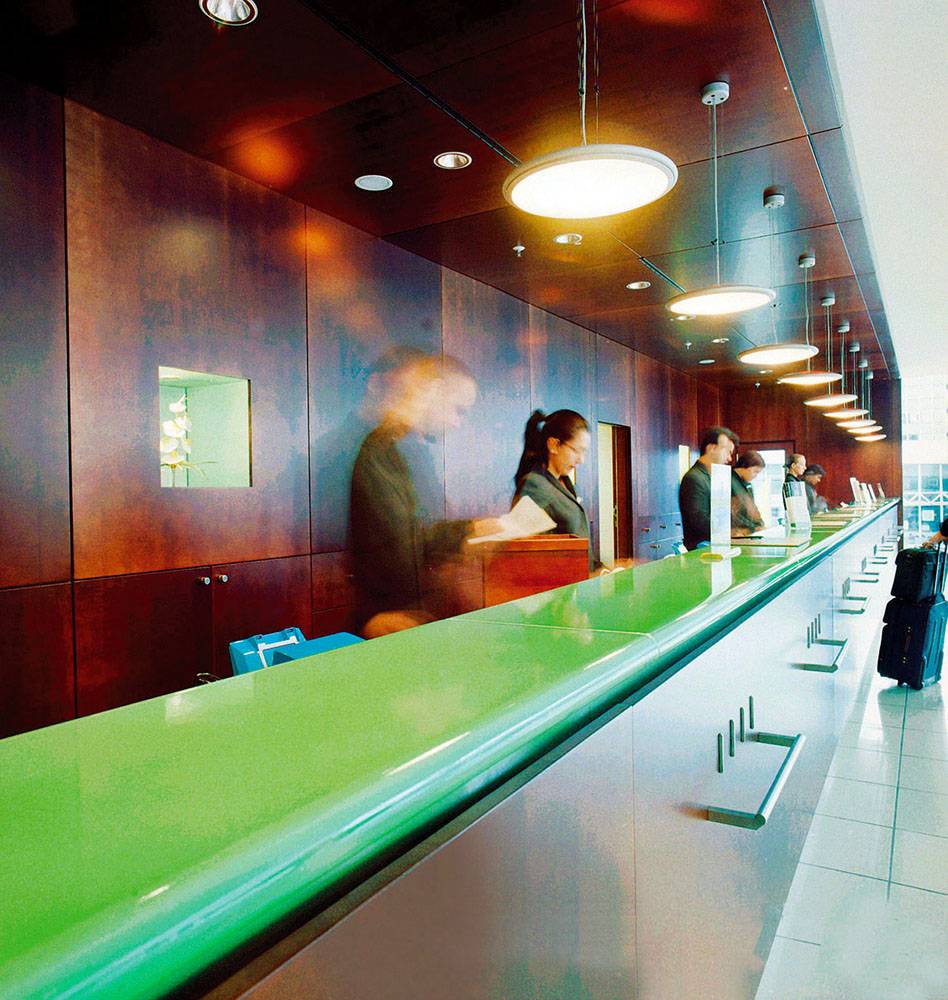
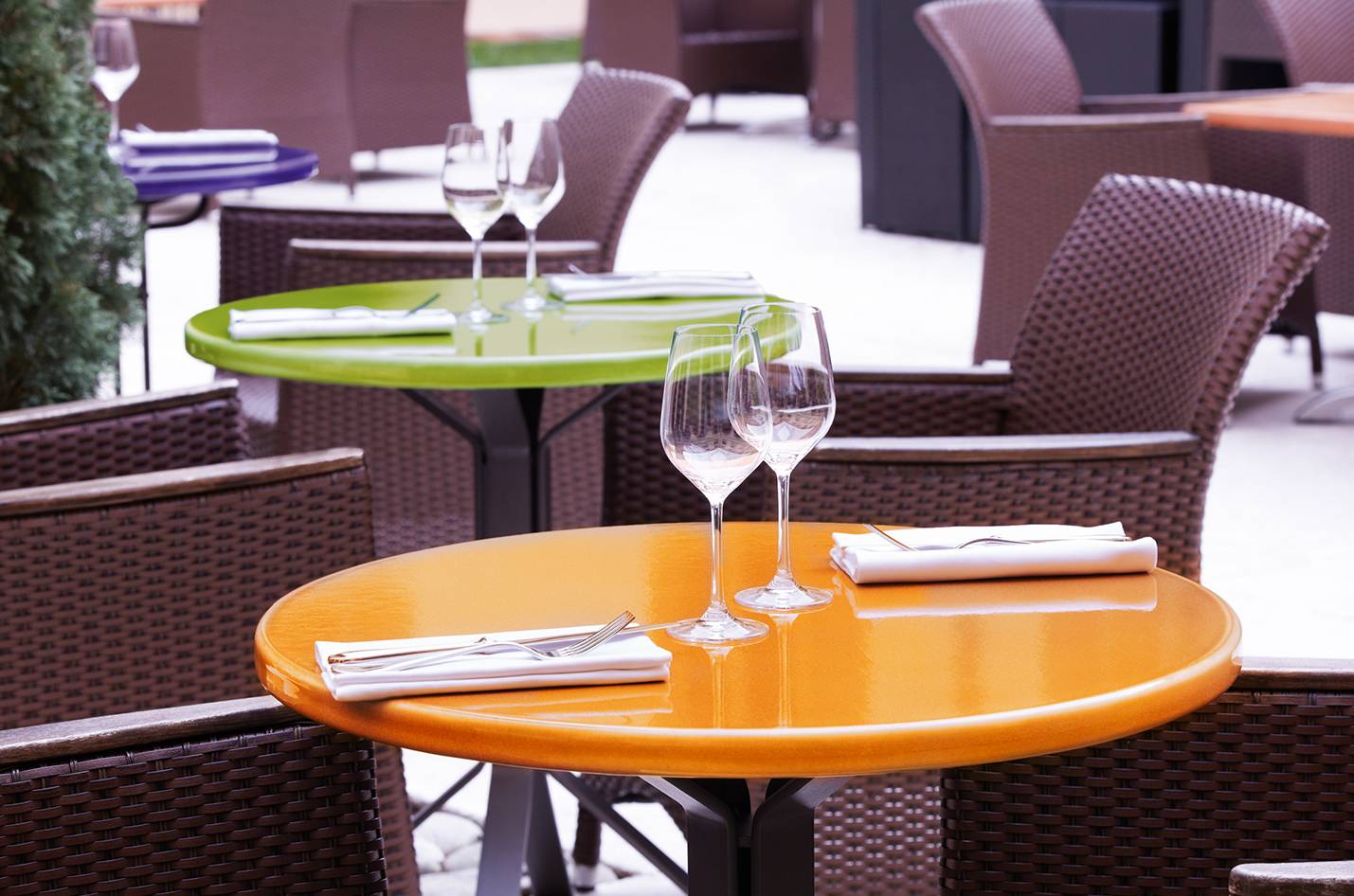
The most sophisticated use of this color capability is not saturating a space with it. It is restraint: a single glazed enamel island in deep oceanic blue against white perimeter surfaces. One vivid cafe table surface anchoring a neutral dining room. A bar top in a specific brand green that the rest of the interior whispers around. The white space makes the color more powerful, not less.

blue glazed enamel cafe table
Finishes available: matte, satin, gloss, and metallic (gold, silver, copper, bronze). The finish is specified before firing and is permanent once completed.
What Architects Need to Know Before Specifying
Size is the first filter. PyroLave's maximum single-piece dimension at 3CM thickness is approximately 102x47 inches (2,600x1,200mm). At 4CM and 5CM thickness, individual pieces are smaller and installations require more seams — a consequence of the denser, heavier material placing greater demands on the kiln and the quarried slab during firing. A bar or island countertop spanning 114 inches of continuous run requires a minimum of three pieces at 3CM, with seams as engineered design elements. Seams must be planned, not accommodated. Identify this at the outset of your specification.
Lead time is the second filter. French-sourced lava stone runs 17 to 23 weeks from specification to installed surface — 12 to 14 weeks of fabrication, plus international freight and customs clearance. The factory observes an August closure. Projects with compressed timelines or summer delivery requirements need this information at the first client meeting, not the last.
Templating is non-negotiable. Glazed enamel surfaces are not adjustable in the field. Every dimension — overhang, sink cutout, faucet penetration, edge profile, seam location — must be locked before fabrication begins. A thorough template by someone experienced with this material category is not a nicety. It is the specification.
Outdoor applications are among the highest-value uses. For architects specifying pool decks, rooftop terraces, restaurant terraces, and exterior hospitality environments: glazed enamel is UV inert, thermally stable at all outdoor temperature ranges, non-porous, and maintenance-free. No other colored surface material performs equivalently across all four categories simultaneously.
The Energy Equation: Why Glazed Lava Stone Costs What It Costs
This section is not an argument against French lava stone. It is an explanation of the economics that every designer owes their client before presenting a budget.
PyroLave's production process is genuinely demanding. Random-sized basalt boulders are lifted by crane from quarry deposits. Diamond-tipped saws reduce them to rough scants. CNC and waterjet equipment profiles each piece to final dimensions. Then the firing begins.
The first kiln firing lasts approximately eight hours at over 1,800°F — fusing a filler coat into the stone's surface and stress-testing the slab to identify structural failures before further investment is made. Pieces that fail this firing are discarded. The surface is then ground smooth. A white enamel undercoat is applied and fired. The final color enamel is spray-applied and fired again. Each kiln cycle operates on large-format industrial tunnel kilns consuming substantial electricity. None of these stages can be shortened.
This is before a single piece is packed into a rigid wooden crate and loaded onto a container ship.
The energy numbers, five years in context:
French industrial electricity prices doubled between 2021 and 2023. The trigger was Europe's dependence on Russian natural gas, disrupted beginning in 2022. At the crisis peak in August 2022, French wholesale electricity prices reached €1,130 per megawatt-hour. The pre-pandemic baseline in 2019 was approximately €39 per megawatt-hour. A 29-fold increase. In three years.
By 2025, prices had retreated to approximately €61/MWh — still 56% above 2019 levels, and still operating in an environment of elevated volatility. For a manufacturer running industrial kilns continuously through those peak years, the cost impact was not an adjustment. It was structural.
An authorized PyroLave distributor stated it plainly in a 2025 project quote: "The exchange rate and tariffs have driven the cost up, unfortunately."
Add the currency dimension: American buyers pay in euros, converted at the prevailing rate. The euro has traded between $1.05 and $1.13 against the US dollar over the past two years — a range representing 5–10% of additional price variability on top of the underlying cost. With a 12–14 week fabrication window, there is no hedge available to the design firm or their client.
The price of imported glazed lava stone reflects not just the extraordinary craft involved in making it, but five years of compounding energy inflation, currency exposure, and international freight in a tariff environment. That is information the designer owes their client.
Domestic Fired Enamel: The Same Surface, Different Supply Chain
The vitreous enamel surface chemistry does not change when the substrate changes. Cobalt oxide fires to the same oceanic blue at 1,550°F whether it is fused to quarried Volvic basalt or to a porcelain plate substrate whose primary constituent is silicon dioxide — the same compound that forms the backbone of volcanic basalt.

Cobalt Blue and Aqua plate by Kimura
Both materials are silicate-dominant. Both are thermally stable. Both accept vitreous enamel coatings fired at the same temperatures and produce the same UV-stable, non-porous, color-permanent surface. PyroLave achieves its white lava stone surfaces by applying a white enamel base coat to the basalt substrate before the color enamel layers — exactly the process used in domestic fired enamel fabrication. The substrate is an engineering decision. The enamel surface is the specification.
Our substrate offers higher flexural strength (50–55 MPa versus approximately 20 MPa for quarried basalt), lower water absorption, and larger available slab formats — up to approximately 118x59 inches as a single continuous piece. It fabricates in America, ships anywhere in the continental United States in four days or less, carries no tariff exposure, and reflects domestic energy costs that were not subject to the European gas supply crisis.
The honest proposition: if the project requires French provenance — if the client specifically wants Volvic lava stone from the Auvergne, and the budget and timeline support a 17–23 week import process — then PyroLave is the correct specification and it is an extraordinary material. If the project requires fired enamel surface performance, custom color, maintenance-free durability, and domestic delivery on a real construction schedule, then domestic fabrication is not a compromise. It is the specification.
Frequently Asked Questions
1. What exactly is glazed lava stone, and how is it different from other stone countertop materials?
Glazed lava stone is a volcanic basalt substrate permanently bonded to a vitreous enamel surface coating — powdered glass mixed with metallic oxide colorants, sprayed in multiple passes and kiln-fired at over 1,400°F until the glass melts and fuses to the stone. The surface you interact with is fired glass enamel, not exposed stone. This places glazed lava stone in a different performance category from granite, marble, and quartz: UV stable (metallic oxide colorants cannot fade or bleach), non-porous without any sealant, and unlimited custom color specification. No natural stone and no engineered quartz product offers all three properties simultaneously.
2. What colors are available for glazed lava stone countertops and tabletops?
The color range is effectively unlimited. Cobalt oxide for blues and teals, chromium oxide for greens, iron oxide for ambers and terra cottas, manganese for purples and blacks, tin oxide for whites — blended in precise ratios and fired permanently into the enamel. Any Pantone reference, paint chip, fabric sample, tile, or custom swatch can serve as the basis for a color match. Finish options include matte, satin, gloss, and metallic. The color and finish are permanent once fired and cannot be adjusted after installation.
3. How large can a lava stone countertop, tabletop, or bar top be in a single continuous piece?
PyroLave's maximum single-piece dimension at 3CM thickness is approximately 102x47 inches (2,600x1,200mm). At 4CM and 5CM thickness, individual pieces are smaller and installations require more seams. A bar or island countertop spanning 114 inches total requires a minimum of three separate pieces at 3CM. Domestically fabricated fired enamel surfaces on engineered nanoglass substrates are available up to approximately 118x59 inches as a single continuous piece, with the identical enamel chemistry, color specification process, and finish options.
4. How does glazed lava stone perform outdoors — cafe tables, restaurant terraces, pool-adjacent surfaces?
Glazed lava stone and fired enamel surfaces are among the most technically appropriate outdoor specifications available. UV stable (metallic oxide colorants cannot bleach or fade — a chemistry property, not a coating property), thermally stable at all outdoor temperature ranges, non-porous with no sealant requirement, and impervious to pool chemicals, cleaning agents, and acidic outdoor environments. No common alternative material meets all four criteria simultaneously and without maintenance. Lighter color specifications are recommended for direct-sun installations to minimize surface heat absorption.
5. How long do glazed lava stone countertops and tabletops last?
Vitreous enamel surfaces should be specified as lifetime architectural elements. The London Underground has operated vitreous enamel tunnel signage in high-traffic commercial environments since the 1880s — over a century of continuous use — with panels remaining color-accurate and structurally sound. French enameled lava stone road signs from the early twentieth century remain legible and vibrant today after decades of outdoor exposure with no maintenance intervention. In residential and hospitality applications, properly installed glazed lava stone countertops and tabletops should be considered permanent: no renewal cycle, no sealant schedule, no expected replacement under normal use.
6. What is the lead time for lava stone countertops?
French-sourced lava stone requires 17 to 23 weeks from specification approval to installed surface: 12 to 14 weeks of fabrication, plus international freight and customs clearance. The primary French producer observes an annual August factory closure of four to six weeks — a complete pipeline interruption for summer projects. Euro/dollar exchange rate exposure and current tariff conditions add price variability between budgeting and final invoice. Domestically fabricated fired enamel surfaces are available with total project timelines of four to ten weeks, including specification, fabrication, and nationwide delivery from Tampa, Florida, with no import exposure.
7. Can glazed lava stone and fired enamel surfaces be fabricated in organic, curved, or non-rectangular shapes?
Yes. Fired enamel surfaces on both volcanic basalt and crystallized nanoglass substrates can be profiled into organic shapes, curved outlines, and fully custom silhouettes using waterjet cutting at 60,000 PSI. Applications include freeform dining tables, curved bar fronts, organic-shaped reception counters, and custom cafe tabletops with compound curves. Shape is specified at templating, locked before fabrication, and cannot be modified in the field.
8. Why has lava stone become so expensive?
The price reflects compounding factors intensified over five years. The production process is genuinely energy-intensive: multiple kiln firings on large-format industrial tunnel kilns, heavy quarrying operations, and CNC fabrication — all conducted in France, where industrial electricity prices doubled between 2021 and 2023. French wholesale electricity peaked at €1,130 per megawatt-hour in August 2022 — a 29-fold increase over the 2019 baseline of €39/MWh. Prices remain 56% above pre-pandemic levels. American buyers also absorb euro-to-dollar currency conversion, international freight, and current tariff conditions. The craft is not more expensive. The energy to fire it and the logistics to deliver it are.
9. What should designers know about coordinating the installation of glazed lava stone?
Glazed lava stone and fired enamel surfaces cannot be adjusted in the field. Edge profiles, sink cutouts, faucet penetrations, overhang dimensions, and seam locations are determined at templating and locked before fabrication begins. A thorough, experienced template is the single most important step in a successful installation. Any post-template changes affecting surface dimensions require a return to fabrication. White glove installation services are available nationally and into the Caribbean from Tampa, Florida, for projects in markets without local glazed enamel specialists.
10. What is the relationship between lava stone, nanoglass, and other fired enamel substrates?
The substrate is not the specification. The enamel surface is the specification. Traditional lava stone countertops use quarried volcanic basalt beneath the enamel. Domestically fabricated fired enamel surfaces use crystallized nanoglass, whose primary constituent is silicon dioxide (SiO₂) — the same compound that forms the backbone of volcanic basalt. Both are silicate-dominant, thermally stable, and chemically inert. Both accept vitreous enamel fired at 1,400 to 1,650°F and produce identical UV-stable, non-porous, color-permanent surfaces. The nanoglass substrate offers higher flexural strength (50–55 MPa versus approximately 20 MPa for quarried basalt) and larger available slab formats — without European energy or currency exposure.
A Note on Working with These Materials
Every project that involves glazed lava stone or fired enamel surfaces benefits from early engagement with a fabricator experienced in this material category — not because the specification is complicated, but because the decisions made at the front end are the surface itself. Color, finish, size, seam strategy, edge profile — these are not selections made at the end of the process. They are the process.
This is a material that rewards deliberate design. It was born of fire, and fire does not negotiate.
If you are an architect or interior designer working on a project that has led you to this material — a client who wants color, permanence, and a surface that performs without attention for decades — the right conversation starts with dimensions, color references, and timeline.
Everything else follows from there.
Downing Designs fabricates custom kiln-formed glass surfaces, fired enamel countertops and tabletops, glass bar tops, and architectural glass installations from our studio in Tampa, Florida. We ship nationwide and install across the continental United States and the Caribbean. For specification inquiries: [email protected] | (813) 784-5211 | Contact Us
Jeff Downing
Founder, Lead Designer & Custom Glass Countertop Expert
Jeff Downing of Downing Designs, is a Tampa Florida–based design studio specializing in custom Glass Countertops, Glass Bar Tops, Glass Vanity tops and Glass Stair Treads. With decades of hands-on experience, Jeff is widely recognized for delivering textured glass surfaces integrated with LED lighting to create dazzling abstract statement pieces.
"Glass. Lights. Ambiance".