
Glass. Lights. Ambiance.
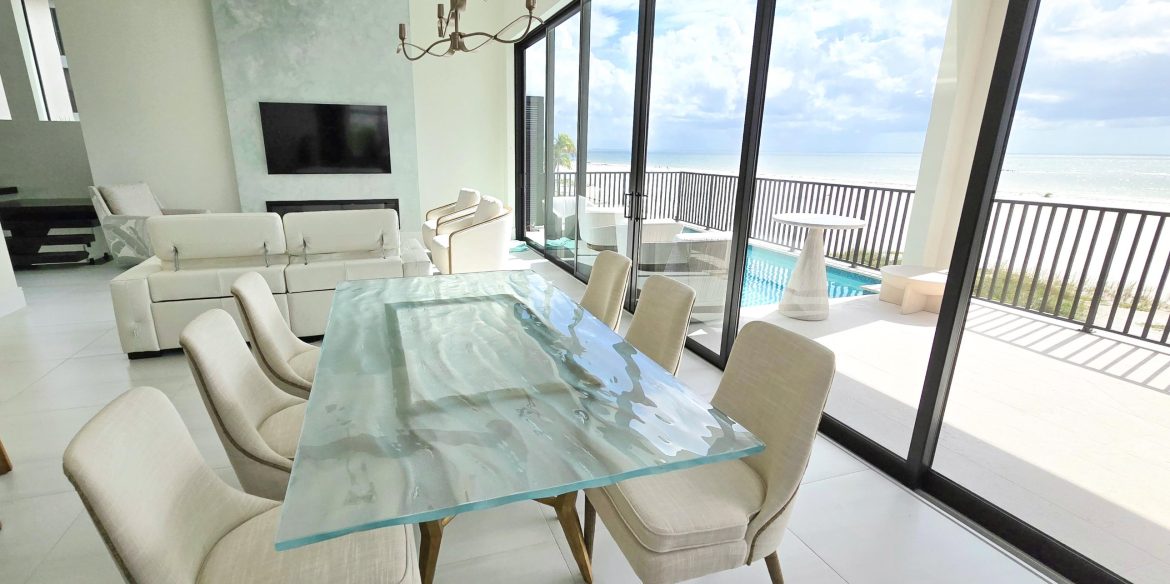
A 295-pound slab of low-iron glass, carved by hand with the people who would sit at it.
Most dining tables are chosen. This one was carved. The homeowners sat with Jeff Downing in our Tampa, FL design studio and shaped the Ebb Tide texture with him, line by line, until the glass looked like the water outside their windows at low tide. The finished top is a single piece of 1-inch low-iron glass, 78″ × 42″, weighing 295 pounds. It now sits on the second story of their beachfront home in Estero Beach, Florida, catching the Gulf light from three walls of glass.
IWhat Is a Textured Glass Table Top?
A textured glass table top carries a surface shaped in the kiln instead of a flat, factory-smooth face. The Ebb Tide texture began as a conversation: the clients described how the water moves when the tide pulls back, with shallow ripples, sand showing through and a calm framed area where the light settles. We carved it into the mold with them, so the table they eat at every day carries their own hand in it.
“They didn’t pick a texture from a sample board. They made it.”
IIWhy Low-Iron Glass for a 1-Inch Table Top?
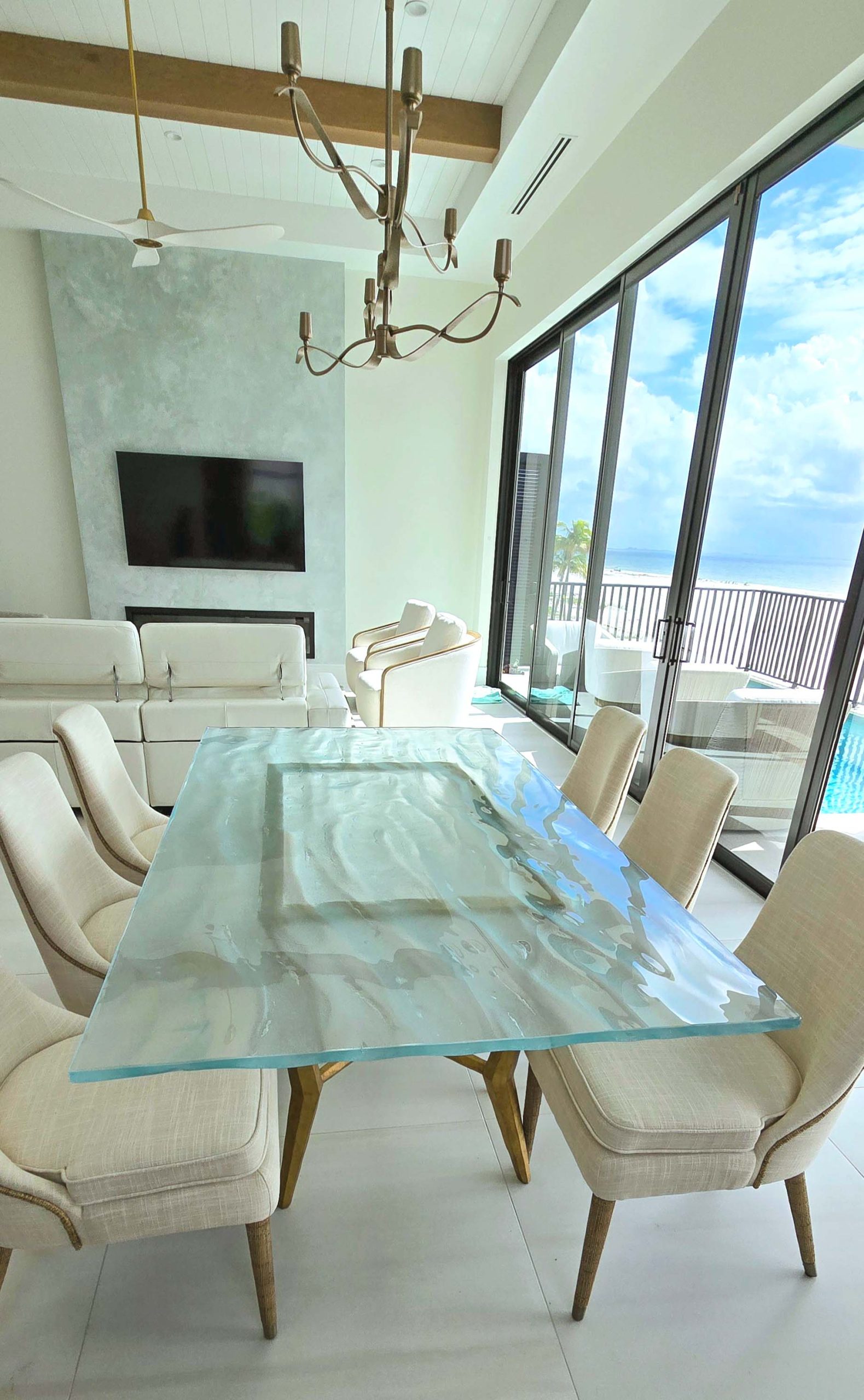
Standard clear glass turns noticeably green as it gets thicker, and at a full inch the tint fights the texture. Low-iron glass has almost none of that green, so the Ebb Tide ripples read as clear water rather than bottle green. What remains is a soft aqua line along the edge that glows when the sun hits it.
IIIHow Heavy Is a 1-Inch Glass Dining Table Top?
About 13 pounds per square foot. At 78″ × 42″, the Ebb Tide top weighs 295 pounds. That weight is part of the design: the glass sits still, solid and quiet under every plate and elbow, with no frame to hold it in place.
IVCan a Heavy Glass Top Sit on Its Own Base?
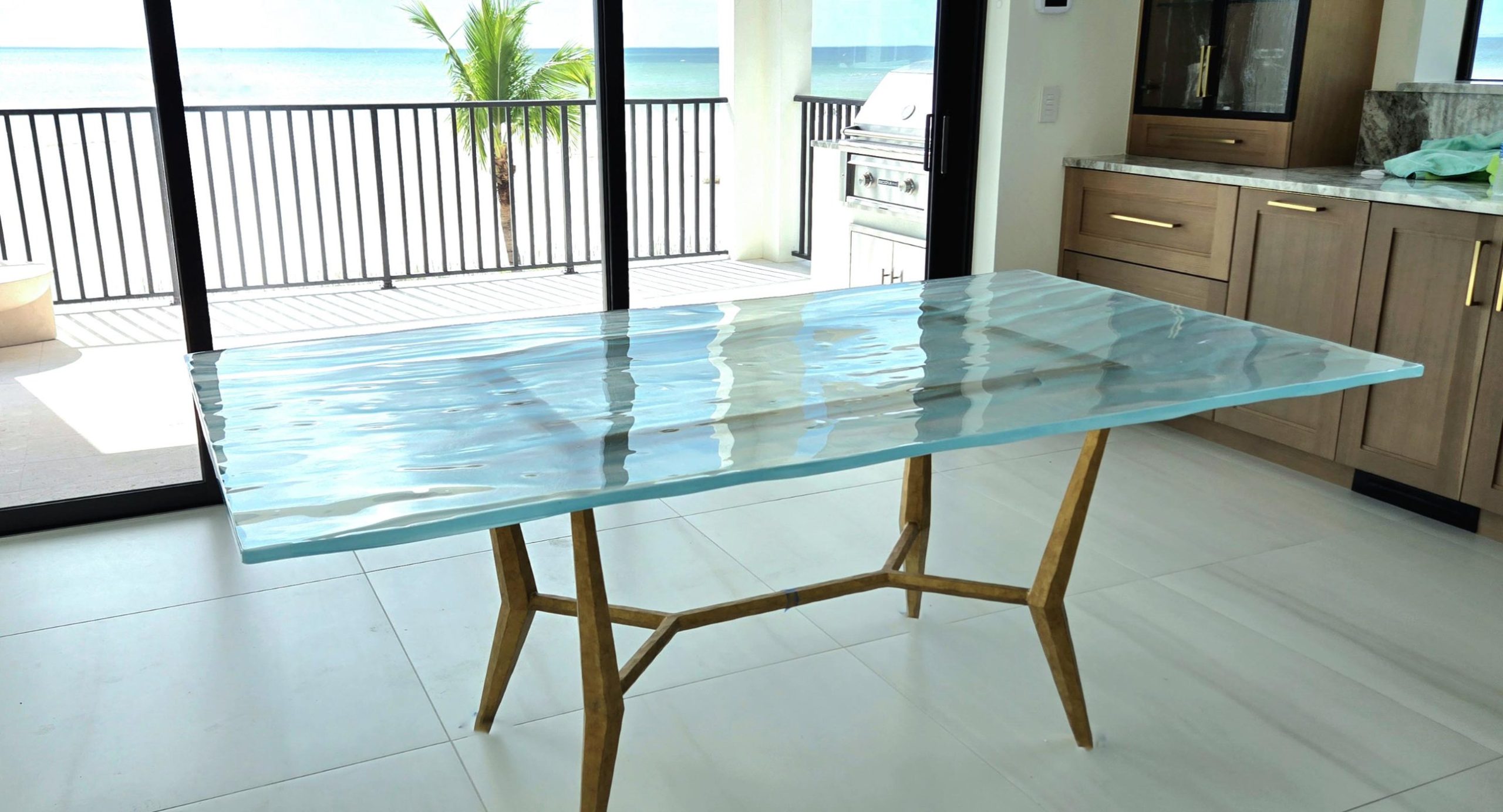
Yes. The Ebb Tide top rests on a custom wood table base, with an 18-inch overhang at each end and a 9-inch overhang along each side. The base underneath measures roughly 42″ × 24″, and the glass carries itself well past it, which is what makes the table read as floating water instead of furniture.
VEdges Polished to Lens Quality
Every edge was polished to lens quality, the same clarity you would expect from a camera lens. Run a hand along it and there is nothing to catch. Look into it and you see straight through the full inch of glass.
VIThe Lift
The dining room is on the second floor, facing the beach. We brought the glass up by forklift, then hoisted it the rest of the way with straps on a windy day. With 295 pounds of hand-carved glass swinging above a beachfront deck, there was a nervous moment. Then it was inside, set on the base, centered, cleaned and photographed.
VIIRipple: The Same Water, One Drop
Where Ebb Tide is a whole shoreline, Ripple is one moment. Concentric rings spread from a single point, the way still water answers a falling drop. The rings are carved deep enough to throw real shadows in full sun, and the aqua deepens toward the thick edges, where the light travels through the most glass. Together, the two pieces are what we call Coastal Glass Design: the study of how water moves, carved into glass by hand.
VIIIProject Details
IXFrequently Asked Questions
How thick should a glass dining table top be?
A thin sheet of glass works as a protective cover over a wood table. A glass top that is the table itself, resting on an open base with no frame, is usually specified much thicker. The Ebb Tide top is a full inch, which gives it the weight, rigidity and visual depth to carry 18-inch overhangs at each end.
How much does a 1-inch glass table top weigh?
About 13 pounds per square foot. A 78″ × 42″ top covers about 22.75 square feet, so the Ebb Tide top weighs 295 pounds. Plan delivery, the base and the floor around that number.
What is the difference between low-iron and standard clear glass?
Standard clear glass contains enough iron to show a green tint, which deepens as the glass gets thicker. Low-iron glass removes most of that iron, so a 1-inch top looks clear through its full depth, with only a soft aqua glow along the polished edge.
Why isn’t this glass table top tempered?
Tempering requires flat glass of even thickness, heated and then cooled rapidly with air. A deep, hand-carved kiln texture is neither flat nor even, so it can’t be tempered. Kiln-formed glass is annealed instead, cooled slowly and under control to relieve internal stress. At a full inch thick, annealed low-iron glass is heavy and rigid enough to serve as the table itself.
Can you make a custom large glass dining table top?
Yes. Our kilns produce single pieces up to 130 inches, so most dining tables are made from one continuous slab with no seams. Size, shape, thickness, texture and edge finish are all designed with the client.
Is a textured glass table top hard to clean?
No. The texture is fired glass: smooth to the touch, non-porous and seamless. A glass cleaner and a soft microfiber cloth are all it needs.
How do you deliver a 295-pound glass top to a second floor?
Carefully, and in person. For the Ebb Tide table, we raised the glass by forklift, then hoisted it the rest of the way with straps to the second-story beachfront deck before setting it on the base, centering it and cleaning it in place.
XGlossary
- Low-iron glass
- Glass made with very little iron, which removes the green tint of standard clear glass and keeps thick pieces clear.
- Kiln-formed glass
- Glass heated in a kiln until it softens and takes the shape or texture of the surface beneath it.
- Annealing
- Slow, controlled cooling of glass after it is formed, which relieves internal stress.
- Tempered glass
- Flat glass of even thickness that is heated and rapidly cooled to make it stronger. Deeply textured glass can’t be tempered.
- Overhang
- The part of a table top that extends past its base. The Ebb Tide top overhangs 18 inches at each end and 9 inches along each side.
- Lens-quality polish
- An edge finish polished to the clarity of an optical lens, smooth to the hand and clear to the eye.
- Ebb Tide
- A Downing Designs texture based on the water at low tide, carved with the clients for this table.
XISelected Sources
- Annealing (glass) — Wikipedia
- Tempered glass — Wikipedia
- Glass Bar Tops — Downing Designs
- Projects — Downing Designs
Begin a Commission
We don’t have office hours. We have phones.
Jeff Downing
Founder, Lead Designer & Custom Glass Countertop Expert
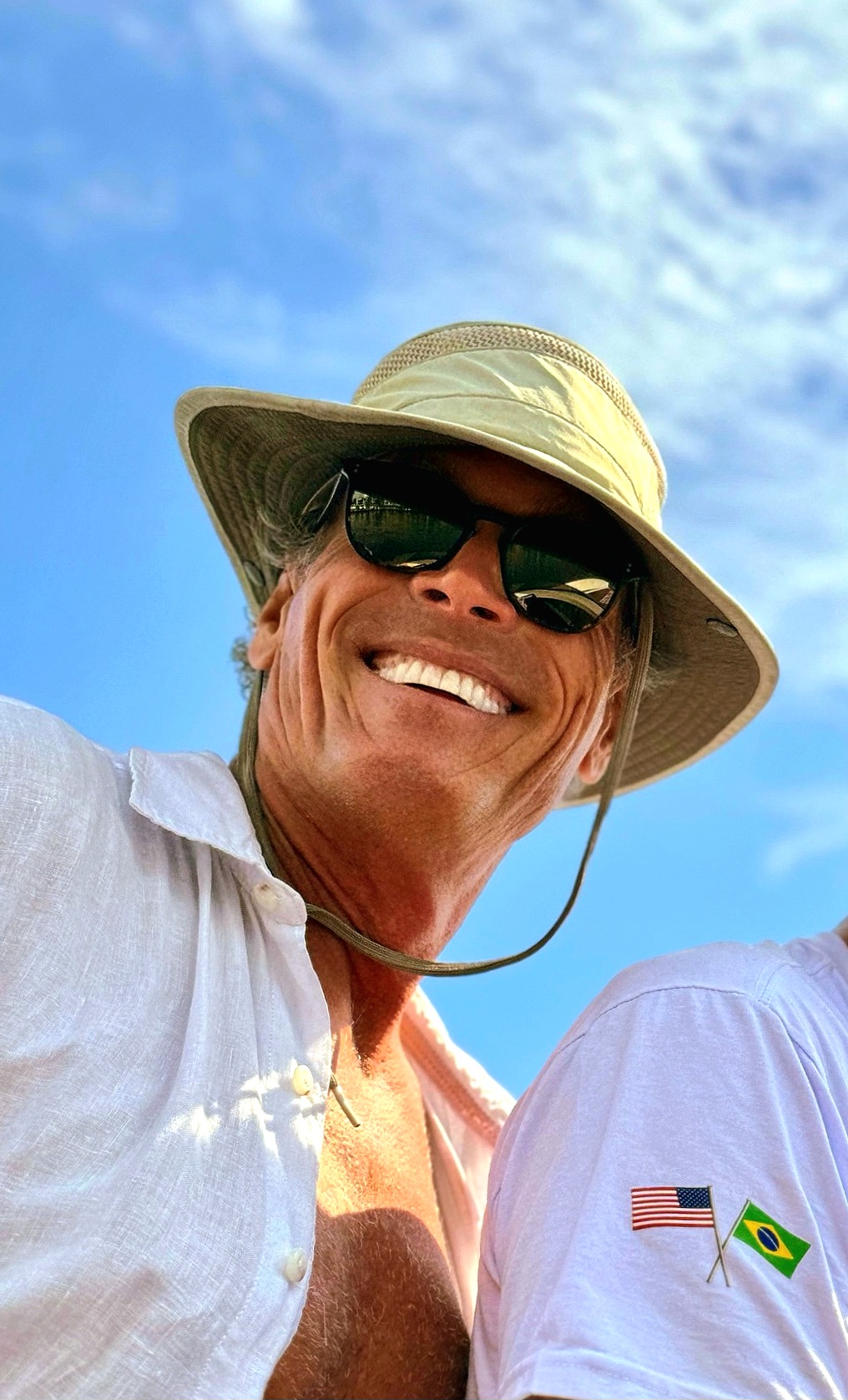
Jeff Downing of Downing Designs, is a Tampa Florida–based design studio specializing in custom Glass Countertops, Glass Bar Tops, Glass Vanity tops and Glass Stair Treads. With decades of hands-on experience, Jeff is widely recognized for delivering textured glass surfaces integrated with LED lighting to create dazzling abstract statement pieces.
"Glass. Lights. Ambiance".