
Behind the Scenes · Ambiance Café™
A textured glass bar top is made by fusing 1.5-inch low-iron glass over a hand-built texture bed in a kiln, then hand-polishing the edges and installing it with integrated LED light. Every step happens in one studio in Tampa, Florida, by one craftsman. We pulled up a stool at the shop and asked Jeff Downing how it really works.
Meet Jeff
I’m Jeff Downing, founder of Downing Designs. I hold a BS in Chemistry from the University of Pittsburgh, and I design, fire, polish, deliver, and install every piece myself. Clients talk to the person making their glass before a dollar changes hands. That’s not a sales line. It’s how the shop is built.
Inside the Shop: Q&A with Jeff Downing
What does a typical day in the shop look like?
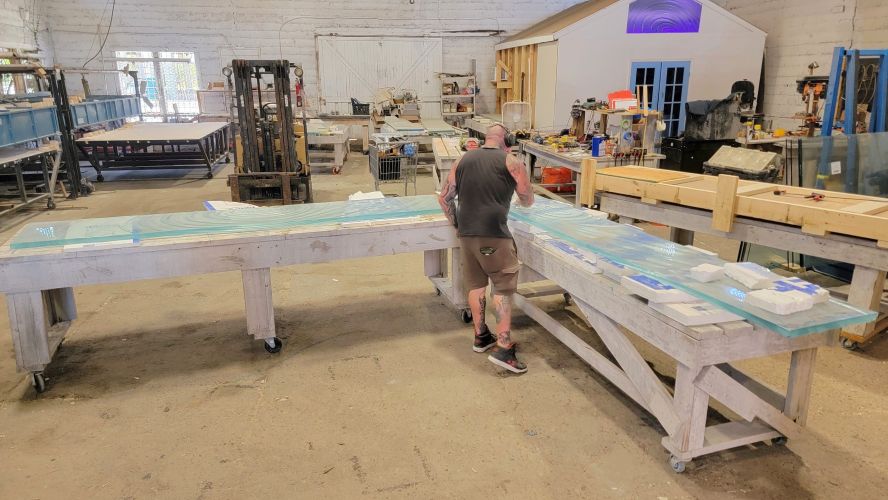
Mornings are glass and kilns: checking what came out overnight, loading the next layup, and polishing edges. Afternoons are phone calls, design drawings, and crating. Then some days the whole day is a truck and an install somewhere in Florida.
Why low-iron glass?
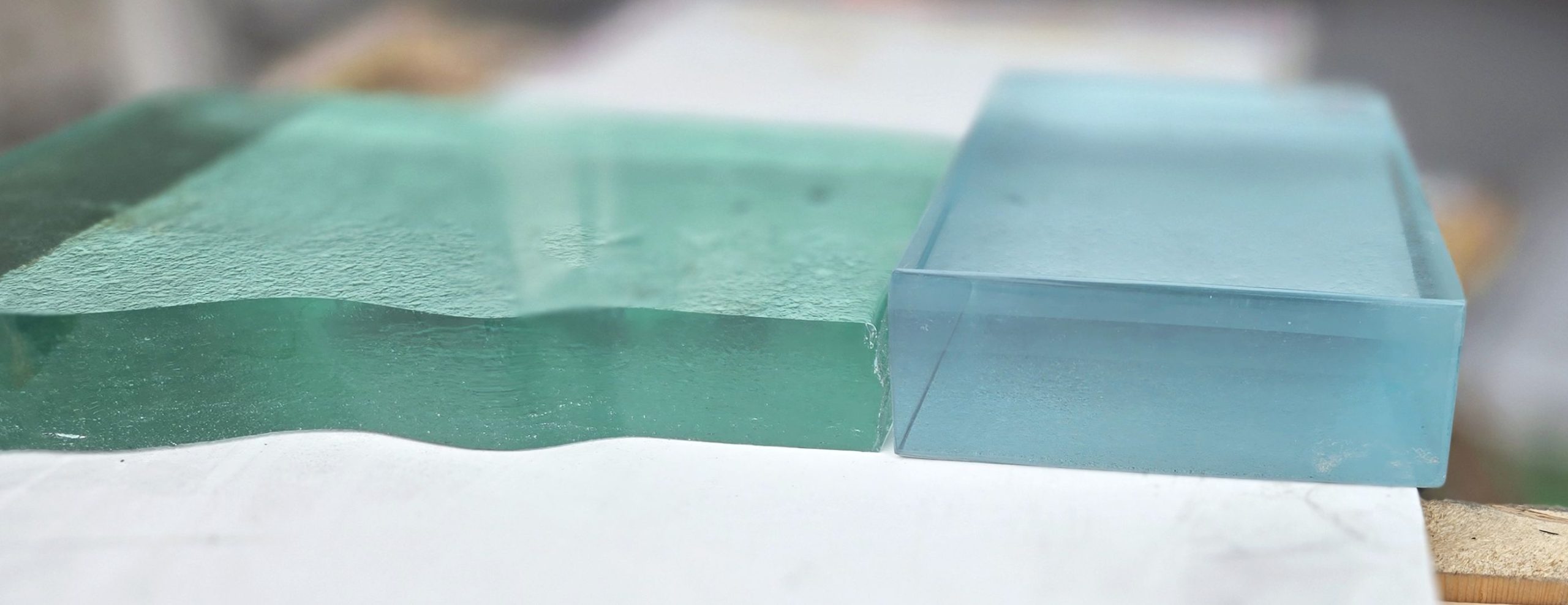
Standard float glass has iron in it, and iron turns thick glass green. At 1.5 inches you see it plainly. Low-iron glass strips that tint out, so the texture reads crisp and the LED colors come through true.
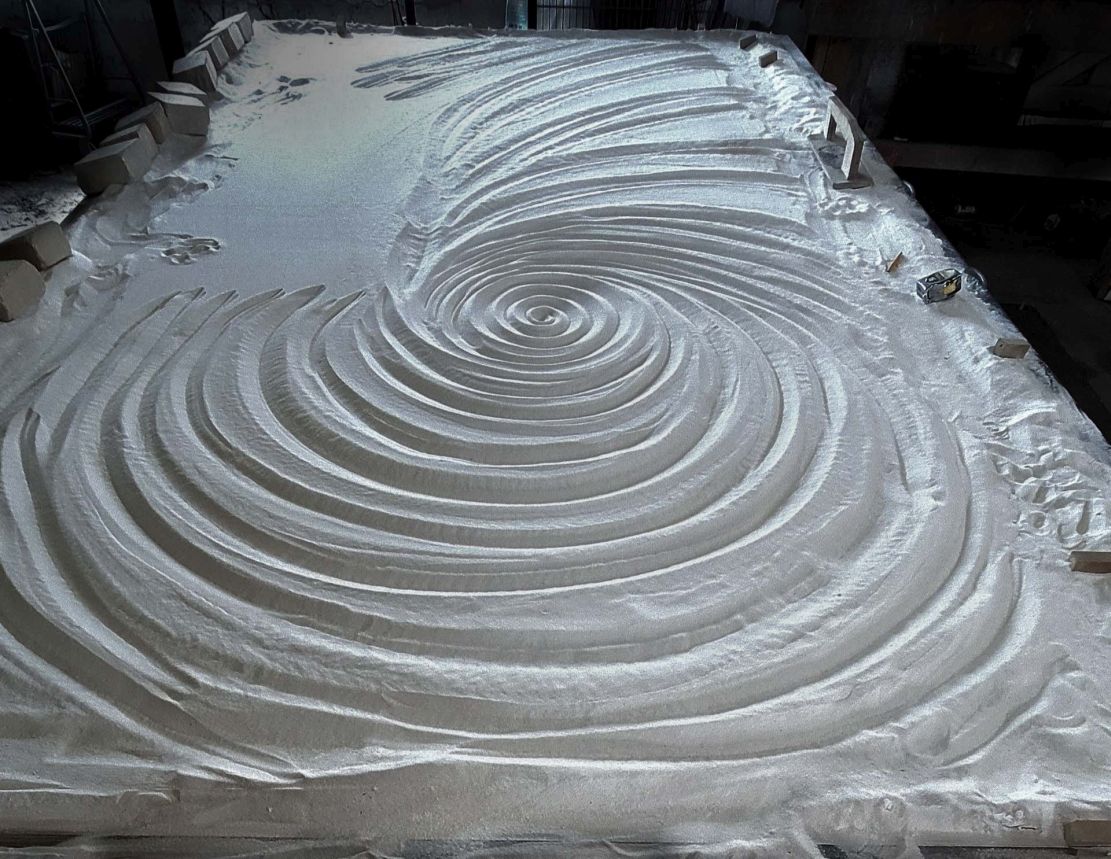
How is the texture made?
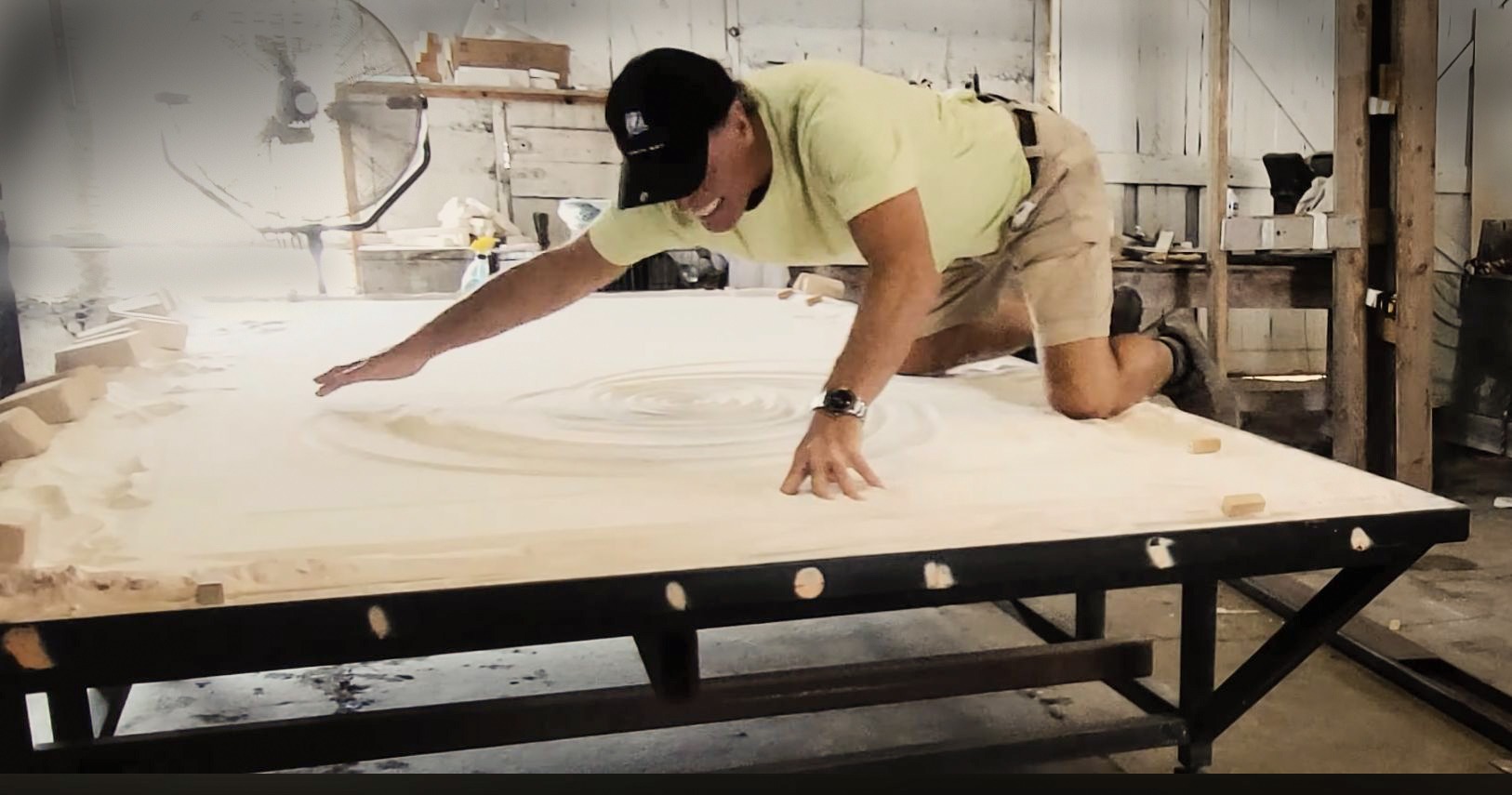
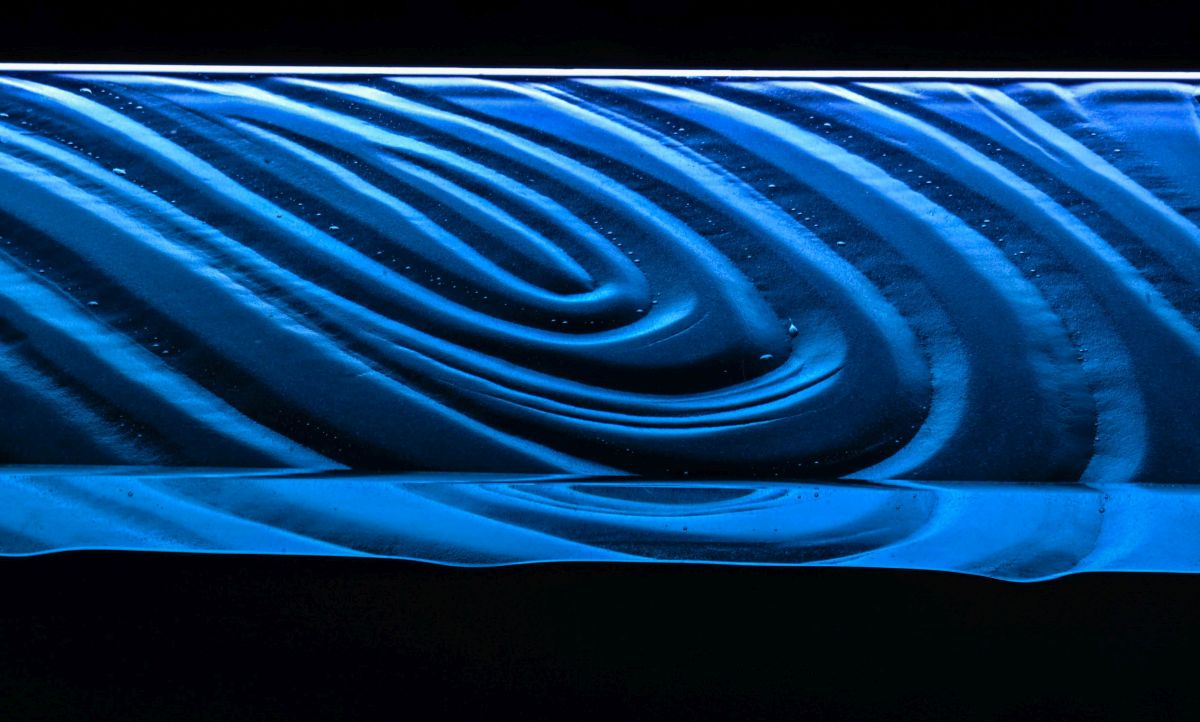
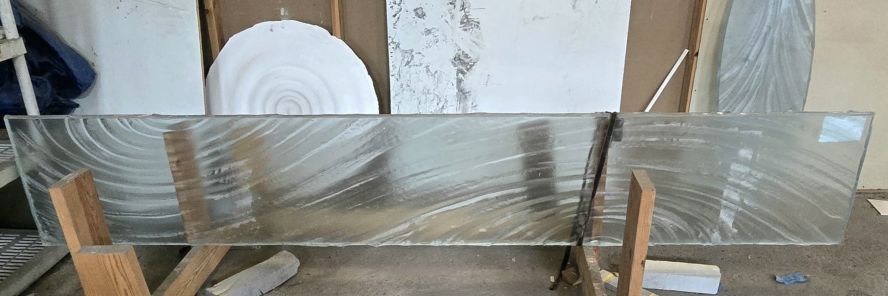
Every texture is built by hand in the studio. Nothing is stamped from a stock pattern. The glass takes the texture’s shape in the kiln, so no two bar tops come out identical.
What happens inside the kiln?
The glass is fired in the 1450°F range, then cooled and annealed slowly so the slab comes out free of internal stress. Thick slabs require exponentially more kiln time, because the slow cool matters as much as the heat. Rush it and thick glass can crack days later.
What’s it like opening the kiln?
Christmas morning. Each time. You hope you’ve been a good boy, but, wham! Ashes for you today, Jeff. Cracks can occur. Failures can happen in so many ways.
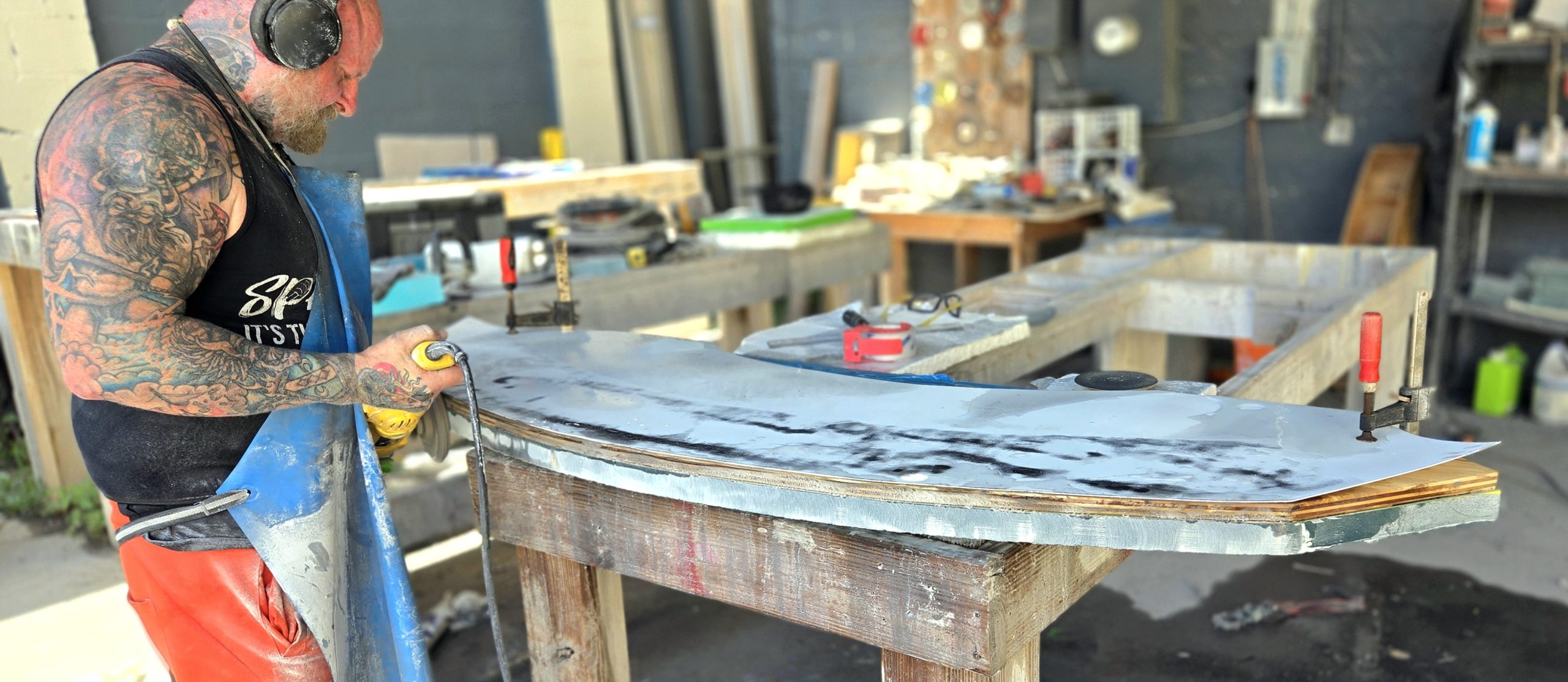
How do you finish the edges?
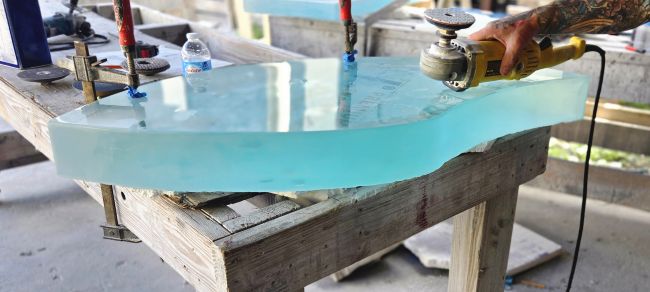
By hand, through six grits: 100, 200, 400, 800, 1600, and 5000. It’s the same logic as Italian lacquer or supercar paint, where each pass removes the scratches of the one before until the edge goes glassy and deep.
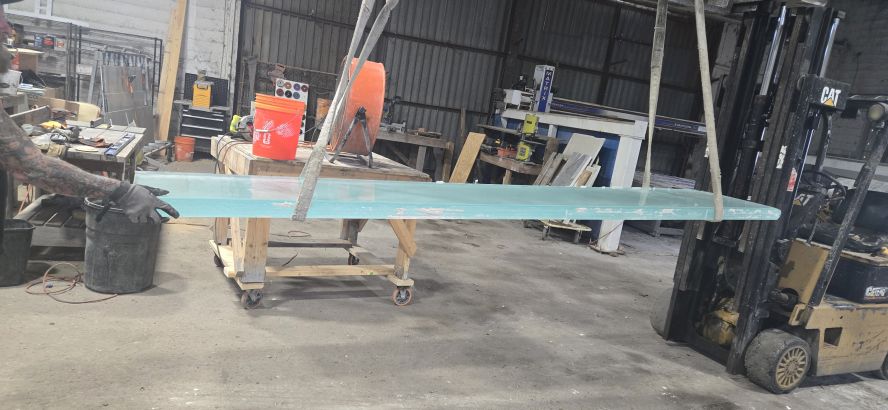
How do you get a 340-pound slab into someone’s kitchen?
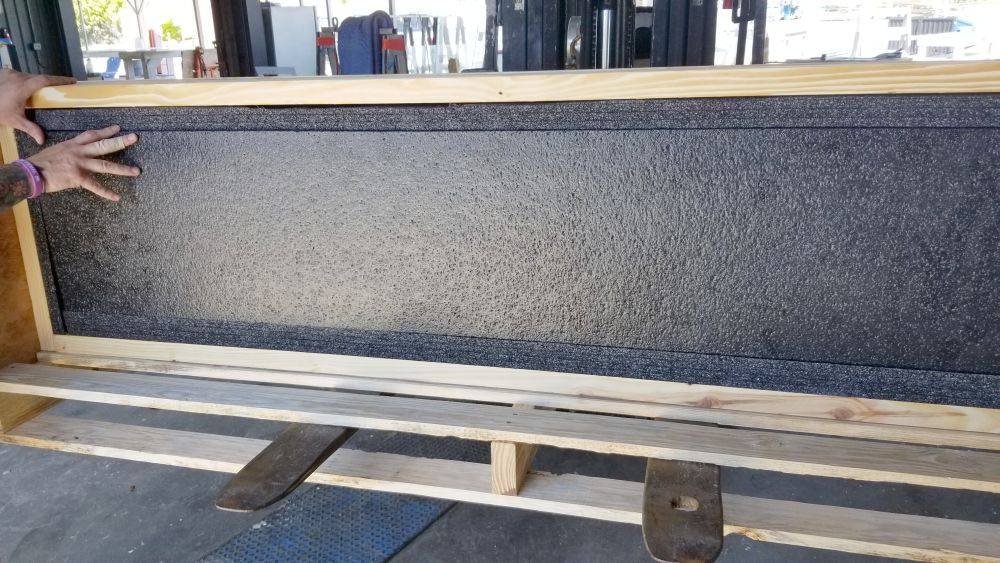
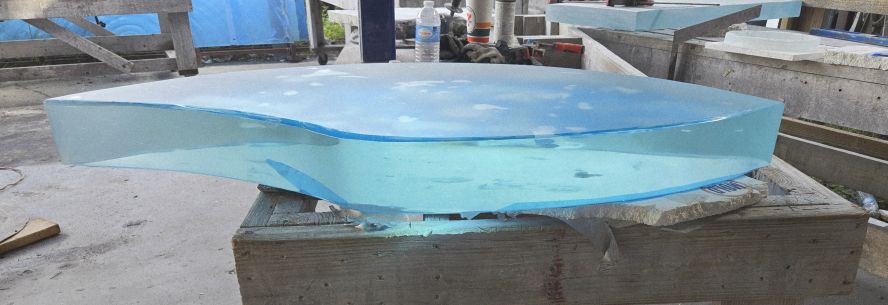
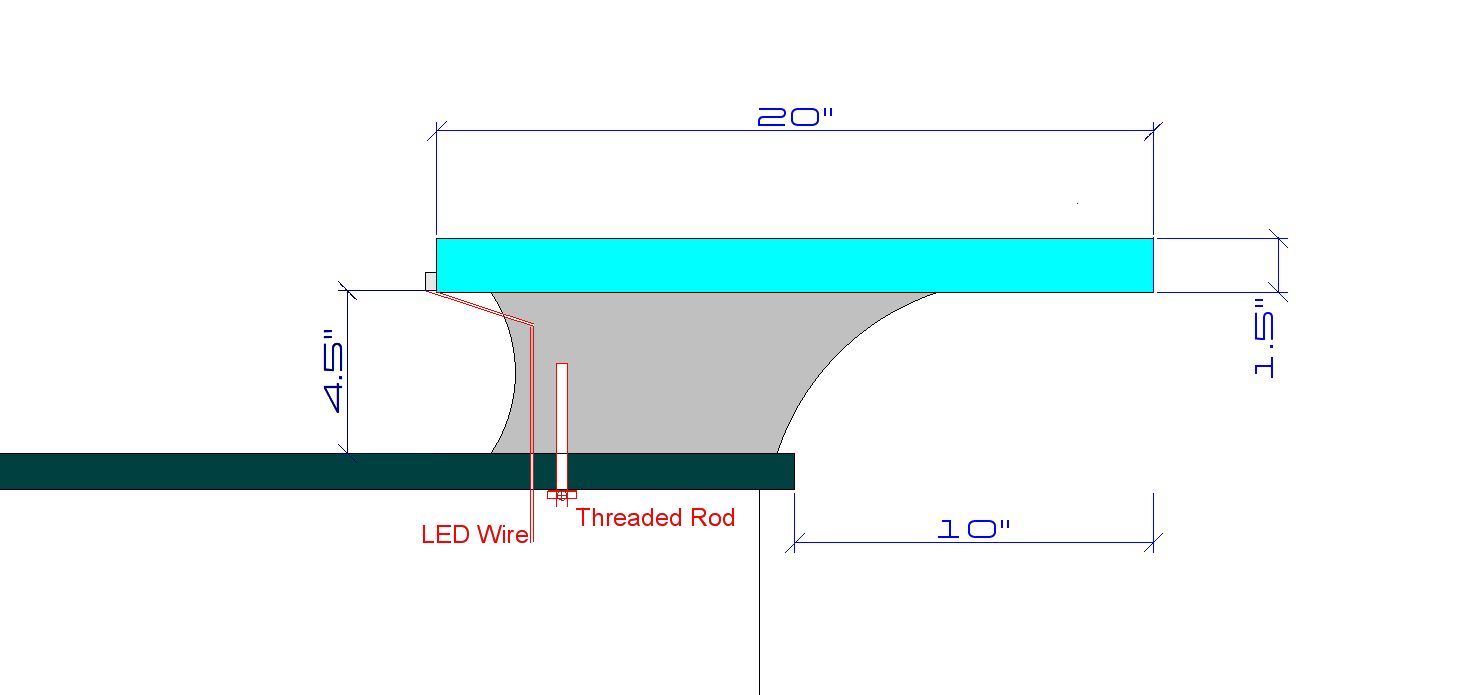
A 126″ × 20″ × 1.5″ bar top weighs about 340 pounds. It ships in a custom crate, and/or I install it myself. The high bar sits at 42 inches off the floor on just two 4.5-inch cantilever brackets, for bars up to 130 inches long. That’s the floating look.

What do you keep secret?
The formula. Think Coca-Cola: we’ll show you every step, the heat range, the grits, the finished result. The exact firing schedule stays in the shop. That’s 20-plus years of glass breakage you don’t get for free.
What project are you proudest of?
Our collaboration efforts. For example, the Acqua Cafe in West Palm Beach, Florida. The mindset of an owner of many restaurants who wants it just so is met with open arms. Come on in. Let’s do this together the way you prefer. It’s a sandbox. Unlimited design potential. Let it rip from your heart.
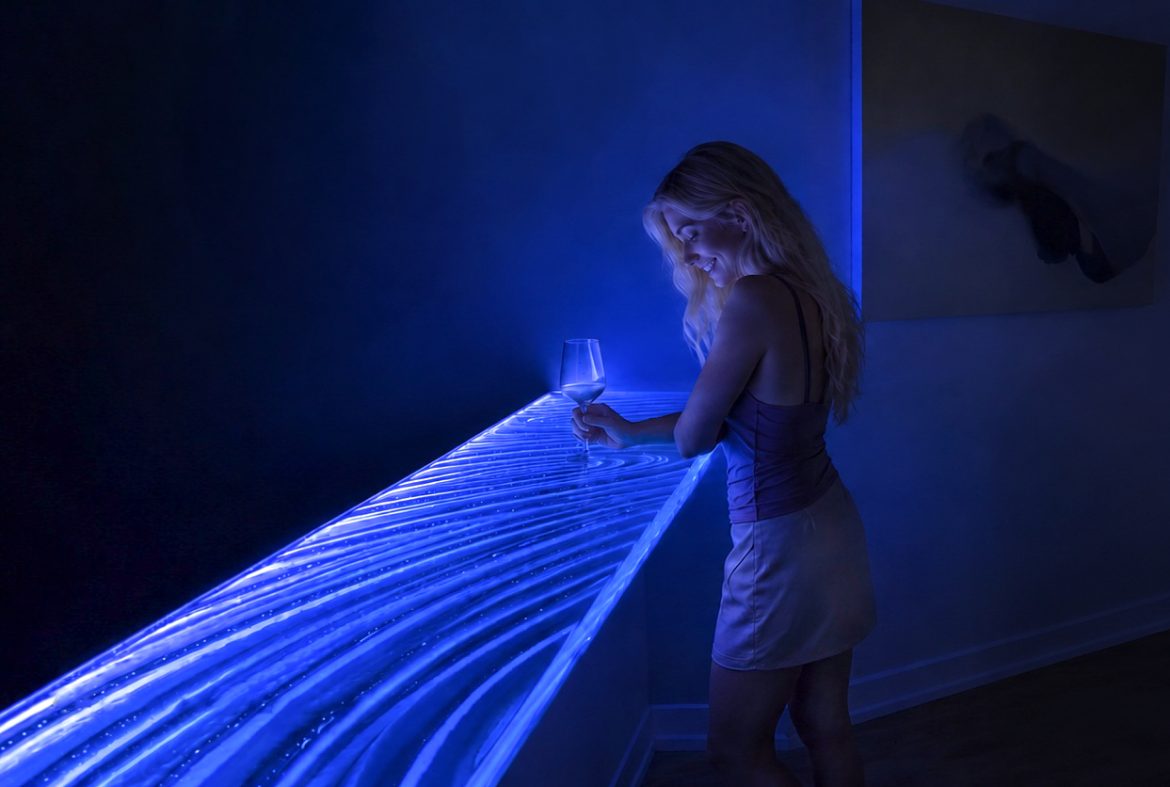
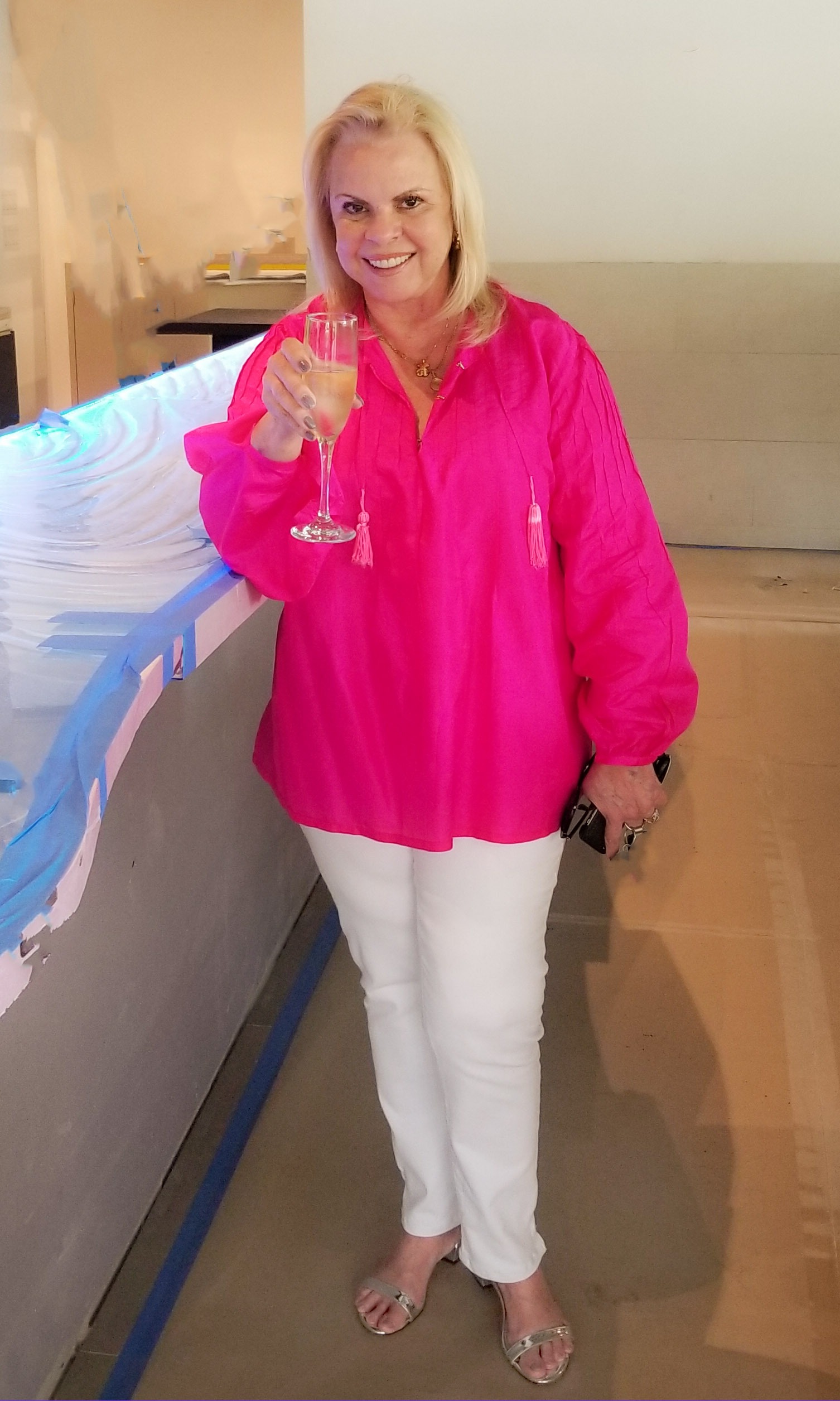
The result is exactly what she wanted, and the champagne bottle opening at the installation confirmed it. The upward glow on her fabulous bartender Leah shows the enhancement possible with the best lighting solution available for a commercial bar. Everybody looks better at my bars! Read the full Acqua Cafe case study.
What’s your favorite moment in the whole process?
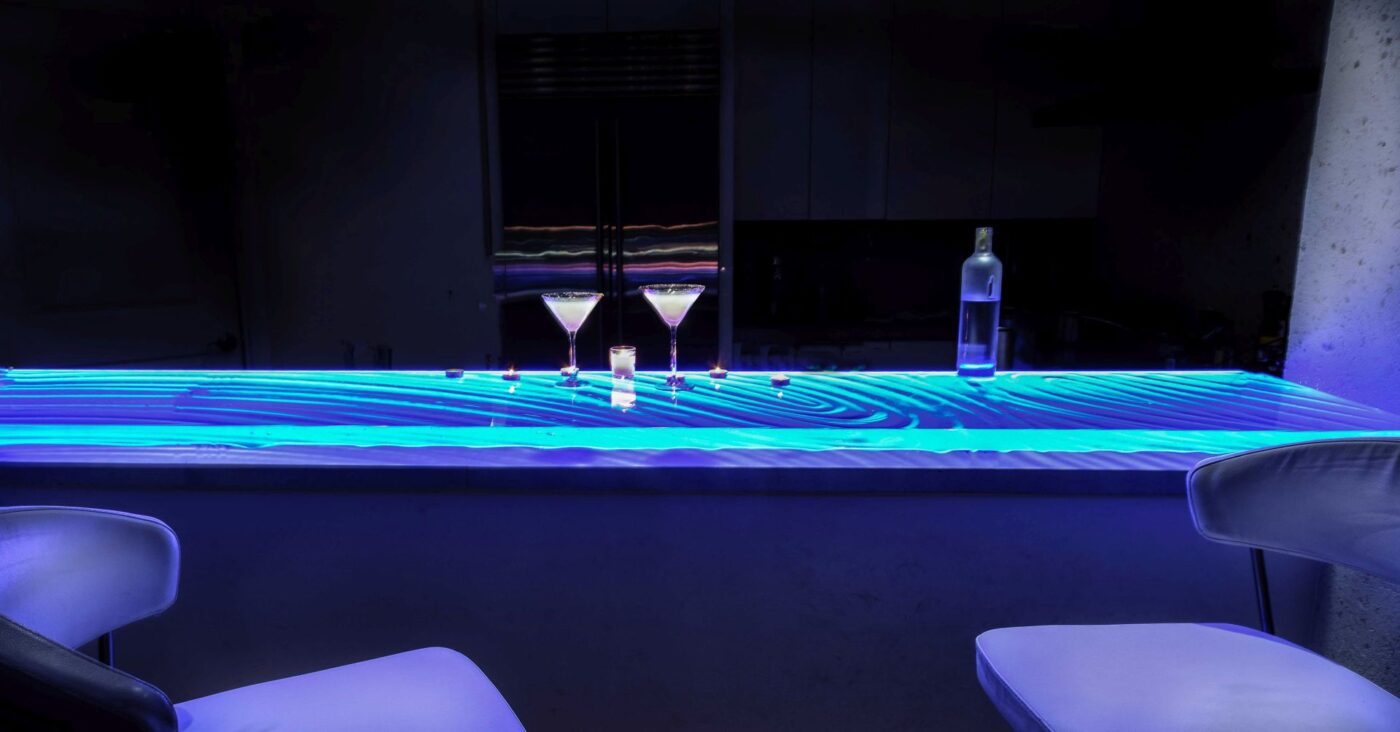
The face of the client on install evening, when the LEDs come on for the first time. They get to see what upward illumination does to their own faces and their spouse’s. Eight million colors, dimmed down low, and the room changes. Glass. Lights. Ambiance.
See it in our Mantoloking, NJ glass bar top and our LED glass countertops.
Frequently Asked Questions
How is a glass bar top made?
Low-iron glass is fused over a custom texture bed in a kiln at 1450°F, cooled slowly to remove internal stress, hand-polished through six grits (100 to 5000), and installed with integrated LED lighting.
How much does a glass bar top weigh?
About 19.5 pounds per square foot at 1.5 inches thick. A 126″ × 20″ × 1.5″ bar top weighs roughly 340 pounds.
How much does a glass high bar cost?
Most glass high bars installed in Florida come in under $10,000 all in, covering glass, brackets, lighting, delivery, and installation. See what a Ferrari kitchen really costs.
How long does a glass bar top take to make?
In-stock glass high bars can be installed in 2 weeks or less. Custom pieces scale with size and complexity.
Why is low-iron glass used for bar tops?
Iron in standard float glass gives thick glass a green tint. Low-iron glass removes it, so textures read clearly and LED colors stay true. 99.9% of our bar tops are low-iron glass. We feel strongly that the pure, ultra-clear glass lets the desired color dominate, without tainting from the glass’s own color. This client wanted a purple glass bar top. It was the ONLY spec that mattered to her.

How is a glass high bar mounted?
On two 4.5-inch-tall cantilever brackets at 42 inches above finished floor, for bars up to 130 inches long. Nothing else touches the glass, so it appears to float.
Glass. Lights. Ambiance.
We don’t have office hours. We have phones.
Reading next: Glass Countertop FAQ · LED Glass Countertops · Acqua Cafe Case Study

Jeff Downing
Founder, Lead Designer & Custom Glass Countertop Expert
Jeff Downing of Downing Designs, is a Tampa Florida–based design studio specializing in custom Glass Countertops, Glass Bar Tops, Glass Vanity tops and Glass Stair Treads. With decades of hands-on experience, Jeff is widely recognized for delivering textured glass surfaces integrated with LED lighting to create dazzling abstract statement pieces.
"Glass. Lights. Ambiance".