
Last updated on July 15th, 2026 at 07:20 am
Project Showcase · Mantoloking, New Jersey
Custom LED Glass Bar Top — Mantoloking, New Jersey
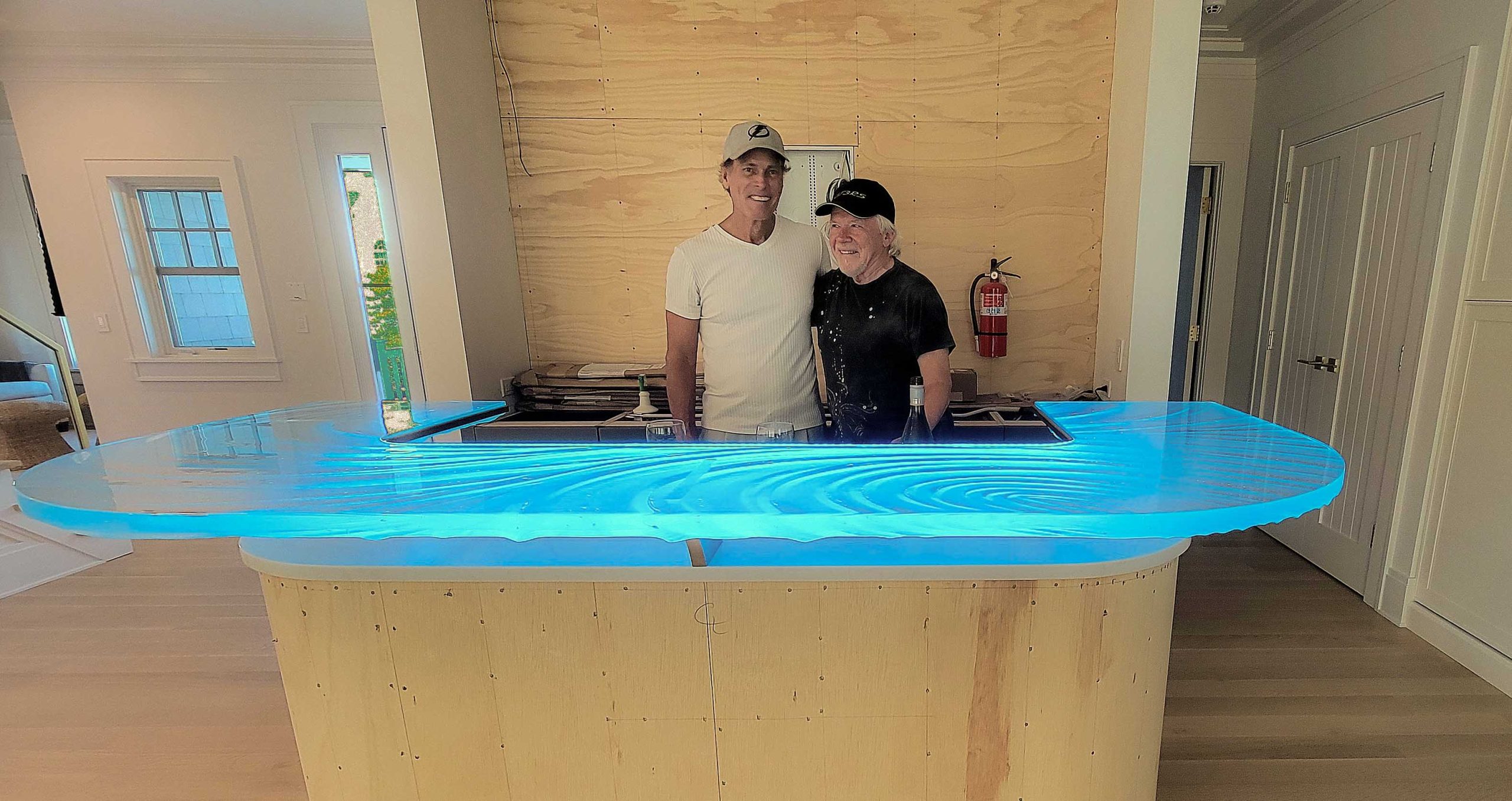
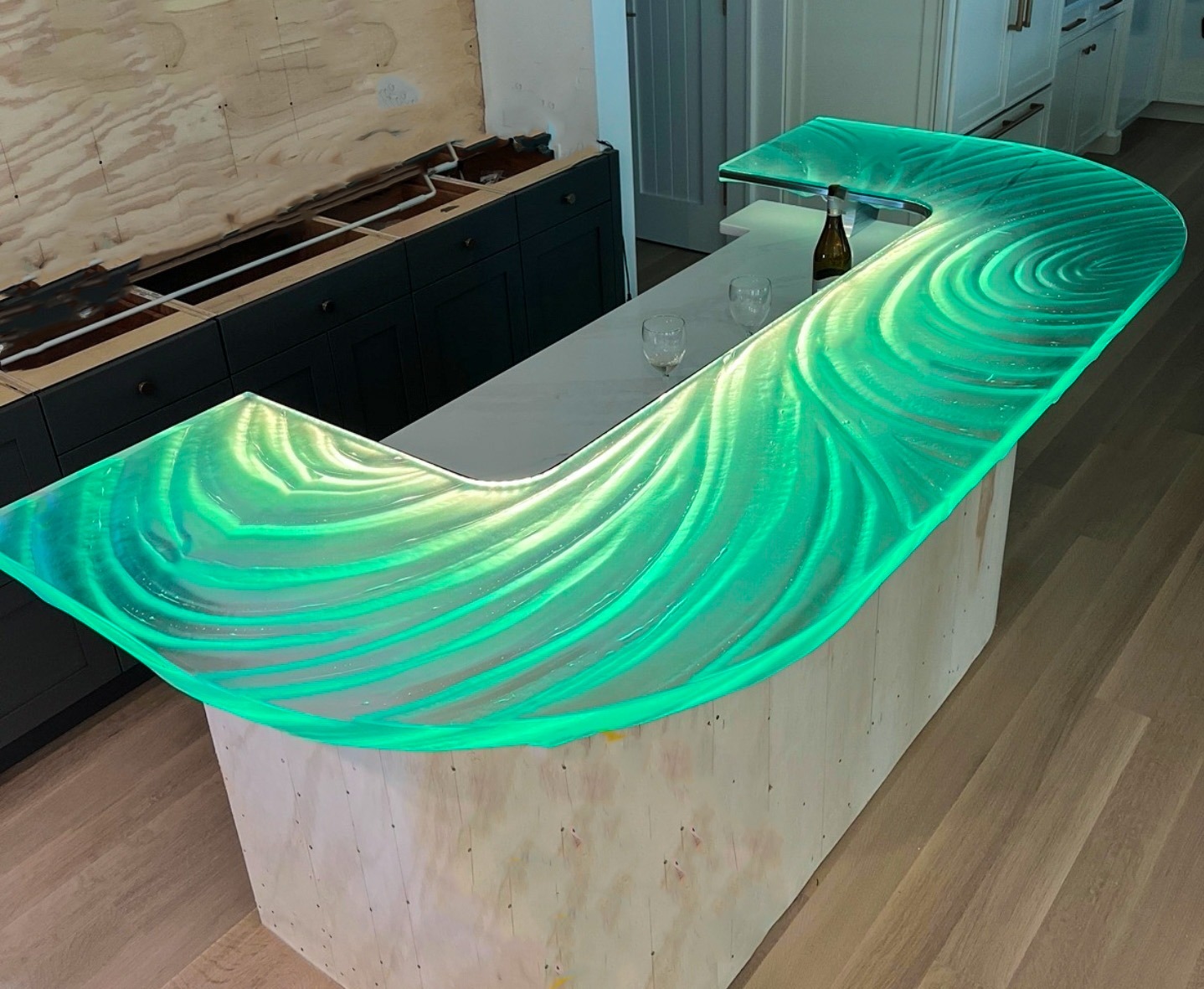
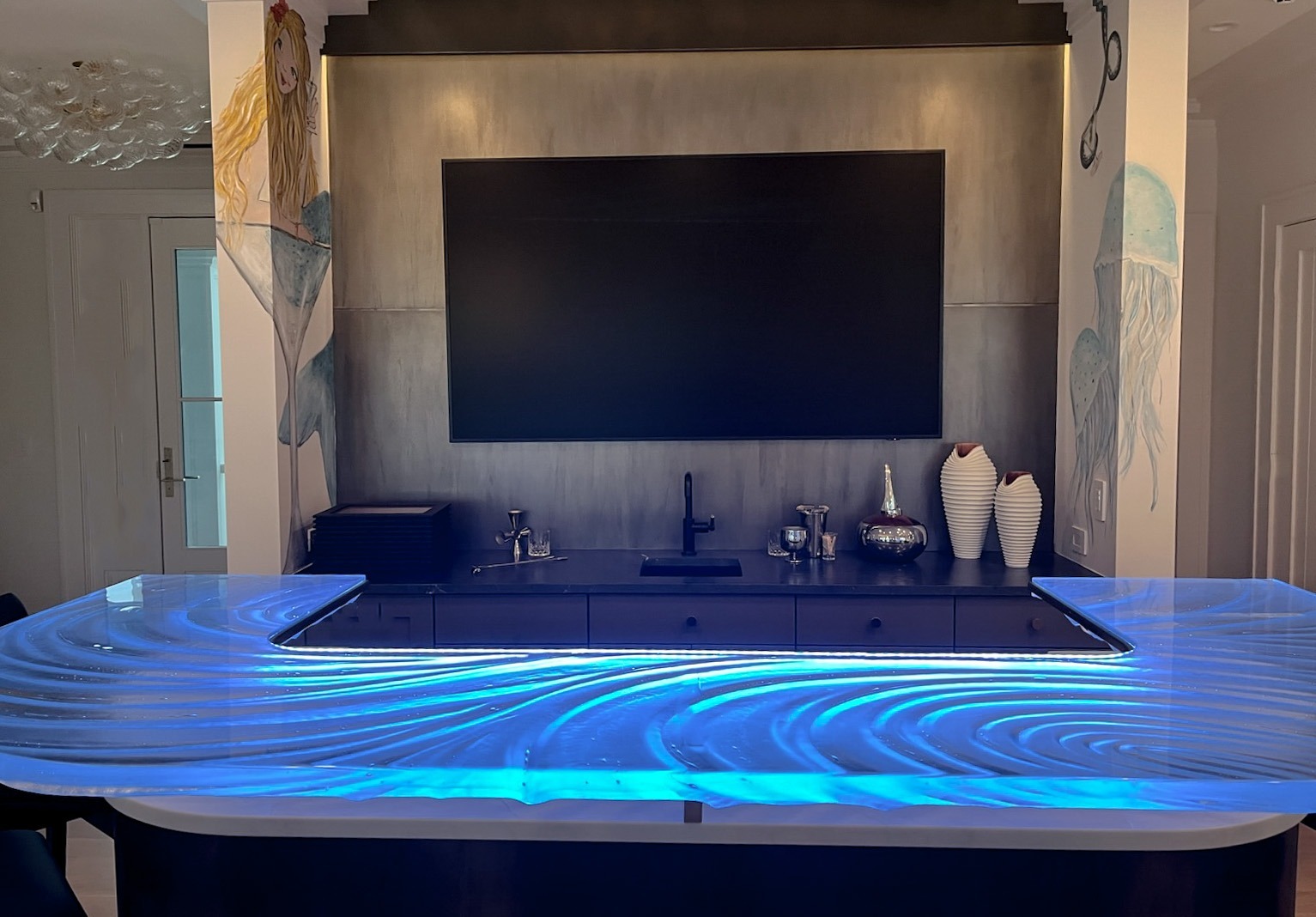
A C-shaped, hand-carved wave surface in 1.5" thick low-iron glass bar top. Cantilevered without a single through-drill. Illuminated by the Ambiance Machine™ dialed into one of 8,000,000 colors to set the ambiance.
Project Summary
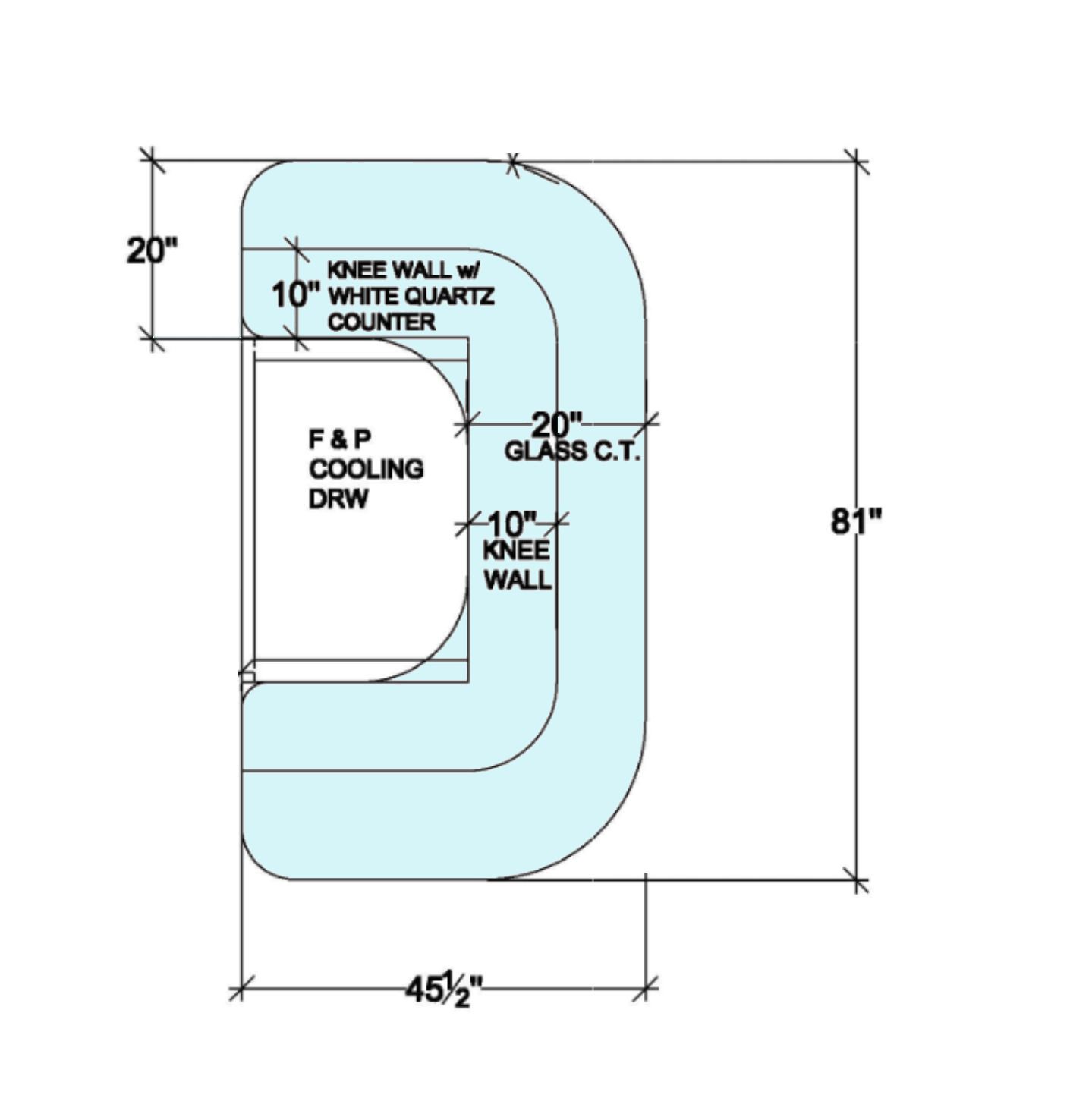
This project features a custom kiln-carved glass bar top fabricated and installed by Downing Designs, Tampa, FL for a private waterfront residence in Mantoloking, New Jersey. The surface is 1.5-inch thick low-iron glass in a C-shaped form measuring 81 inches long by 45.5 inches deep, with a hand-carved organic wave texture designed interactively with the client. Support is provided by three cantilevered brackets with zero through-drilling. The integrated Ambiance Machine™ RGB LED system illuminates the surface from the interior edge across 8 million color combinations. Total timeline: 8 weeks, design through installation.
Mantoloking is a barrier island community where the exterior architecture is treated as heritage — cedar shingles, measured proportions, decades of careful stewardship. The interiors of the newer homes here tell a different story. Nick and Diane's home is one of those: a preserved Flintstones exterior, a Jetsons interior, and at the center of it all, a glowing custom glass bar that makes the design tension work. Nick had visited the Downing Designs studio years before this project began. His opening text, when the time came, was direct: "I told you we were going to buy your glass." That kind of certainty produces a certain kind of result.
Project Specifications
| Project Type | Custom kiln-carved glass high bar top |
|---|---|
| Location | Private waterfront residence, Mantoloking, New Jersey |
| Form | C-shaped continuous surface |
| Dimensions | 81" long × 45.5" total depth × 1.5" thick. Weight = 359 lbs |
| Bar Surface Width | 20" (working depth) |
| Glass | 1.5" low-iron (ultra-clear) glass |
| Texture Profile | Hand-carved organic wave pattern — designed interactively with client and room flow |
| Edge Treatment | Hand-polished roundover at top and bottom edges for softness. |
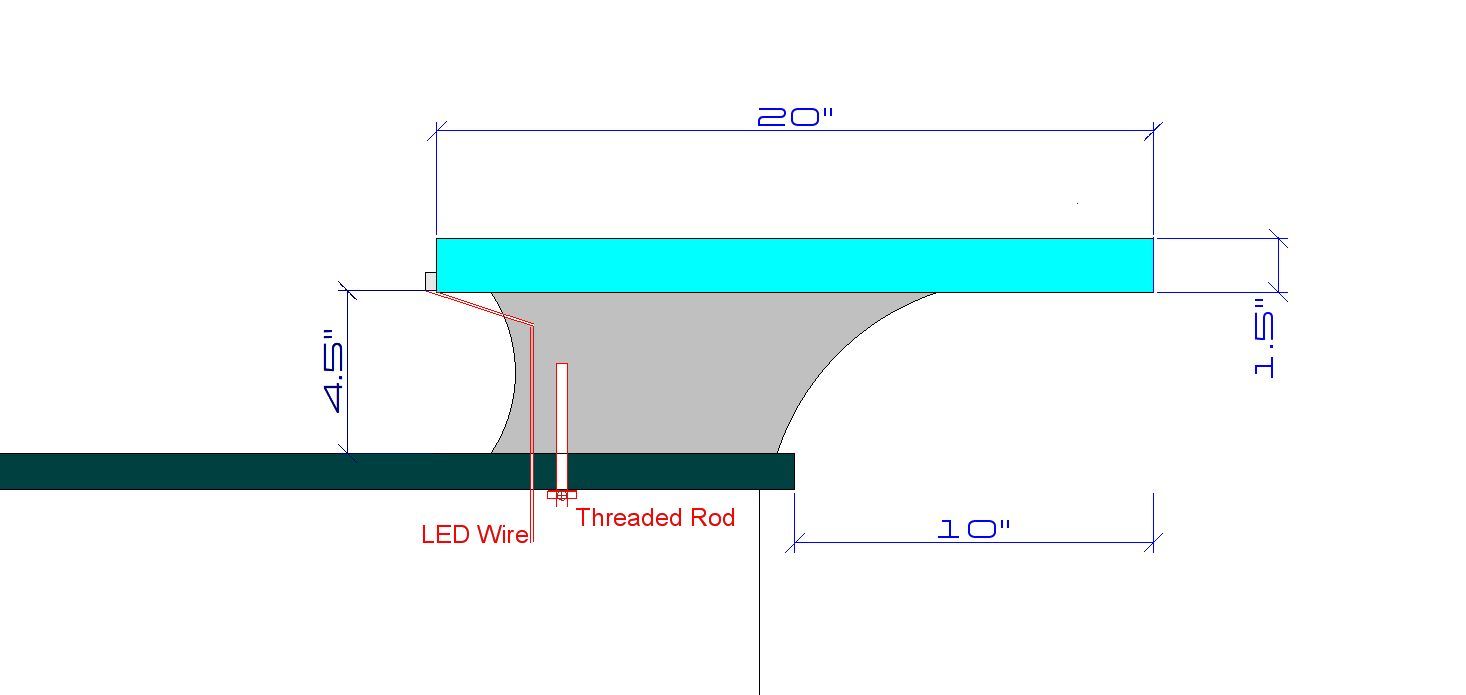
| Support Method | Three cantilevered brackets — zero through-drilling, no hardware through glass surface |
| Lighting System | Ambiance Machine™ RGB LED — interior edge, 8 million colors, 0–100% intensity, programmable scenes, photocell-capable (auto-triggers at dusk). Wiring embedded inside the supports |
| General Contractor | Steve Heinz |
| Fabricator | Downing Designs — Tampa, FL — sole craftsman |
| Timeline | 8 weeks, design through installation |
What does "kiln-carved" mean on a glass bar top?
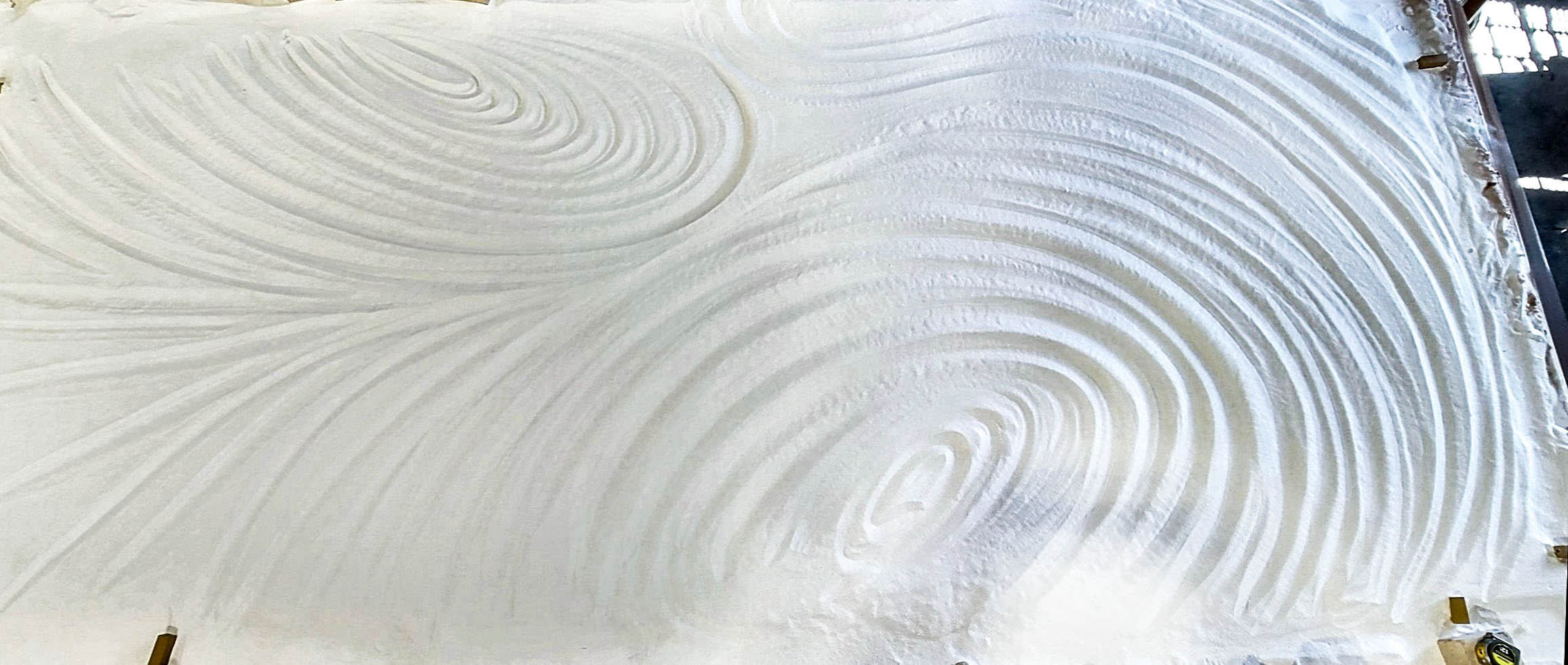
Direct answer: Kiln-carving is a process in which glass is fired in a kiln over a textured bed — in this case, a hand-worked sand surface — so the heat softens the glass and allows it to take on the precise contours of the texture beneath it. The result is a surface that is permanently part of the glass, not applied to it.
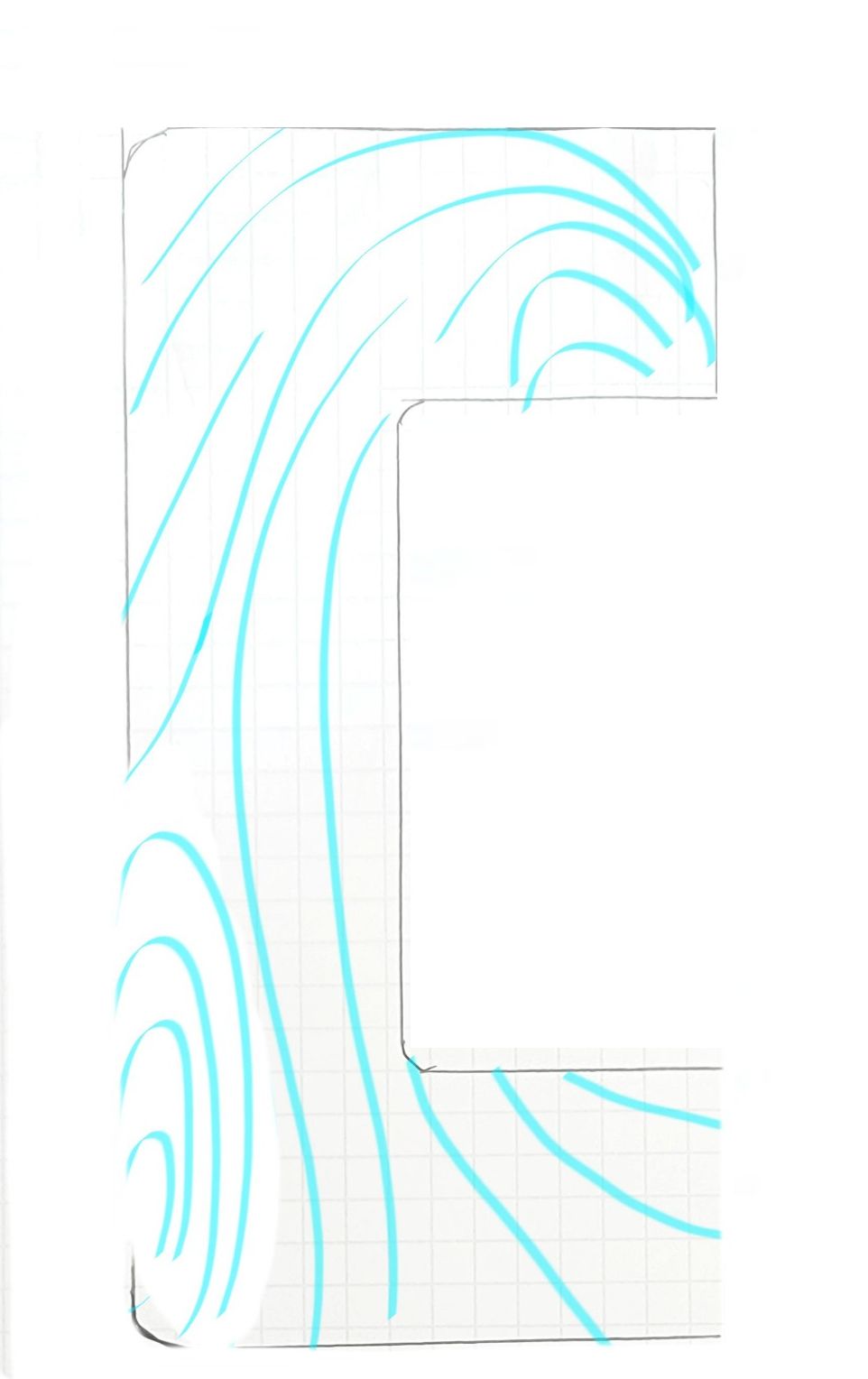
For the Mantoloking project, the wave texture was first developed as a scaled drawing — agreed upon by client and craftsman — with anchor points established so the hand-worked texture in the kiln bed would remain faithful to the design. The texture lives on the underside of the glass, which means the top surface stays smooth and cleanable while the visual depth lives below, amplified by the LED light source behind it.
How is a glass bar top this size supported without drilling through the glass?
Direct answer: Three cantilevered steel brackets, anchored into the bar structure below, carry the full load of the glass surface. The glass rests on the bracket faces and is bonded with ultra-clear silicone — no hardware passes through the glass at any point.
The installation sequence was designed to eliminate lateral risk: two motorcycle jacks raised the glass panel vertically over the bracket positions, silicone was applied to the bracket faces, and the jacks were lowered in concert — clean, controlled, no left-to-right movement possible. General contractor Steve Heinz had the site prepared so thoroughly that the placement was nearly effortless.
The absence of through-drilling is not a minor detail. Every hole drilled through a glass surface is a stress concentration point, an aesthetic intrusion, and a future maintenance issue. Cantilevered bracket support eliminates all three — and it is one of the most significant technical differences between Downing Designs and the broader market.
Ambiance Machine™
How does the LED lighting system work inside a kiln-carved glass bar top?
Direct answer: The Ambiance Machine™ RGB LED system mounts along the interior edge of the bar structure and fires light upward through the glass. The carved texture catches and scatters that light, creating a surface that appears to glow from within rather than be lit from below.
The system operates across 8 million color combinations at 0–100% intensity, with programmable scenes that shift throughout the day. It can also be connected to a photocell sensor that detects the shift in ambient light as the sun drops — the bar activates on its own schedule, at dusk, without any manual trigger. Wiring was concealed by routing it through a channel pre-drilled into one of the support brackets, making the electrical run invisible in the finished installation.
Low-iron glass contains virtually no green tint. Standard float glass carries a green cast that corrupts color fidelity at lower intensities. Low-iron glass transmits light without that interference — the blue reads as blue, not aqua, and white reads as white, not pale green.
How was the wave texture pattern developed for this project?
Direct answer: The texture was designed interactively — client and craftsman working from the bar's geometry and the room's flow to arrive at a pattern that felt native to the space rather than applied to it.
Once the bar base drawings were confirmed, overhangs and radii for both outer and inner curved edges were calculated. Multiple textural iterations were developed against that geometry. Nick selected the wave pattern. That drawing was then scaled and anchor-pointed so the hand-worked sand bed in the kiln matched it as faithfully as the process allows.
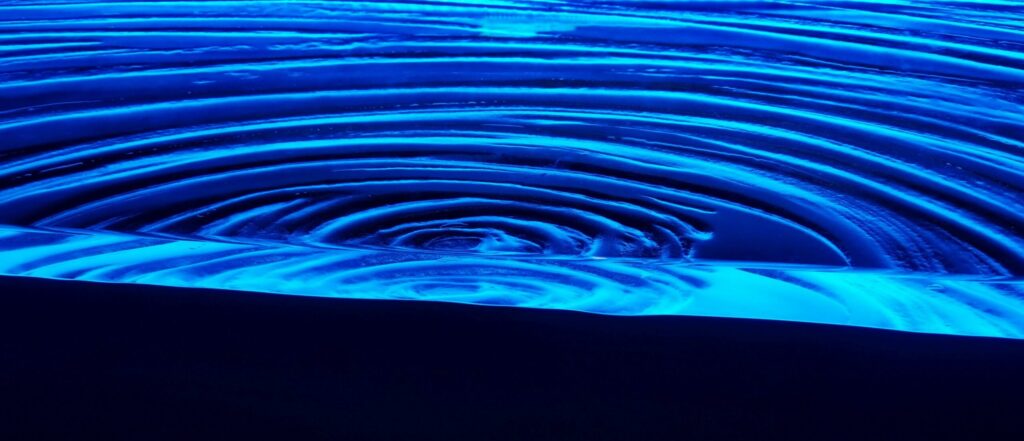
The finished surface reads differently under different light conditions: during the day, the texture is visible as depth and shadow. In the evening, with the Ambiance Machine™ active, it becomes the medium through which the light moves.

What is the recommended glass thickness and edge profile for a custom LED glass bar top?
Direct answer: The standard specification for a premium custom glass bar top is 1.5-inch thick glass finished with a flat edge and a roundover profile at both the top and bottom.
This combination provides structural durability and optimal clarity. For illuminated installations, dotless LED technology — the Ambiance Machine™ — is installed along the inner bartender-side edge, radiating a seamless, hotspot-free glow outward toward patrons. Thinner 1-inch glass lacks the edge profile depth to properly diffuse the light, and 2-inch glass adds unnecessary structural weight. Look at that edge. The refraction is amazing.
How does dotless LED technology prevent hotspots in glass bar tops?
Direct answer: Dotless LED technology eliminates the visible hotspots common in traditional strip lighting by using a continuous, high-density COB (Chip-on-Board) design that emits a seamless, unbroken line of light.
When installed along the bartender-side inner edge of a 1.5-inch glass bar top, this technology allows light to radiate smoothly and evenly outward toward patrons, creating a flawless glowing surface with no visible point sources.
What are the unsupported span limits and weight capacity for a 1.5-inch glass bar top?
Direct answer: Downing Designs engineers 1.5-inch thick custom glass bar tops to handle cantilevered spans up to 18 inches without requiring heavy corbels or under-counter brackets. The glass weighs approximately 19 lbs per square foot.
Because 1.5-inch glass possesses substantial inherent structural strength, it resists flexing under typical heavy usage. For longer spans, custom standoffs and structural hardware distribute weight across the bar structure while maintaining the clean, floating aesthetic of the glass surface. See our other Projects featuring cantilevered glass bar tops here.
What are the maintenance requirements for a kiln-carved glass bar top?
Direct answer: The surface requires no special treatment. The top surface is smooth polished glass — cleaning requires only a damp cloth or standard glass cleaner. No sealing, no waxing, no periodic treatment required.
Low-iron glass is non-porous, does not stain, and does not react with alcohol, citrus, or cleaning products the way stone and concrete surfaces can. The LED system is solid-state and maintenance-free under normal residential use. The silicone bond at the bracket faces is rated for long-term structural adhesion and requires no periodic re-application.
Start a Conversation
Every Downing Designs project begins with a drawing and a conversation. If you have a bar, a space, or an idea — that's enough to start.