
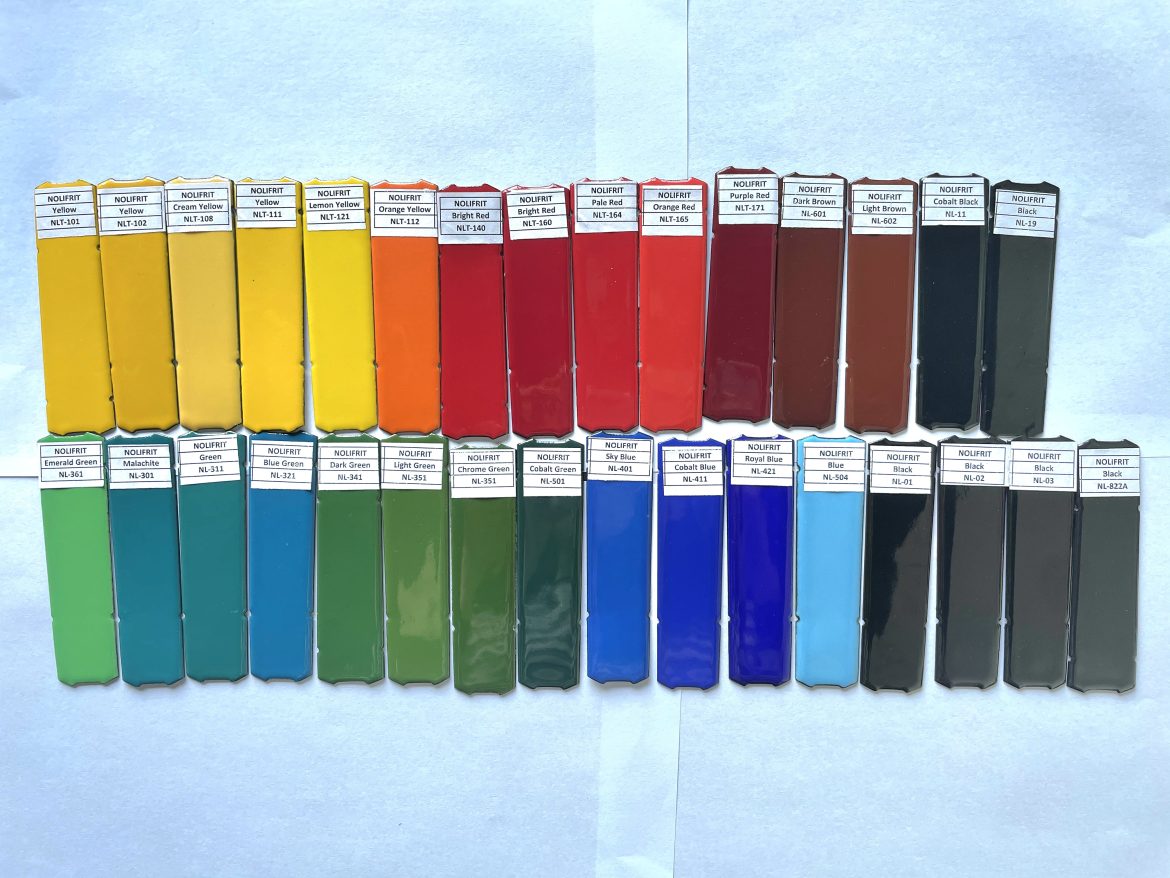
We Don’t Match Pyrolave. We Match YOUR Color.
Fired in Tampa. Shipped by ground. Your color, answered in days while the other quote is still crossing an ocean.
Thirty-Five Weeks? There’s Another Way.
Your color target. Our chemistry. Six kilns. A faster route from inspiration to fired reality.
Yesterday, a designer on Kauai contacted Downing Designs about a countertop originally envisioned in imported lava stone tile. Then came the lead time: 35-plus weeks.
Thirty-five weeks is a long time to hold up a design decision. It delays the project, complicates scheduling, and forces a designer to reconsider a finished vision. It is also roughly eight months of mortgage or rent on a property waiting for its remodel.
She started looking for an American alternative. She found us in Tampa, Florida.
That conversation raises a question worth asking: why should a client’s color vision be dictated by a manufacturer’s existing collection, or a project’s schedule by an overseas supply chain?
At Downing Designs, we approach custom-colored enamel glass differently. We don’t begin by asking which manufacturer’s color you want. We begin with yours.
The Powder Doesn’t Tell You the Color. The Fire Does.
Here’s something that surprises people who haven’t worked with fired enamel.
Many of the powders we start with look white or pale. Chalky, subdued, almost nothing like the finished color. Then they go into the kiln.
At high temperature, the chemistry changes. The materials react, develop color, and become a fired glassy surface. A pale powder can emerge as a saturated red, a warm amber, or a deep ocean green. The color of the unfired powder is not a reliable preview of the color after firing.
The fired sample is the evidence. Everything before it is a hypothesis.
That distinction matters when you’re matching a Benjamin Moore paint chip, a RAL or Pantone color, a fabric swatch, or a corporate identity. We put the material through the process that creates its final color.
That is why every powder is carefully measured, logged, labeled, and tested. Looking at the powder tells you nothing. Only the fire tells the truth.
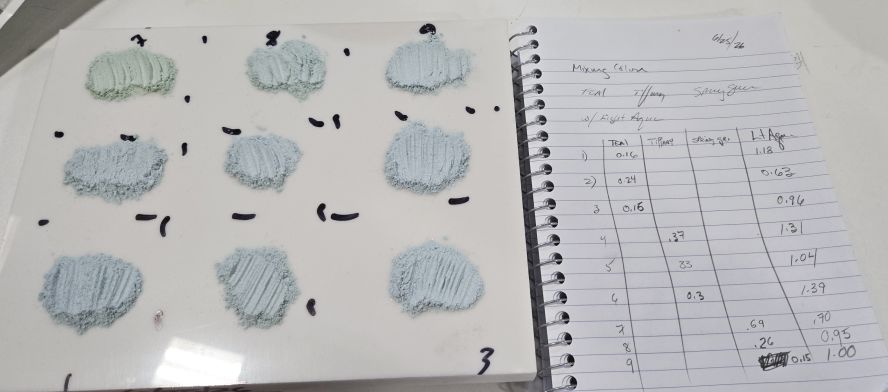
Powders pre-fire
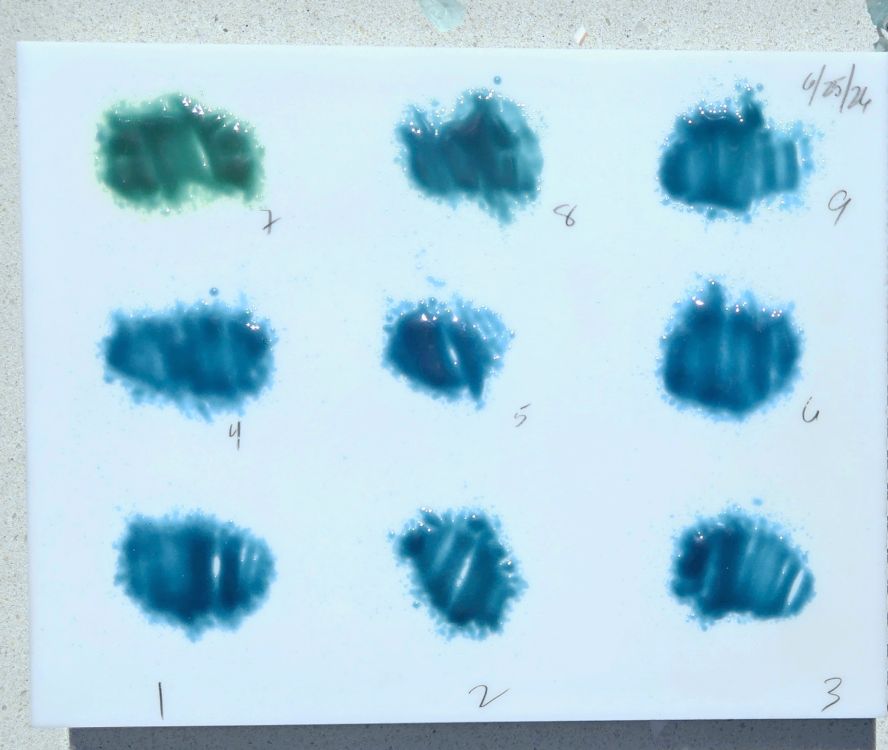
Glazed enamel samples post-fire
The Honest Part: Sometimes the Color Misses
Custom enamel isn’t a matter of mixing two colors and expecting the result to behave like paint. Colorants interact. One ingredient influences another. Sometimes the first sample disappoints.
Good. Now we know something we didn’t know before.
The question isn’t whether every first attempt is perfect. The question is how quickly and intelligently we learn from each firing. We compare the fired result to your target, adjust the formulation or firing approach, and test again. Then again, if necessary. Observation, adjustment, comparison, iteration.
We’re not selling the fantasy that chemistry never surprises us. We’re selling the ability to respond when it does.
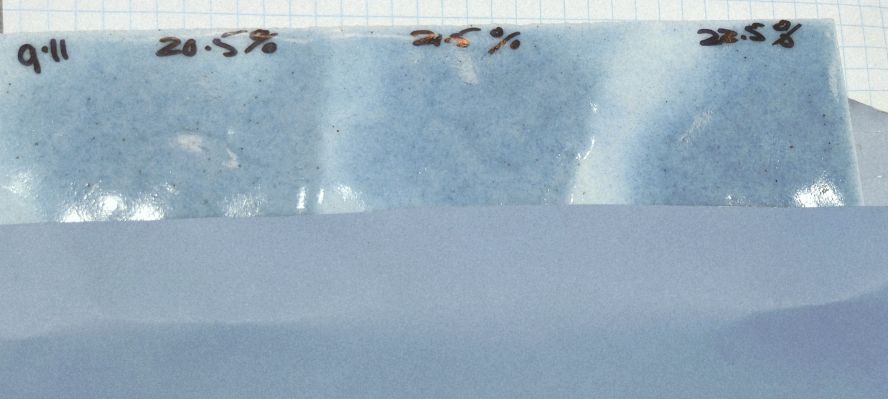
Swing and a miss (but close)
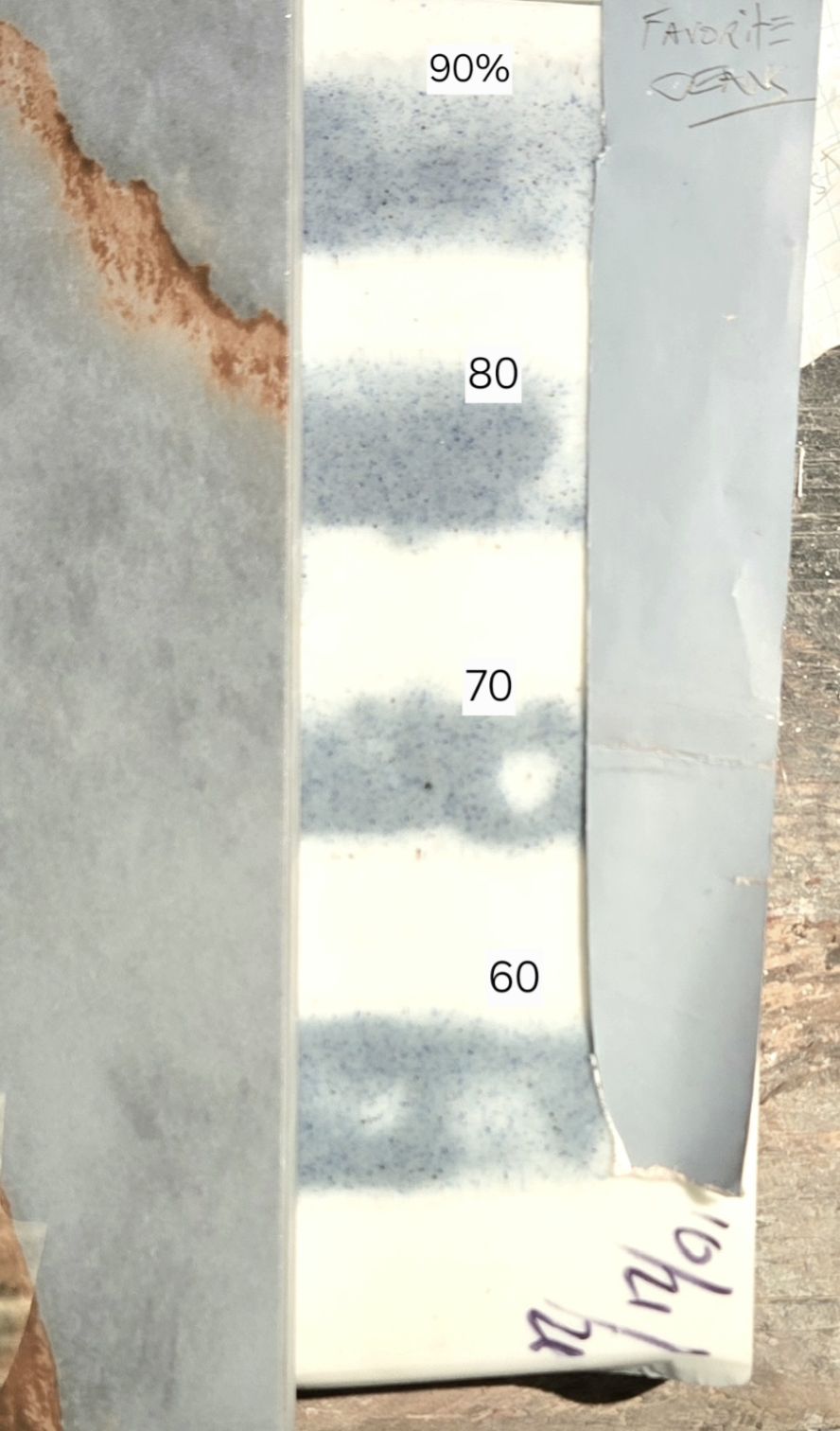
Glazed enamel samples post-fire (getting real close)
Six Kilns. One Small Kiln With a Very Specific Job.
Downing Designs operates six kilns. When we’re developing a custom color, we don’t load a production kiln and wait out a full production cycle. We reach for the smallest kiln.
Color development runs on fast feedback. A small test batch lets us heat, fire, cool, inspect, and compare without the time and material a larger load demands. We can make a targeted adjustment and run the next test. Our R&D kilns cycle twice a day: first thing in the morning and last thing before we leave in the afternoon.
This is how we triangulate toward your color. The first firing gives us a result. The second tests what we learned. Each firing narrows the gap between the target and the actual color. The number of rounds depends on the target, the chemistry, and how closely the fired material needs to match the reference.
Keep the experiments small. Keep the feedback fast. Keep moving toward the target.
The kiln does the firing. Our artists do the evaluating, deciding, and refining.
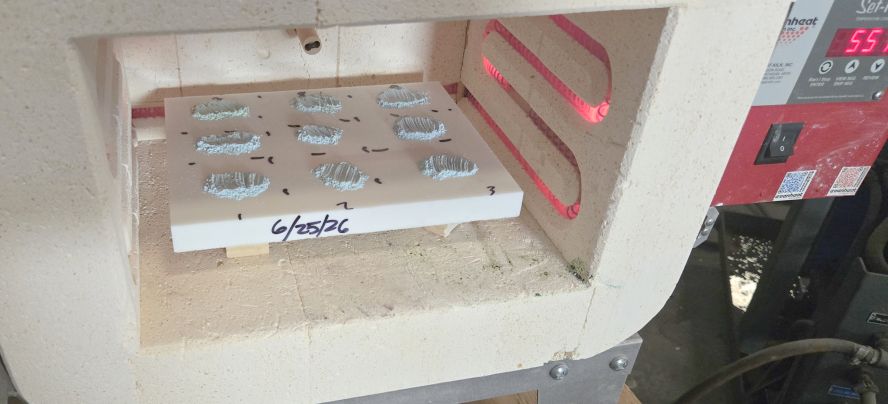
Swing and a miss (but close)
The Standard Is Your Color
Most suppliers hand you a catalog and ask you to choose. We hand the decision back to you.
Your target is the standard. A paint chip from the great room. A swatch of linen. A photograph of the sky over Hanalei at 6:40 p.m. Bring it. We fire until the glass agrees with it.
The color you’ve been looking for may not be in a catalog. It may be in your paint deck, your fabric library, your client’s brand guidelines, or a photograph you’ve saved for months. Bring us the reference. We’ll bring the chemistry, the kilns, the experience, and the determination to see what we can make of it.
Downing Designs creates custom glazed enamel glass surfaces for distinctive residential and commercial interiors, from kitchen islands and vanity tops to restaurant tables and hospitality bars. We develop color around the project rather than asking the project to conform to an existing palette.
We don’t match Pyrolave. We match YOUR color.
Two Different Approaches
Pyrolave is an established European maker with its own database of enamel over basalt lava stone. The palette, the material, and the production process belong to its product line. The fine crackle visible on many of their samples is typically a COE (thermal expansion) mismatch that cracks the surface after the maximum process temperature is reached. Some designers like that look. Some don’t. Ink or marker settles into those cracks and is very hard to remove.
Downing Designs takes a different approach: custom-colored enamel on glass, developed around the client’s requested color. We’re not trying to reproduce anyone’s catalog. We’re asking for your target.
It might be a paint chip from the great room. A textile sample from the furniture package. A brand color that has to carry through a hospitality project. A particular green that makes the whole design work. We evaluate the reference, develop fired samples, and work toward an agreed color.
Will every target be achievable in exactly the same way? No. Enamel chemistry has constraints, and a fired glass surface doesn’t behave like paint, fabric, or stone. Some colors are harder than others, and any visual comparison depends on lighting, gloss, texture, and viewing conditions.
That’s why the sample matters. Your color is the goal. The fired sample tells us how close we’ve come.
Ground, Not Air Freight
Overseas tile means ocean lanes, customs, air freight, and a calendar measured in seasons.
Downing Designs means one Tampa studio, one fire schedule, and a truck. Fewer hands. Fewer surprises. Samples that look like the final piece because they were made by the people making the final piece.
Start With the Sample
Don’t commit to an imported palette and a long wait before you find out whether the color works. Start with the color you actually want.
- Send us your target: chip, swatch, or photo.
- We talk feasibility and scope your color development sample.
- We fire test chips in the quick-turn kiln and close in on your color.
- You approve the fired sample.
- We fabricate the full countertop, island, bar, or table, finish it, and ship by ground.
Once the color is approved in your hand, the big decision gets easy.
Frequently Asked Questions
Can Downing Designs match a specific paint, fabric, or brand color?
Yes. Send a paint chip (Benjamin Moore, RAL, Pantone, or any other system), a fabric swatch, a brand guideline, or a photograph. The physical or digital reference becomes the standard, and we fire samples against it until the color is agreed. Because gloss, texture, and lighting all change how a color reads, we judge the match on the fired glass itself.
Why does color-matching enamel take more than one firing?
Enamel powders often look white or pale until they are fired, and their colorants can interact with each other at high temperature. The first fired sample shows what the chemistry actually does. We compare it to your target, adjust, and fire again. Most custom colors take more than one round.
How fast can you develop a custom color?
Our R&D kilns run two test firings a day, so feedback arrives in hours, not weeks. The total number of rounds depends on the target, the chemistry, and how tightly the fired color must match the reference.
Why use the smallest kiln for color development?
A small kiln heats and cools quickly, uses little material, and lets us run a targeted adjustment right after reading the last result. That fast loop is what lets us triangulate on your color without tying up a production load.
Is a custom-matched enamel glass countertop faster than imported lava stone tile?
Imported lava stone tile can carry lead times of 35 weeks or more, as a Kauai designer recently learned. Downing Designs develops the color, fabricates the piece, and ships from one studio in Tampa, Florida, with no overseas production queue and no air freight.
Will you match Pyrolave colors?
We don’t use Pyrolave’s catalog as our standard. Your color target is the standard. If a Pyrolave sample is your reference, send it, and we’ll develop fired enamel on glass toward the color you want from it.
Can every color be matched exactly?
No, and we say so up front. Enamel on glass has chemical limits, and some colors are harder than others. The fired sample shows how close we can get before you commit to the full piece.
What kinds of projects do you build?
Custom glazed enamel glass surfaces for residential and commercial interiors: kitchen islands, countertops, vanity tops, restaurant tables, and hospitality bars.
Do you ship outside Florida?
Yes. Downing Designs fabricates in Tampa and ships (fully insured) nationwide, with international delivery available. Call 813.784.5211 to talk through your location and timeline.
Glass. Lights. Ambiance.
We don’t have office hours. We have phones.
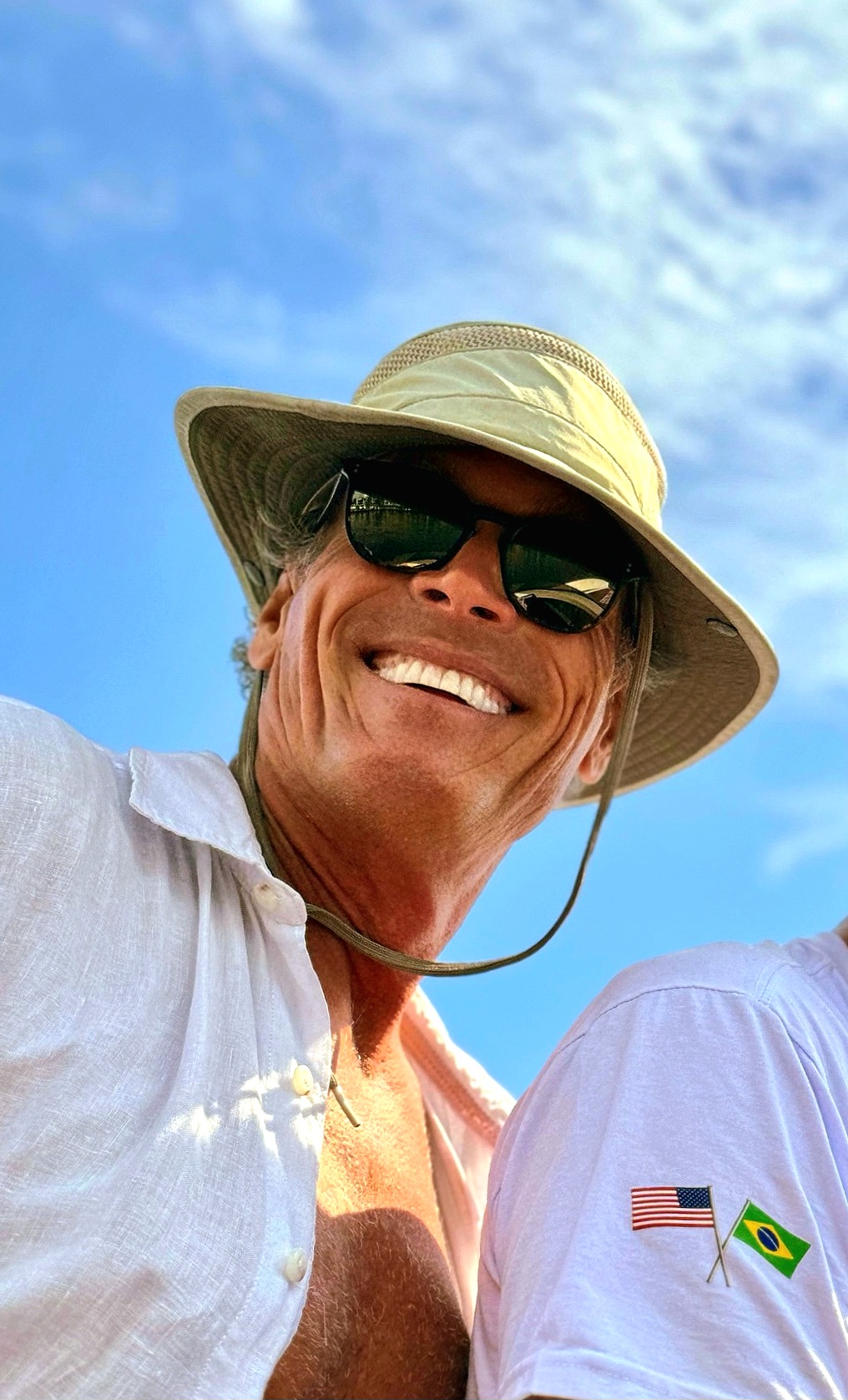
Jeff Downing
Founder, Lead Designer & Custom Glass Countertop Expert
Jeff Downing of Downing Designs, is a Tampa Florida–based design studio specializing in custom Glass Countertops, Glass Bar Tops, Glass Vanity tops and Glass Stair Treads. With decades of hands-on experience, Jeff is widely recognized for delivering textured glass surfaces integrated with LED lighting to create dazzling abstract statement pieces.
"Glass. Lights. Ambiance".