
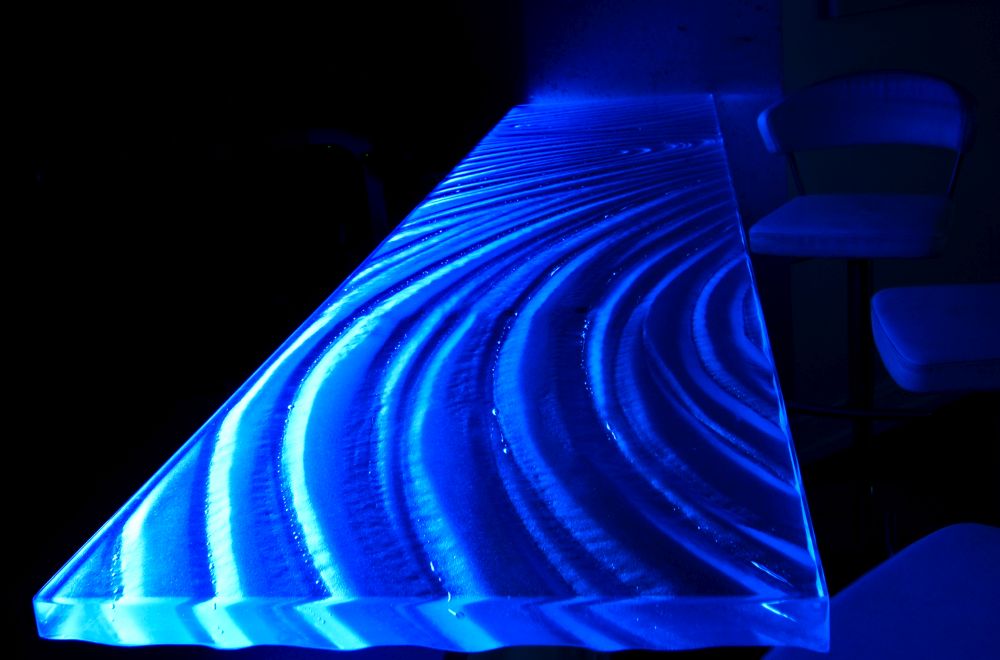
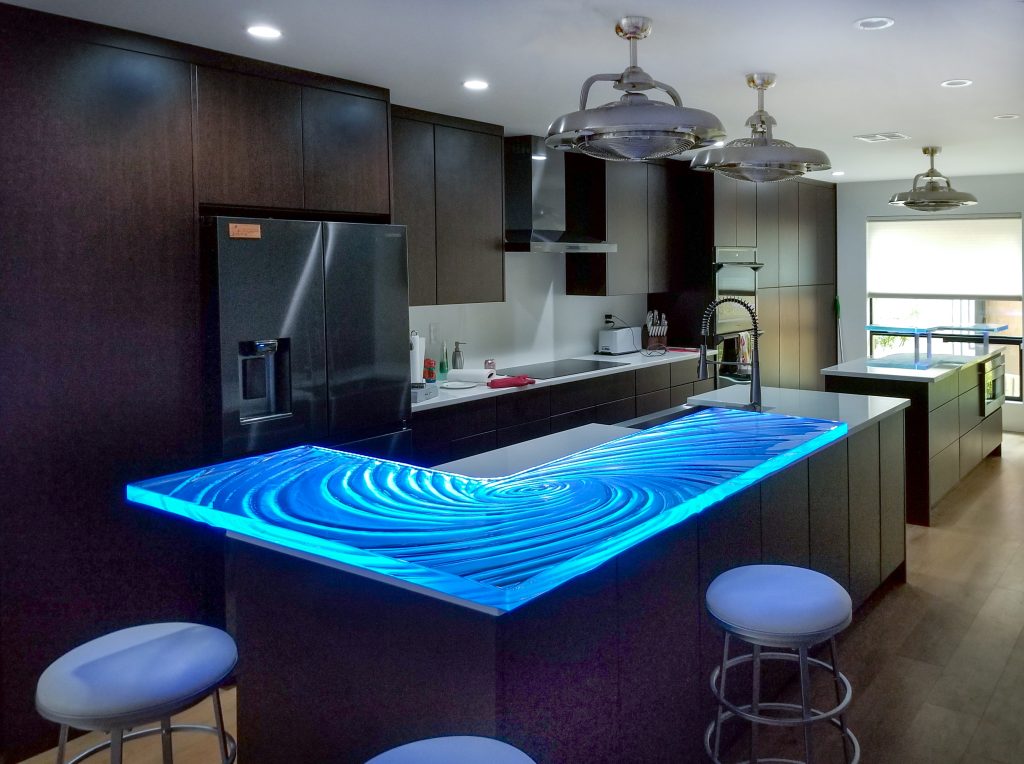
Texture is something you can carve into glass. Texture is also something that becomes dramatic when properly revealed with light. A hand-carved surface can hold peaks and valleys a half-inch deep, but without the right lighting, none of it seems dramatic to the eye — especially at 9:30pm on a Friday night when you're entertaining guests. The mechanism is simple: light irradiating your glass bar top from a single direction casts shadows across every peak and valley, and shadow contrasted with luminous peaks is what the human eye interprets as depth. It can be very dramatic. Light irradiating the same peaks and valleys from every direction at once fills in those same shadows, and without shadow, texture becomes washed out instead of dramatic relief.
That word — relief — is the whole standard. Not glow. Not brightness. Relief: the physical, dimensional, carved-and-shadowed quality that separates a surface with real depth from a surface that's just lit up. If you remember one phrase from this page, make it this one: demand relief.
You've Seen This Every Sunset of Your Life
You don't need a lighting designer to understand this. You've watched it happen for free, on every clear evening of your life.
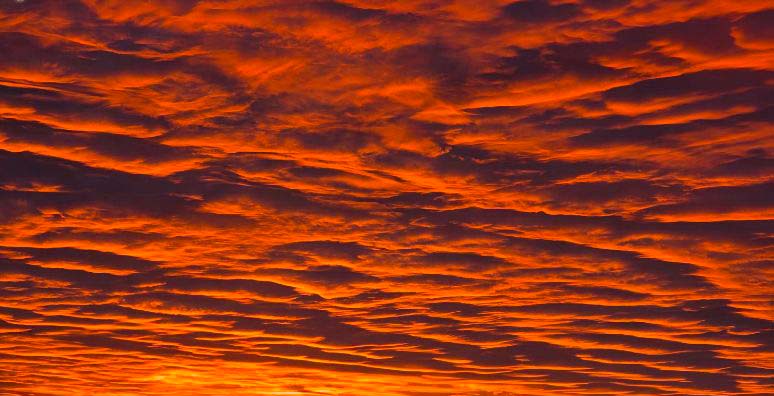
At sunrise and sunset, the sun sits low on the horizon — a single point source of light, traveling nearly parallel to the ground. Look at any cloud lit that way and you'll see it instantly: the side facing the sun blazes orange and gold. The side facing away falls into deep shadow. That contrast — bright face, dark back, on the very same cloud — is what gives it a sense of volume and shape instead of just being a gray smear across the sky.
Nobody built a second sun and hung it on the other side of the sky to light clouds evenly from all directions. One direction, one source, is what turns a flat cloud bank into something that looks sculpted.
Two More Fields That Already Figured This Out
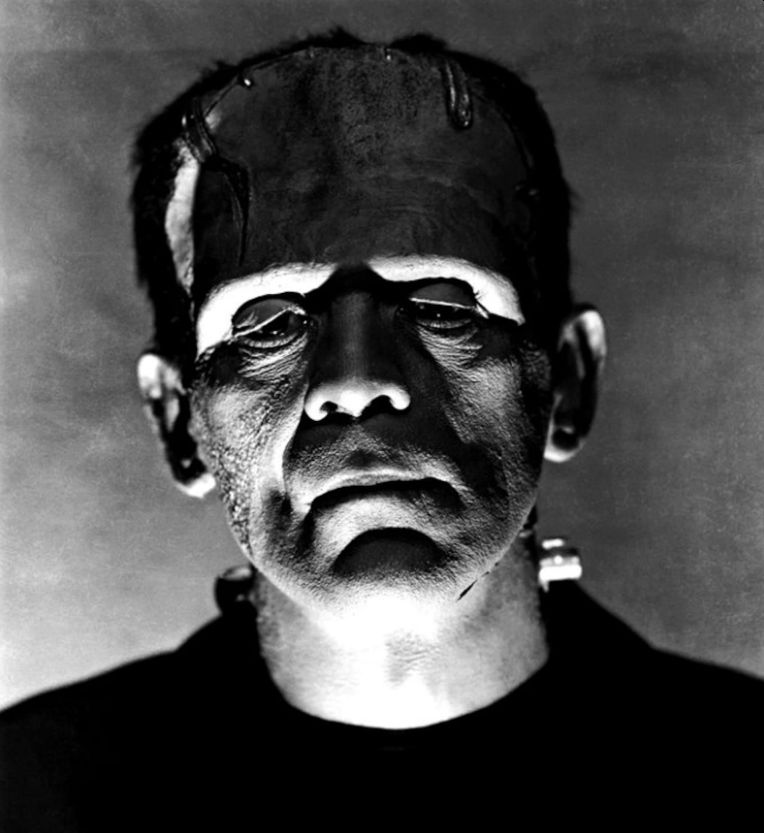
Portrait photographers — and filmmakers, especially in film noir — understand the same principle from the opposite direction. Large softboxes and diffused studio lighting are used specifically because diffuse light minimizes wrinkles, pores, and skin texture. The same quality that flatters a face by hiding its texture will flatten a carved glass surface by hiding its texture, too. Flattering skin and flattening glass are the same optical event. More than one Hollywood actress lamented the arrival of HDTV, because suddenly there was nowhere left to hide.
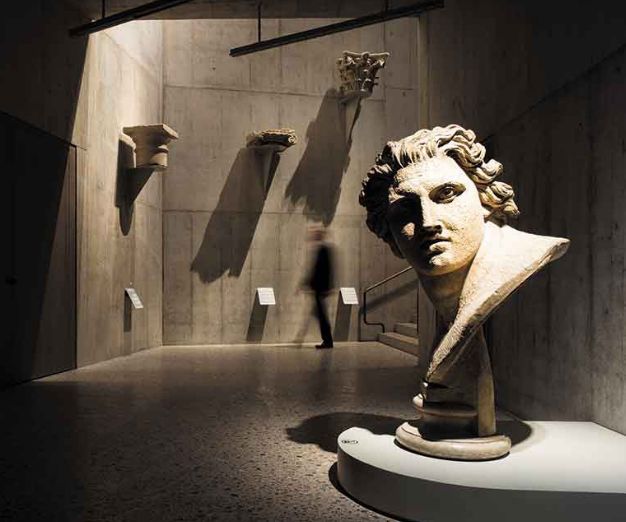
Museum lighting designers rarely illuminate carved stone, sculpture, or textured artwork equally from every direction. Instead, they use carefully controlled directional lighting, because shadow is what allows the eye to perceive relief in the first place. Walk through any well-lit sculpture gallery and you'll notice the light is coming from a deliberate angle, not flooding the piece from all sides.
That's the identical principle behind a hand-carved glass bar top lit from a single rear-fired LED source instead of surrounded on all sides. One direction in, real depth out — the same physics that turns a sunset into something you stop and watch, instead of something you just notice is bright.
The Physics of Light on Textured Glass Bar Tops
Every hand-textured surface — glass, stone, wood, plaster — is a landscape of high points and low points. What makes that landscape visible isn't the texture itself. It's the shadow the texture throws when light hits it from an angle. Remove the shadow and the peaks and valleys are still physically there, but the eye can no longer read them. The surface goes flat, even though nothing about the material has changed.
This is why lighting direction matters as much as lighting intensity. A surface can be brightly lit — even lit from six directions at once — and still look flat. More light angles is not more better. More angles just means more ways to cancel out the one thing that was making the texture look like something.
Raking Light vs. Diffuse Light
Raking light strikes a textured surface at a low, near-parallel angle from one direction. Every peak throws a shadow; every valley holds one. The result is a surface that looks carved, dimensional, and alive as the eye — or the viewing angle — moves across it.
Diffuse, omnidirectional light strikes a textured surface from multiple angles at once, filling in the shadows that raking light creates. The peaks and valleys are still physically there, but the eye can no longer see them. The surface reads as flat and uniformly bright — a glow, not a relief.
Lighting from multiple directions will generally make a textured surface appear flatter, because light arriving from opposing angles fills in the very shadows that create the perception of depth. This isn't a matter of taste or brand philosophy — it's how the human visual system reads relief.
What This Looks Like on Your Glass Bar Top
Single-direction lighting
One LED source, aimed from one side only, low and raking across the surface. Every peak in the hand-carved texture throws a shadow directly behind it; every valley holds one. Result: high contrast, deep, readable relief — the eye can trace the texture across the whole surface.
Omnidirectional lighting
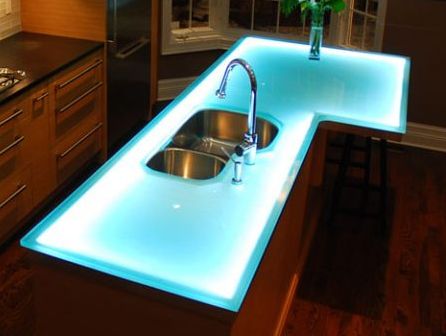
LED sources aimed inward from all four sides at once, meeting in the middle. The shadow that one light source would cast behind a peak gets filled in by the light source on the opposite side. Result: low contrast, shadows erased, the same physical texture reads as a flat, uniform glow.
How This Applies to a Glass Bar Top
One lighting approach seen across the industry — including in projects published by fabricators like CBD Glass Studios — raises the glass on a perimeter structure and lights it from underneath with LED aimed up and outward from multiple sides at once. The optical result follows directly from the principle above: texture that would otherwise read as deep, hand-carved relief tends to compress into a soft, even glow, regardless of how much physical texture was carved into the piece to begin with. More angles, more wattage, less relief.
At Downing Designs, every hand-carved glass bar top is lit from a single rear-fired source — a dot-less COB RGB LED strip aimed in one direction across the underside of the glass. The texture is carved by hand, in a sand bed here in Tampa, specifically to catch that single light source and throw shadow. One direction in, real depth out.
Structure follows the same logic. A raised perimeter box with visible sides is furniture — well-built furniture, but furniture. A glass bar top floated on sub-floor cantilever brackets, with nothing visible beneath the glass at all, is architecture. One announces its own support system. The other disappears and lets the glass do the talking.
Demand Relief
Every surface Downing Designs builds — bar tops, countertops, vanities, stair treads — is engineered around this one standard, not as a slogan but as a design discipline: hand-carved texture, paired with a single, deliberate light source, installed so the structure disappears and the glass does the work. That's not commodity fabrication with LEDs bolted on afterward. It's lighting and texture designed together, from the first sketch.
So when you're comparing quotes, don't ask "does it light up." Ask where the light comes from, and ask to see it lit in a real photograph — not a rendering. Then look for the shadows. If there aren't any, there's no relief. There's just glow.
Boris Karloff knew scary. Dramatic, single-source lighting was his best friend.
Demand Relief for Your Glass Bar Top.
FAQ
Often, yes. It depends on the direction and distance of the light, not just the presence of LED. Glass lit from a single direction, as with rear-fired COB RGB lighting on hand-carved texture, produces dramatic shadow and depth. Glass lit from multiple sides at once, such as under-mounted LED arrays surrounding a raised bar structure, tends to fill in shadow and flatten texture regardless of how deep the original carving was. This effectively washes out the texture — the whole reason you chose textured glass in the first place gets undermined by poor lighting engineering.
Smooth or lightly frosted glass has little surface relief to catch and reflect light, so lighting direction matters less. Deeply hand-carved texture, when properly lit from one direction, produces shadows that read as high-contrast and three-dimensional, so the lighting technique has a much bigger visual impact.
Edge lighting runs LED along one side of the glass, typically lighting from the rear (bartender side) toward the client. Back lighting produces a flat wash of light with little to no shadow or depth on the underside of the glass or onyx. Downing Designs uses single-edge rear LED lighting with COB LEDs, controlled from your smartphone via our app.
Museums use directional light to reveal texture and depth in sculpture and carved surfaces. Portrait photographers use diffuse light to minimize the appearance of texture on skin. Both are applying the same optical principle — shadow reveals texture, and filled-in light suppresses it — toward opposite goals. One is dramatic; the other isn't.
It means insisting on visible shadow and dimensional depth in a textured glass surface, rather than accepting a uniformly bright, evenly lit glow as a substitute for real carved texture.
A sunset is lit by a single, low-angle point source — the sun near the horizon — which creates strong shadow contrast across cloud formations and gives them a sense of depth. An overcast sky is lit diffusely, with light scattered through cloud cover from many directions at once, which fills in shadow and makes the sky read as flat and uniform. The same principle determines whether a hand-carved glass surface reads as dimensional or flat, depending on whether it's lit from one direction or many.
If you're comparing quotes for a glass bar top and one of them is lit from all sides, ask to see it lit in a real photo before you buy — not a rendering. Real texture either throws a shadow or it doesn't.
Demand Relief.
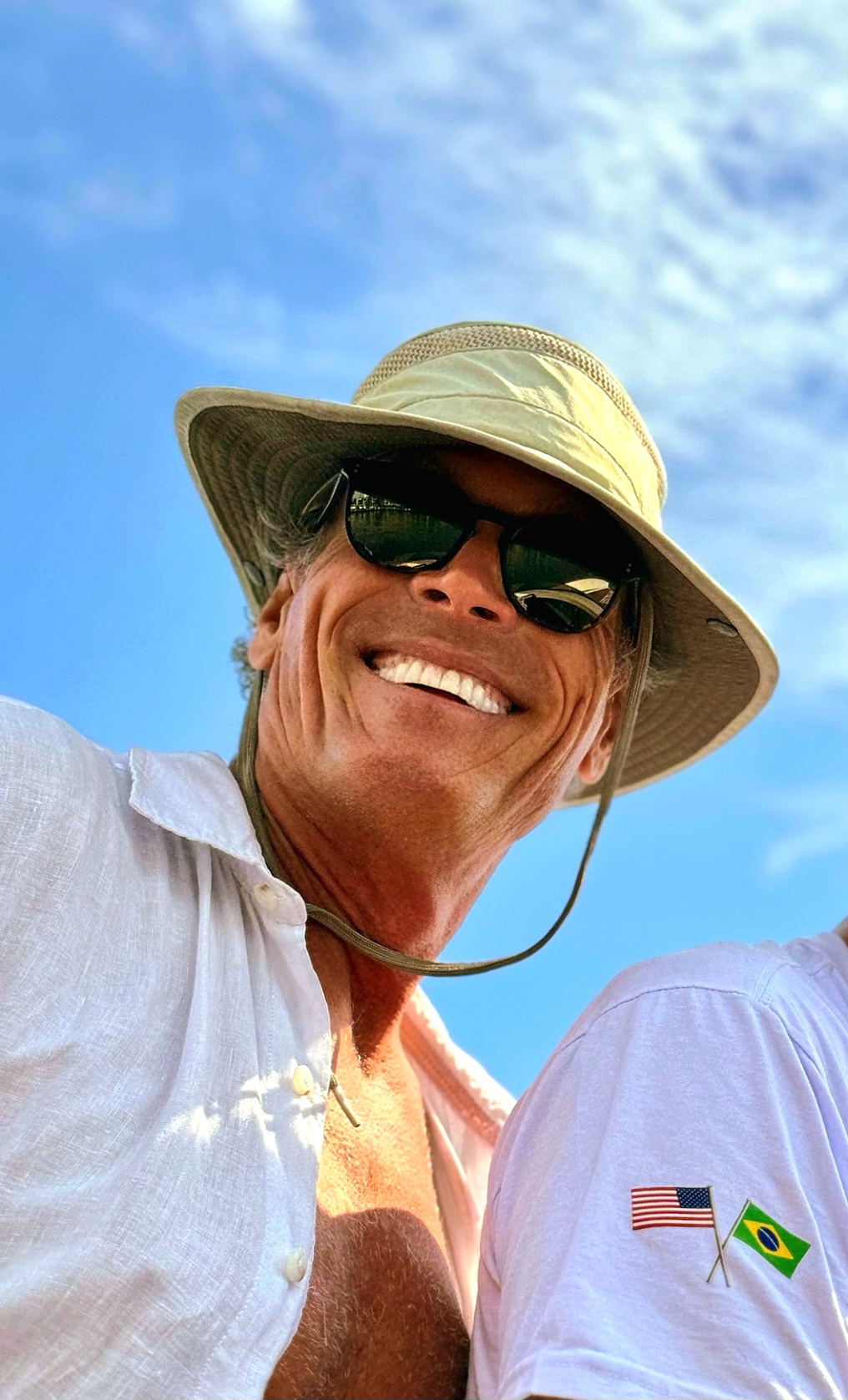
Jeff Downing
Founder, Lead Designer & Custom Glass Countertop Expert
Jeff Downing of Downing Designs, is a Tampa Florida–based design studio specializing in custom Glass Countertops, Glass Bar Tops, Glass Vanity tops and Glass Stair Treads. With decades of hands-on experience, Jeff is widely recognized for delivering textured glass surfaces integrated with LED lighting to create dazzling abstract statement pieces.
"Glass. Lights. Ambiance".