

Last updated on November 12th, 2026 at 07:46 am
Downing Designs makes custom precast concrete stair treads in any color and any size, from a fine white-sand, white-cement, fiber-reinforced mix (8,000–10,000 PSI) that’s colored all the way through, so the tread looks the same in year twenty as on day one. Treads are permanently sealed with a penetrating system (no epoxy), start at $150 per square foot for 2-inch profiles, and ship crated and insured anywhere in the U.S. with a guaranteed ship date and one extra tread in every order.
We make custom concrete stair treads for architects, general contractors and homeowners who won’t compromise on quality, color or craftsmanship. We’ve been doing it for more than 25 years, and our contractors come back project after project. Nobody buys a bad product twice.
Architectural precast treads have become a defining feature of minimalist coastal homes and commercial properties across Florida, including Tampa, St. Petersburg, Sarasota, Naples, Miami, Fort Lauderdale, Boca Raton, West Palm Beach and Jupiter, and we ship them nationwide.

At a glance
| Spec | Downing Designs treads |
|---|---|
| Mix | Fine white sand and white Portland cement; no large aggregate |
| Reinforcement | Hair-fine, high-tensile synthetic fiber throughout |
| Strength | 8,000–10,000 PSI compressive |
| Color | Any color, matched to a Benjamin Moore or Sherwin-Williams swatch; through-body |
| Sealer | Multi-stage penetrating system; no epoxy, no recoating |
| Surface | Polished to a slip-resistant finish; ½-inch round-over front edge |
| Recommended thickness | 2 inches minimum; up to 4 inches where railings are through-drilled |
| Price | From $150 per sq ft (2-inch) |
| Shipping | Nationwide, foam-padded wood crates, insured, guaranteed ship date |
What makes our treads different
A mix with no surprises
Most precast concrete uses large limestone aggregate. As the surface wears, those rock chunks surface and change the whole look of the tread, which is a nasty surprise years after installation, especially on color-matched work. In Florida that aggregate is white limestone, and it shows. We use fine sand and white cement only. The color goes all the way through, like porcelain tile, so what you see on day one is what you see in year twenty.
Better for light colors
White cement and white sand give us a clean canvas, the way a paint store starts from the whitest base. Grey cement varies in tone and makes light shades hard to hit. White cement costs nearly twice as much, but it also gains early strength faster, which helps us turn projects around sooner.
Fiber reinforcement
Hair-fine, high-tensile synthetic fibers run through the entire mix. Rebar keeps big pieces from breaking off; fiber keeps cracks from forming and spreading in the first place, and lets the tread flex under loads that would crack conventionally reinforced concrete. With our mix design, treads reach 8,000 to 10,000 PSI, two to three times typical structural concrete.
Permanently sealed, no epoxy
Every tread is acid-washed and sealed with a multi-stage penetrating system. The first coats are thinned with acetone to soak in deep; final coats go on until the concrete stops accepting more. The protection is permanent, indoors and out. We don’t use or recommend epoxy or plastic coatings on treads: they wear off under foot traffic, leave worn zones unprotected and look patchy. To refresh the look, wipe on our enhancing sealer and wipe it off.
Safe when wet
We polish to a controlled slip-resistant finish, critical for exterior stairs and pool decks. The standard ½-inch round-over front edge is comfortable underfoot and resists chipping. Abrasive metal safety nosing, including luminescent versions, is available.

Weight by thickness
Weight planning matters, especially for floating stairs, upper floors and large landings. Share these figures with your structural engineer and installers.
| Thickness | Weight | Typical use |
|---|---|---|
| 1.5 in | 20 lb / sq ft | Interior, lighter loads |
| 2 in | 27 lb / sq ft | Standard residential and commercial |
| 3 in | 40 lb / sq ft | Heavy-duty, exterior, commercial |
We recommend 2 inches minimum, and up to 4 inches where railings are through-drilled and anchored; thicker concrete spreads the post load far better. We can also mold railing post notches into the tread edge. For big landings, we can cast a 3-inch perimeter around a 1.5-inch interior, which looks solid but weighs far less. Plan forklift or lull access for anything over 200 pounds.
Custom color matching
We start from white Portland cement and fine sand, then add pigments by computer-controlled mix design to hit any color you specify. We use only pigments proven in concrete roof tile, documented for 30-plus years under UV, heat and rain, and we balance color depth against strength, since oversaturating with pigment weakens concrete.
- Pick a target. Any Benjamin Moore or Sherwin-Williams swatch.
- We make chips. Blended, cast, polished and sealed to final spec.
- You approve by photo. We text or email the best matches, typically within a week.
- Refine if needed. A second batch if you want it. Production is scaled mathematically from the approved formula.
Color tip: light-to-medium tones are most forgiving outdoors, hiding pollen, dirt and wear. Light grey is our top exterior pick: minimal pigment, maximum strength. Beyond solid colors, we can embed seashells, glass pieces or metal logos, or grade a staircase so each tread steps about 10 percent darker from bottom to top. We’ve color-matched plenty of concrete countertops and sinks the same way.

How we make them
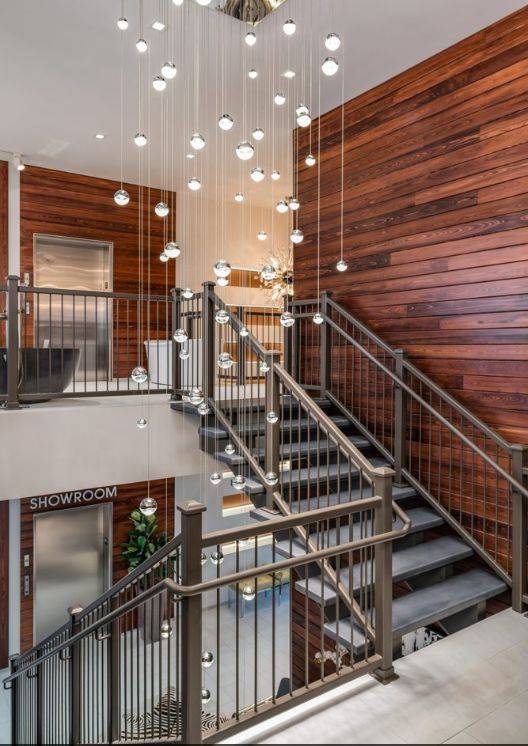
We pour large slabs, polish the whole surface, then cut each tread to your exact dimensions, so color, texture and finish match across the entire set, which individually cast pieces can’t guarantee. Hollow-back profiles are available to cap a steel stair structure and hide the metalwork, molded to your steel fabricator’s drawings.
Steel substrate and installation
| Topic | What to know |
|---|---|
| Flat supports | Welding heat often warps steel, especially supports 3 feet or longer. Grind welds and correct bows before install; gaps mean shims and uneven stress that can crack a tread. |
| Steel vs. aluminum | Steel. It expands and contracts at about the same rate as concrete. Aluminum doesn’t, and can stress the bond. |
| Railings | Install after the treads, so the crew can align each heavy piece freely. |
| Adhesive | We often use Sikadur-31 Hi-Mod Gel, a paste-consistency structural epoxy that stays where you put it and bonds to concrete, metal and wood. |
| Crew | A 36-by-12-inch tread at 2 inches weighs about 80 pounds. Larger treads and landings need four strong installers or equipment. Set landings before treads. |
Shipping, extras and maintenance
We ship to any U.S. address in foam-padded, secured wood crates, fully insured, with a guaranteed ship date. Every order includes one extra tread. It has saved more than a few contractors when a tread was damaged on site. Concrete keeps hardening for weeks after casting, so smart clients order early; we’ll warehouse finished treads and deliver on your schedule. Cleaning is warm soapy water, or diluted bleach for stubborn stains or growth. No resealing, no maintenance contracts. If a tread is ever chipped, we keep your color formula on file and patch it seamlessly.
Pricing
Commodity precast treads are made cheaply with large aggregate that shows over time. Ours carry a high cement content for strength and start at $150 per square foot for 2-inch profiles. Thicker treads, rush lead times and complex color matches can change the price.
| Option | Typical cost | Notes |
|---|---|---|
| Standard precast step (12 × 48 × 2 in) | About $150–$500 | Stock sizes, limited colors |
| Poured in place | About $200–$500+ per step | On-site forming, heavy labor |
| Downing Designs custom | From $150 / sq ft | Any color, any size, ships nationwide |
More than stair treads
The same mix and color formula can make matching countertops, window sills, cap stones and outdoor furniture. We made the concrete base for the Phil Esposito statue for the Tampa Bay Lightning, and the base for the Dave Andreychuk statue, which takes constant foot traffic from fans posing for photos, plus spilled beer, rain and Florida summers, and still looks great. We’ve also built custom concrete sinks for commercial breweries.


Frequently asked questions
How much does a concrete stair tread weigh per square foot?
About 20 pounds at 1.5 inches thick, 27 pounds at 2 inches and 40 pounds at 3 inches. Use these numbers when planning structural support and your installation crew.
What metal substrate is best for concrete stair treads?
Steel. It expands and contracts at about the same rate as concrete, the same reason rebar and concrete work together. Aluminum behaves differently under temperature cycling and can stress the bond.
What is the most important thing about tread supports?
They must be flat and level. Welded supports 3 feet or longer often warp from welding heat, leaving a gap that has to be shimmed or filled and creating uneven stress that can crack a tread. Correct them before the treads arrive.
Should railings go in before or after concrete treads?
After. Your crew needs room to align each heavy tread without working around fixed posts.
Can I save weight on a large concrete landing?
Yes. We can cast a 3-inch perimeter with a 1.5-inch interior: big weight savings with a solid look. A 400 to 500 pound landing still needs a lull, forklift or four strong installers, so plan site access first.
Can you match any paint color?
Yes. Send a Benjamin Moore or Sherwin-Williams swatch. We cast polished, sealed sample chips, photograph them and send them, typically within a week, and refine with a second batch if needed.
Will the color fade?
We use industrial pigments proven in outdoor concrete roof tile, with documented 30-plus-year durability under UV, heat and rain. They’re not standard construction colorants.
How do I know the sample will match the final order?
Every ingredient is scaled by formula. Pigment, water and admixture ratios are identical between the sample batch and production.
How durable are concrete stair treads outdoors?
Very. Our mix reaches 8,000 to 10,000 PSI, and the penetrating sealer is permanent. For exterior stairs we recommend light grey: minimal pigment, maximum strength, and it hides pollen and wear.
Do you ship outside Florida?
Yes, to any state. Every shipment is foam-padded, wood-crated and insured, with a guaranteed ship date and one extra tread.
What does a custom concrete stair tread cost?
From $150 per square foot for 2-inch profiles. Thickness, lead time and color complexity affect the final price; we quote once we have dimensions, thickness, color and timeline.
Why concrete instead of wood, tile or stone?
Our concrete is colored all the way through, so even decades of wear reveal the same color, with no coating to peel. Wood eventually rots, tile grout is a maintenance chore, and stone must be thick or laminated to be strong enough. A heavy person carrying a load can put 350 pounds on a single step.
Do you recommend epoxy sealers for concrete treads?
No. Epoxy is a surface coating that wears off under foot traffic and leaves the concrete unprotected and patchy. Our penetrating sealer bonds inside the concrete permanently.
What aggregates are in your mix?
Fine sand and cement only. Large aggregate looks fine at first, but as the surface wears the rocks show through and change the tread’s appearance.
How do I order custom concrete stair treads?
Tell us size, shape, thickness and color. We’ll quote, confirm a guaranteed ship date and deliver crated anywhere in the U.S., with installation support for Florida clients. Call or text Jeff at (813) 784-5211.
Keep reading
Made in Florida. Shipped anywhere.
Tell us your size, shape, thickness and color. We handle everything from there.
We don’t have office hours. We have phones.

Jeff Downing
Founder, Lead Designer & Custom Glass Countertop Expert
Jeff Downing of Downing Designs, is a Tampa Florida–based design studio specializing in custom Glass Countertops, Glass Bar Tops, Glass Vanity tops and Glass Stair Treads. With decades of hands-on experience, Jeff is widely recognized for delivering textured glass surfaces integrated with LED lighting to create dazzling abstract statement pieces.
"Glass. Lights. Ambiance".