Last updated on October 24th, 2026 at 07:08 pm
A glass bar top is a great choice when you want the bar to be the room. Thick, kiln-formed glass is non-porous, never needs sealing, carries light the way no stone can, and with the right edge finish and support it holds up to daily bar life. Its real weaknesses are edge impact, hot cookware, and cost. If you can live with those, nothing else comes close for atmosphere.
Why glass at the bar?
Every other countertop material stops light. Glass is the only one that moves it.
Set a textured glass bar top over warm LEDs and the whole room changes at dusk. The surface stops being a place to set a drink and becomes the thing people gather around. That is the entire reason glass belongs at a bar, and it is why I have spent my career building them.
I’m Jeff Downing. I run Downing Designs from our studio in Ybor City, Tampa, and I’ve put a lot of glass bar tops into homes, condos, restaurants and outdoor kitchens across the country. This guide is what I tell clients before they buy: what works, what doesn’t, and what most guides skip.
Not all glass bar tops are the same glass
“Glass bar top” covers four very different products. Knowing which one you’re looking at is the single most useful thing in this guide.
| Type | What it is | Best for | Watch out for |
|---|---|---|---|
| Tempered glass | Flat glass heated and rapidly cooled for strength. | Clean, minimal, budget-conscious bars. | It cannot be cut, drilled or reshaped after tempering, and it offers no real depth or texture. |
| Laminated glass | Layers of glass bonded with an interlayer. | Public and commercial bars where safety rules matter. | Visible layers and interlayer edges. It reads as a window, not a statement. |
| Kiln-formed glass (what we make) | Thick glass shaped and textured in a kiln, then slowly cooled. The texture is formed into the glass, not printed or applied to it. | Statement bars, luxury homes, hospitality, anywhere the bar top is the centerpiece. | It is a fabricated, custom product. Edge finishing and support design matter a great deal, and it is priced accordingly. |
| Recycled glass composite | Glass chips bound in resin or cement. | Eco-minded projects and a terrazzo look. | It looks like a composite, because it is one. It does not glow. |
Our bar tops are kiln-formed, so I’m biased. But if your project is a quiet, flat, budget bar, tempered glass is a fine answer, and I’ll tell you so.
Durability, honestly
Most guides call glass “tough” and move on. Here is the real picture.
What glass handles well
Daily bar life. Bottles, glasses, shakers and coasters are no problem. Glass is harder than almost anything that will touch it, so ordinary use does not wear it down.
What deserves respect
- Edges. A hard, pointed impact on an edge or corner is how glass gets damaged. This is why edge finishing and support design matter more than any spec sheet number.
- Heat. Set hot pans on a trivet. Sudden temperature shock is not good for any thick glass.
- Rough-bottomed trays and metal. Dragging them across the surface can leave marks. Felt feet and coasters solve it.
The honest bottom line: a well-made, well-supported glass bar top lasts for decades. A poorly supported one is a problem regardless of price. The support matters as much as the glass.
The edge is where a glass bar top is won or lost
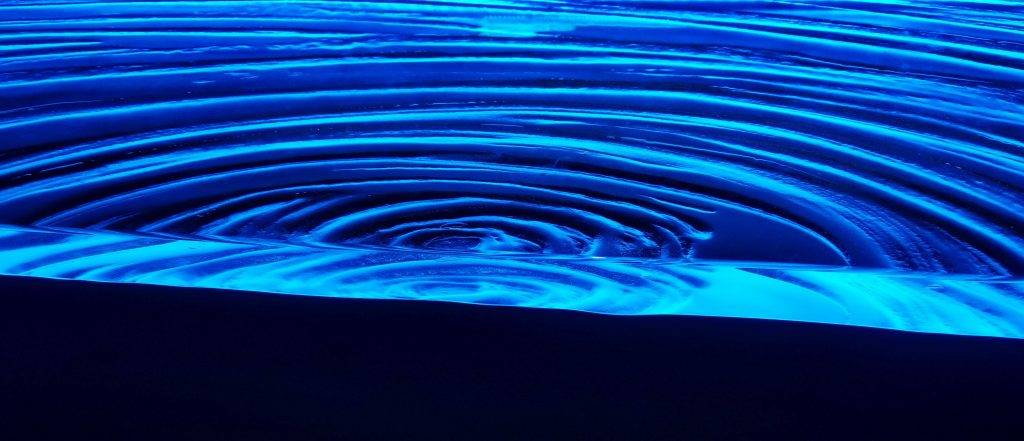
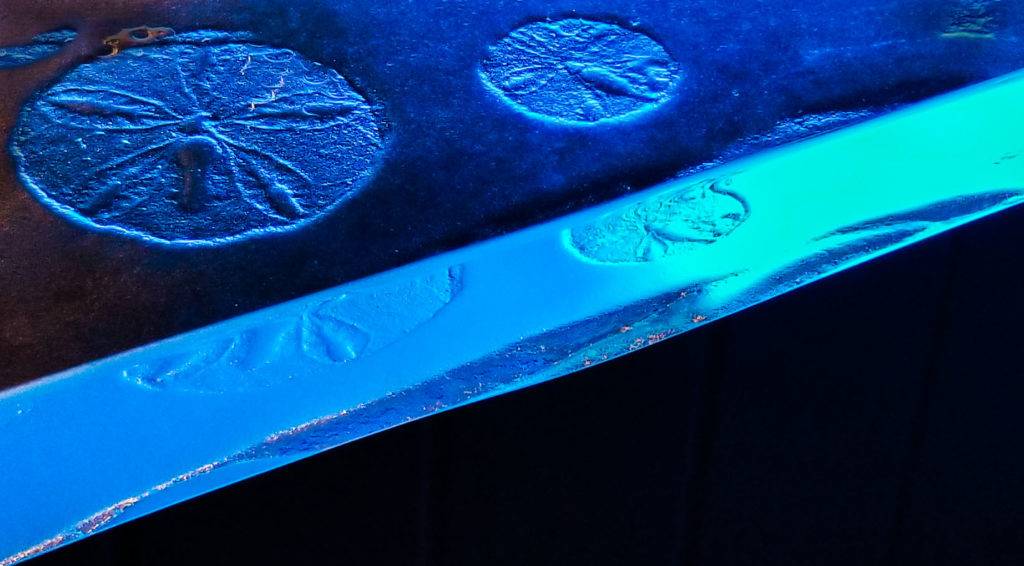
Our optically clear, hand-polished edge magnifies the inside of the thick glass and pulls your eye deep into the texture. We round over the top and bottom by hand. The result is soft to the touch and far better at absorbing the knocks that bottles and glasses deliver than a sharp 45 degree bevel, which is doubly sharp and prone to chipping.
Hand-working thick glass is slow, and it is worth it. It also lets us design the texture around the edge. We “dissect” the edge through the middle of abstract hurricanes, galaxies and flowing lines, so the glass reads as one piece of art from every seat. Sit at a cantilevered bar and the edge is the first thing you notice.
Hygiene: the genuine advantage
This is where glass wins outright. It is non-porous, so it does not absorb liquids, oils or odors. There is no sealer to reapply, no grout line to stain, and no porous surface for a spilled negroni to settle into. A cloth and glass cleaner is the whole routine.
The trade-off: glass shows fingerprints and condensation rings. They wipe off in seconds, but they are visible. Textured glass hides this far better than a smooth, clear top, which is one more reason texture earns its place.
The numbers that make a bar top work
Width is the one most people get wrong. Wider tops tend to look heavy, not sleek. My own bar at home is 17 3/8 inches wide, and I only wish it were a touch wider, because a wine glass at the very edge of a bar is not calming.
Overhang. Plan on roughly 10 to 15 inches so people can sit comfortably.
Length. Seating three or four people regularly? A long bar makes sense. Mostly two people? A 6 or 7 foot top delivers the statement at a lower cost.
Supports: how a glass bar top floats
You’ll read that raised bars are old-fashioned. They are, when the support is a knee wall or a forest of stand-offs that steals the space under the bar and puts a visual curtain between the kitchen and the living room. Those articles also assume an opaque material like granite. They never contemplate glass, or a support system built for it.
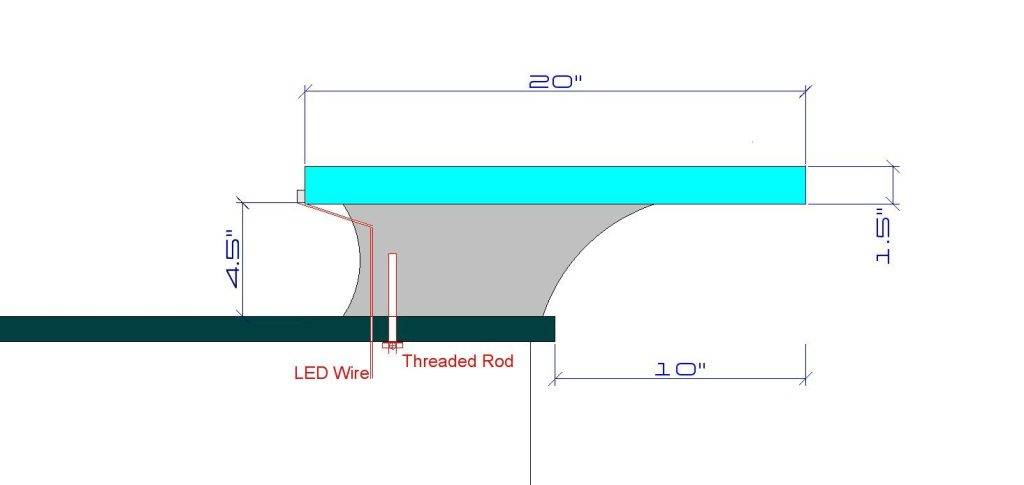
Strong, thick glass lets us do something different. We use two clean supports for a linear high bar, even on tops up to 130 inches long. That opens the space under the bar, lets downlighting and LED light shine through the glass, and keeps the sightline unbroken. A standard 20 inch wide raised bar cantilevers 10 inches over the lower island edge, a comfortable distance for even the tallest of us. The support even conceals the LED feed wire inside it.
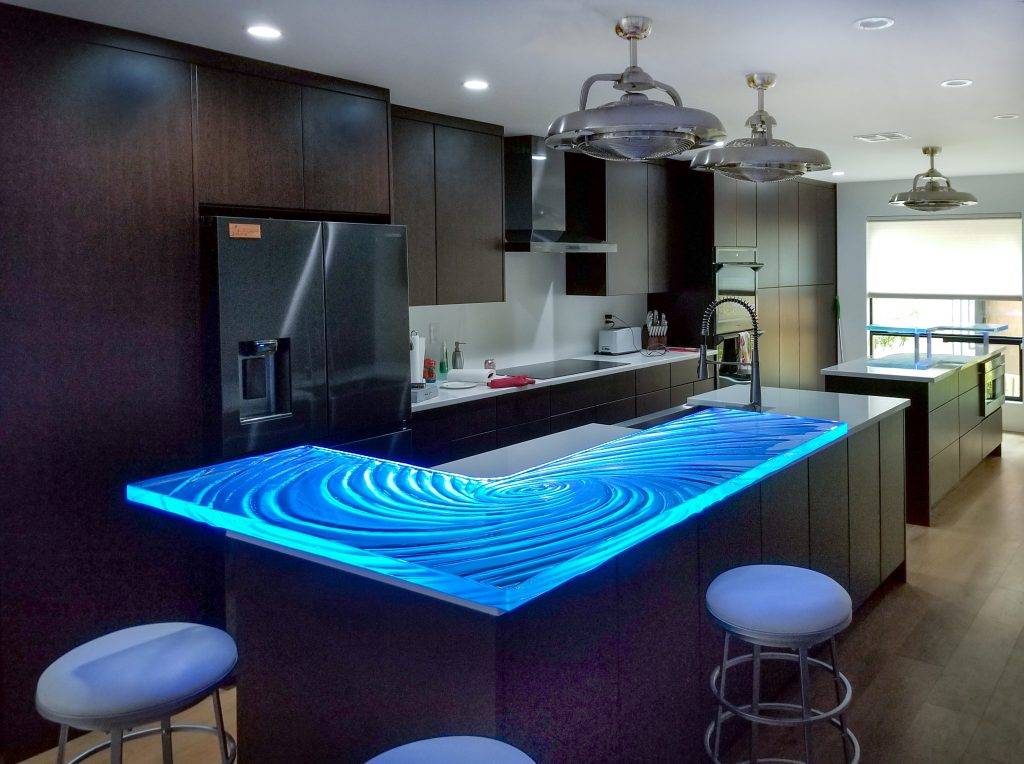
For one-piece arced or L-shaped bar tops we need only three supports: one at the apex and one at the end of each leg.
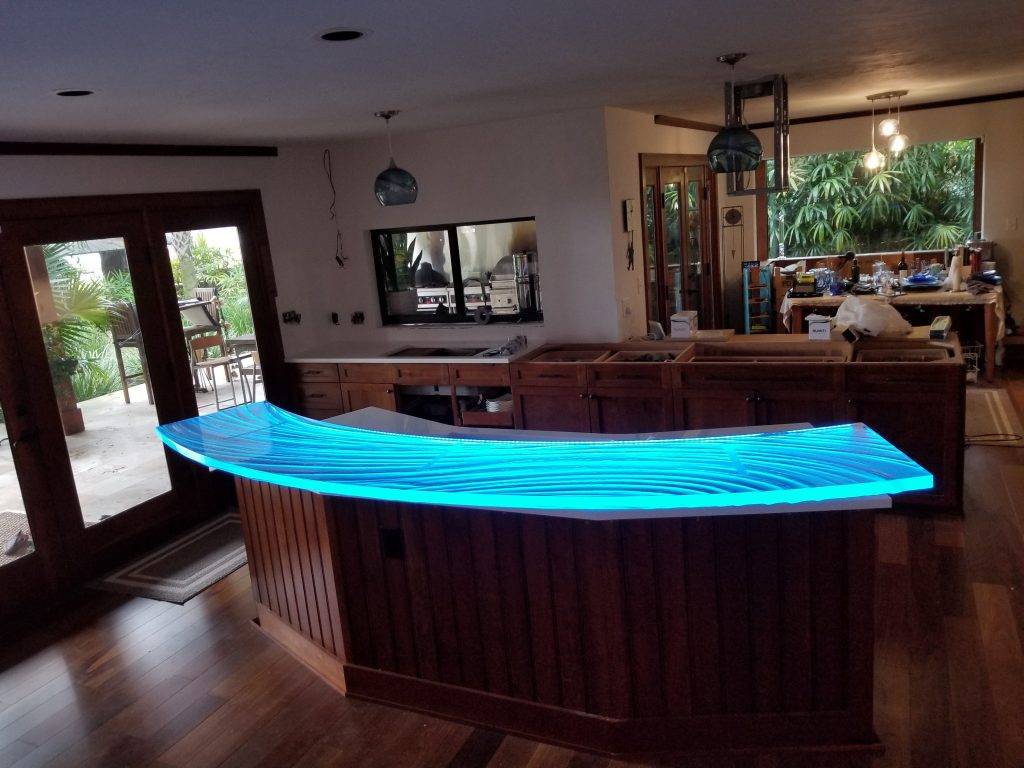
Cantilever distance is an engineering decision that depends on the glass, the support and the application. It is not a place for guesswork, and we engineer it for every project. For the full breakdown, read Cantilevered Glass Bar Tops: The Engineering Behind the Longest Floating Glass Bars.
Light: where a glass bar top becomes an Ambiance Machine
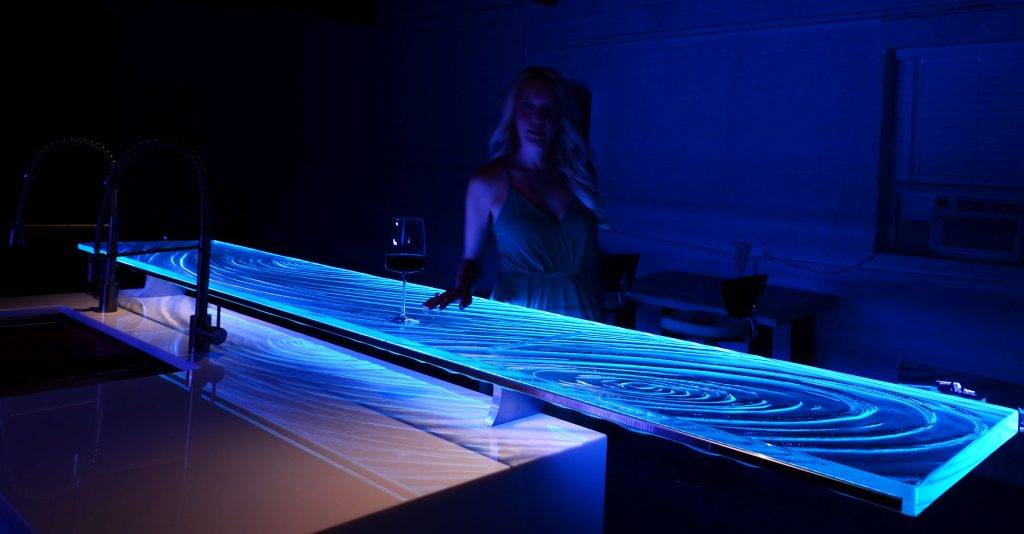
Glass and LEDs belong together. Thick, textured glass over a warm, dimmable light turns a countertop into atmosphere: low and golden for a quiet night, bright and colored when the room fills up. We call it the Ambiance Machine, and it is the reason most of our clients choose glass over stone in the first place.
With an air gap under the glass, downlighting casts elegant shadow lines across the surface below. More lights is not better. Read why more LED lights on your thick glass bar is not better. If you plan to add lighting, tell us at the start. It affects edge details, texture choice and how the light behaves through the glass.
Residential, commercial and outdoor
Residential bars are about feel. Low traffic, high drama, and every detail is personal.
Commercial bars and restaurants are about traffic and rules. Heavy use, cleaning schedules, and local codes and insurance requirements all matter. Check with your designer, building department and insurer early so the glass specification fits the project from day one. The upside is real: guests who spend an evening at a gorgeous glass bar remember it, photograph it, and come back. That lifts your social posts and your 5-star reviews.
Outdoor bars can work beautifully, including poolside and swim-up designs. We have built a 22-foot glass bar top for a swim-up pool bar and outdoor kitchen. Outdoor use changes the design conversation, so tell us where the bar lives before we start.
Care in thirty seconds
- Daily: soft microfiber cloth and standard glass cleaner.
- Avoid: abrasive pads, powders, and dragging rough-bottomed items.
- Use: coasters, felt feet, and a trivet for anything hot.
- If lit: keep the LED channel free of dust.
That’s it. No sealing, no polishing, no special products.
Six mistakes I see buyers make
- Choosing the glass before the support. The support decides whether the top looks like furniture or a shelf.
- Going too wide. Twenty inches beats thirty almost every time.
- Adding lighting as an afterthought. Decide at the start.
- Picking a perfectly clear top for a busy family kitchen. Texture forgives fingerprints.
- Treating overhang as a styling choice. It is an engineering one.
- Buying on price alone. Two tops that look alike in a photo can be nothing alike in the edge, the support and the surface. Our Glass Bar Top Buyer’s Checklist gives you ten questions to ask any fabricator.
Who should not buy a glass bar top
Be honest with yourself. If you want a purely utilitarian surface, glass is not the answer. Solid surface and laminate are cheaper and tougher for rough use, and I will say so out loud. Nobody needs a glass bar top. People want one, because it turns an ordinary room into a place people remember.
If that’s you, keep reading.
What a glass bar top costs
I don’t publish a rate, and here is why: no two tops are alike. Size, texture, edge, lighting and support all change the answer. Fabrication, delivery and installation are quoted as one number, so there are no surprises, and every project begins with a conversation about your space.
Recent bar tops
Jupiter, Florida
A luminous L-shaped bar designed with Trisha Estabrook of Bandon Blue Interiors, textured to define the room without overpowering it.
Swim-up pool bar
A 22-foot glass bar top anchoring an outdoor kitchen built for summer parties.
Tampa, Naples and North Carolina
A lit condo bar in Tampa, and floating raised bar tops on cantilevered supports in Naples and North Carolina.
Keep reading
What Does Your Bar Top Feel Like at 9:30pm?
The case for designing a bar around the evening.
Glass bar top questions, answered straight
Are glass bar tops durable?
Yes, when they are thick, well made and properly supported. Daily bar life (bottles, glasses, shakers) is not a problem. The real risks are a hard, pointed impact on an edge or corner and poor support design. Hand-polished edges and an engineered support system are what make a glass bar top last for decades.
Do glass bar tops scratch?
Glass is harder than almost anything that touches a bar top, so ordinary use does not wear it down. Dragging rough-bottomed trays or metal items across the surface can leave marks. Coasters, felt feet and a little care prevent it.
Can I put hot items on a glass bar top?
Warm drinks and plates are fine. Hot pans and anything straight off a burner belong on a trivet. Sudden temperature shock is hard on any thick glass, so treat heat with respect.
Are glass bar tops hygienic?
Glass is one of the most hygienic bar surfaces available. It is non-porous, so it does not absorb liquids, oils or odors, and it never needs sealing. A cloth and glass cleaner is the whole routine. The only trade-off is that it shows fingerprints and condensation rings, which textured glass hides far better than clear glass.
How do I clean and care for a glass bar top?
Wipe daily with a soft microfiber cloth and standard glass cleaner. Avoid abrasive pads and powders. Use coasters and a trivet for anything hot. If your bar top is lit, keep the LED channel free of dust. There is nothing to seal, polish or reapply.
What is the standard height and width of a bar top?
Standard bar height is 42 inches. Allow about 24 inches of length per stool and roughly 10 to 15 inches of overhang for knee space. For width, 18 to 20 inches works best for a plate, a glass and a side dish. Wider tops rarely look better.
What is the difference between tempered glass and kiln-formed glass bar tops?
Tempered glass is flat glass strengthened by rapid cooling. It is clean and minimal but cannot be reshaped or textured after tempering. Kiln-formed glass is thick glass shaped and textured in a kiln and then slowly cooled, so the texture is part of the glass itself. Kiln-formed is the choice for statement bars. It is a custom, fabricated product, and edge finishing and support design matter a great deal.
Can a glass bar top have LED lighting?
Yes, and it is the reason many clients choose glass. Thick, textured glass over a warm, dimmable light turns the bar into atmosphere. We call it the Ambiance Machine. Decide on lighting at the start of the project, because it affects edge details, texture and how light moves through the glass.
How far can a glass bar top overhang?
It depends on the glass, the support and the application, and it is an engineering decision, not a styling choice. We engineer it for every project. For the full breakdown, read our guide to cantilevered glass bar tops.
Can glass bar tops be used outdoors?
Yes. We have built glass bar tops for outdoor kitchens and swim-up pool bars, including a 22-foot top. Outdoor use changes the design conversation, so tell us where the bar will live before we start.
What does a glass bar top cost?
Every glass bar top is custom, so there is no standard rate. Size, texture, edge, lighting and support all change the answer. Fabrication, delivery and installation are quoted as one number, and every project starts with a conversation about your space. Call 813.784.5211.
Do you ship and install glass bar tops nationwide?
Yes. We build every glass bar top in our Ybor City, Tampa studio and handle delivery and installation nationwide. Florida is our home market, and we also ship and install across the country.
Glass. Lights. Ambiance.
Start your bar top
Tell us about your space and we will tell you honestly whether glass is right for it.
Call 813.784.5211. We don’t have office hours. We have phones.